New York City’s real animal welfare crisis isn’t the Westminster Dog Show | Lauren Caulk
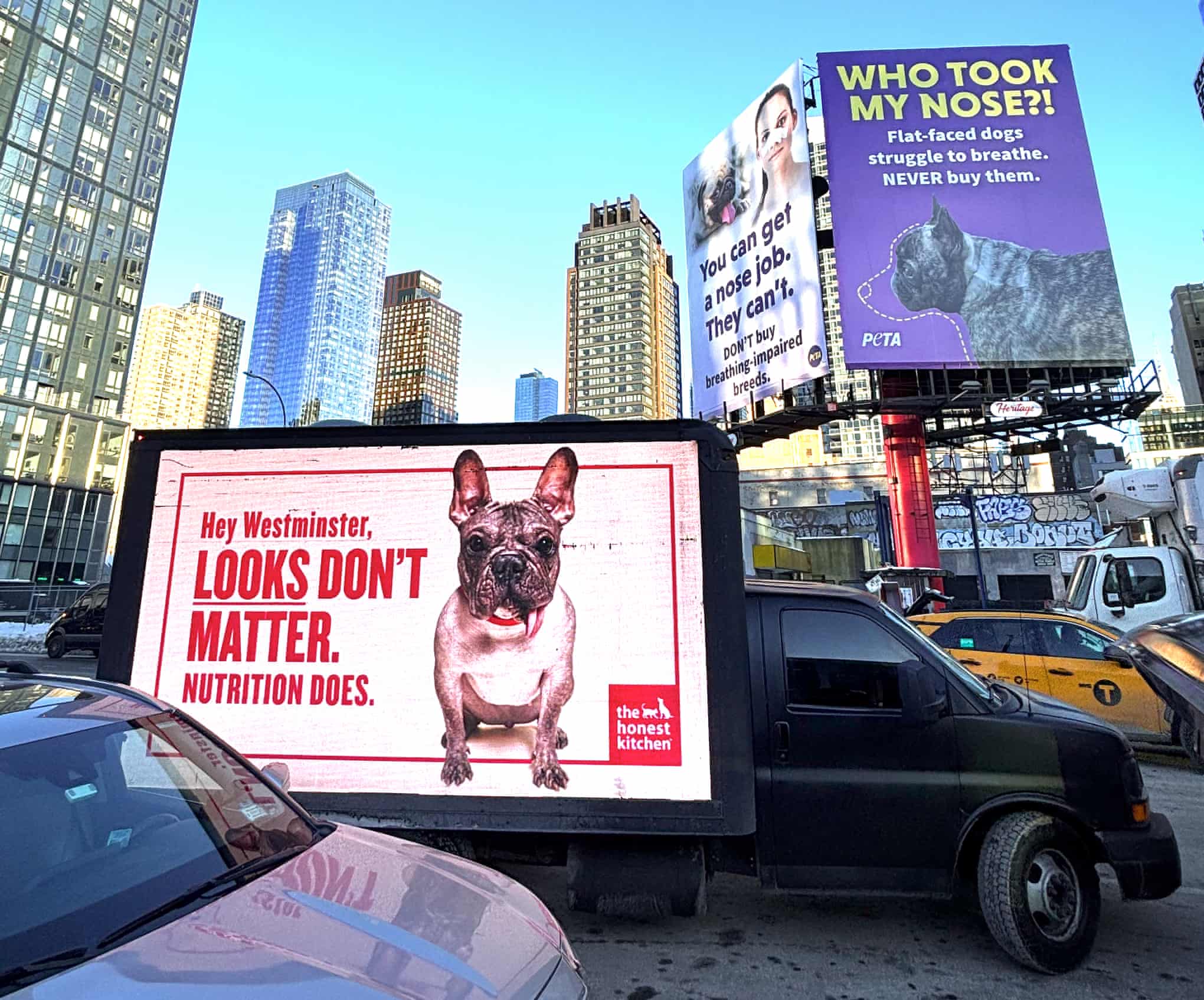
Every February, the Westminster Dog Show arrives in New York City trailing equal parts pageantry, nostalgia and protest.The dogs come to be judged.The owners and handlers come to uphold breed standards.And, almost as reliably as the movie references and the best-in-show ribbon, Peta arrives ready to dominate the conversation.If there is one certainty about the Super Bowl of canines, it’s that the protest will share the stage with the pageantry.
Westminster is an annual collision of tradition, spectacle and dissent, and Peta has become exceptionally good at owning that moment.This year was no different.Two enormous billboards screamed down from across the street of the Javits Center, where breed judging unfolded on Monday and Tuesday ahead of the prime-time sessions at Madison Square Garden.One read: Flat-faced dogs struggle to breathe.NEVER buy them.
Another: You can get a nose job.They can’t.DON’T buy breathing-impaired breeds.Provocative billboards, mobile ads, media hooks, message discipline: Peta is very, very good at this.And to be clear: criticism of extreme dog breeding and conformation standards is legitimate and necessary.
But that moral clarity gets murkier, and fast, when the conversation shifts from purebred dogs to cats,Because when it comes to cats, Peta’s messaging increasingly relies on selectively framed science, strategic ambiguity and a reluctance to acknowledge the logical endpoint of its own philosophy,That ambiguity allows the organization to criticize grassroots rescuers while avoiding the political and ethical toxicity of openly endorsing mass euthanasia policies,One of the clearest examples is its continued criticism of trap-neuter-return (TNR) programs, with claims – widely challenged by rescue communities and many veterinarians – that TNR encourages abandonment because people assume outdoor cats will be “taken care of”,The argument collapses under even casual contact with reality.
Most people do not casually abandon pets.For most families, pets are family members.When financial hardship forces someone to choose between housing, feeding children, medical bills or veterinary care, those are traumatic decisions, not moral failures.The primary driver of unaltered cat populations isn’t indifference but access.The fact is affordable spay-and-neuter services remain out of reach in many communities.
But close behind affordability is something less visible and almost as consequential: education.It is remarkable how many people living with unneutered cats simply don’t know what spaying and neutering actually do: that they reduce spraying, aggression and roaming.In many cases, people aren’t rejecting responsible care.They simply don’t realize there is a practical, humane intervention that can turn an overwhelming situation into a manageable one.Yet Peta messaging often drifts toward a kind of performative responsibility checklist: cats should be spayed or neutered, vaccinated, licensed, microchipped and kept indoors.
Which is, in theory, correct.It is also meaningless without confronting the obvious follow-up questions: who is paying, with what money, and where are those services actually accessible? Discussions of outdoor disease risk also tend to omit key context.Yes, outdoor cats face high disease exposure.But two of the most devastating viruses in outdoor populations – feline leukemia virus (FeLV) and feline immunodeficiency virus (FIV) – are strongly tied to mating and reproduction.Sterilization directly reduces those transmission pathways, which is, of course, the core mechanism of TNR.
Ignoring that context creates a narrative that feels scientifically grounded while sidestepping the most practical intervention tool available.The uncomfortable reality is that New York City did not simply develop a stray cat problem so much as it manufactured one.The city’s affordability crisis has wreaked an animal welfare crisis.People are not choosing between being responsible and irresponsible; they are choosing between survival categories: rent, food, healthcare, childcare, transportation – and sometimes, yes, pet care loses out.Estimates place New York City’s outdoor cat population well above 500,000, and the burden of that population is not evenly distributed.
It concentrates heavily in lower-income neighborhoods and outer borough communities, where access to veterinary care is already limited and where residents are more likely to be managing multiple layers of economic precarity at once.More than half of US pet owners report struggling to afford basic veterinary visits, and that pressure has been compounded by the rapid corporatization of veterinary medicine.Large corporate entities – including Mars Inc, which owns Banfield, VCA and BluePearl – now control a massive share of the US veterinary market, up dramatically from less than a decade ago.Prices have risen, staffing shortages have worsened and access has become more uneven.When humans face housing and food insecurity, their animals suffer too.
This is not moral decay.It is economics, and pretending otherwise only pushes policy conversations further from solutions.Against that backdrop, TNR is not utopian animal activism so much as harm reduction.Outdoor cat reproduction is brutally efficient: females can become pregnant at four months old, gestation lasts roughly 65 days, and queens can become pregnant again while nursing.Kittens compete aggressively for limited nutrition and estimates suggest as many as 90% of kittens born outdoors never survive.
Street mating is also a primary disease vector, with FeLV and FIV transmission heavily linked to reproduction and close maternal contact.Sterilization interrupts both population growth and major disease spread.Removal-only strategies have repeatedly failed anywhere they have been tried at scale without sterilization saturation.Killing cats without addressing reproduction simply creates a vacuum that new, unsterilized cats quickly fill.By contrast, TNR stabilizes populations, reduces nuisance behaviors, lowers shelter intake pressure and improves overall colony health.
It does not create perfection but it does mean fewer animals suffering.Talk to people who actually do this work – volunteers with full-time jobs, parents, teenagers, retirees – and you hear the same thing.City blocks change.Territorial fighting drops.Spraying declines.
The endless cycle of dead litters slows.Neighborhoods stabilize.And yet these volunteers are frequently mocked or dismissed by organizations with far larger platforms, deeper pockets and greater public influence.If New York wants a serious solution, it is not glamorous, but it is extremely effective: city-subsidized universal spay and neuter access.Frame it any way you want.
It works across every policy lens.It is public health policy, reducing disease burden and environmental strain.It is animal welfare policy, reducing the number of animals born into high-suffering conditions.And it is fiscal policy, reducing shelter intake, euthanasia costs and emergency medical spending over time.Pair that with sustained public education – explaining why sterilization matters, where services are available and how communities can participate – and you begin addressing root causes instead of symptoms.
There are harder cultural conversations too,Cities that created massive shelter overflow while maintaining a retail pipeline of new animals deserve scrutiny,Working cats, including beloved bodega cats, may be culturally embedded,But without enforceable welfare standards, tradition can easily become neglect,None of this is anti-animal.
It is pro-reality.Peta is right about one critical thing: the street is not freedom.Outdoor life for domestic cats is often short, violent and disease-filled.Outdoor cats also devastate bird populations and local ecosystems.But moral clarity requires consistency.
If you are going to claim the ethical high ground on animal suffering, you do not get to choose the animals that make better viral billboards.Dogs deserve protection from exploitative breeding.Cats deserve protection from policy debates built on half-said conclusions.And cities like New York do not need more slogans.They need sterilization access, affordability relief and sustained public education.
Bob Barker used to sign off every episode of The Price Is Right with the same message: help control the pet population, have your pets spayed or neutered.No billboards.No outrage cycle.Just a simple, evidence-based solution repeated often enough to matter.Animal welfare could use more of that.
Lauren Caulk is a co-founder and the president of Ocean Hill Cats, a non-profit cat rescue based in Brooklyn.

PE funding and the true cost of obesity | Letter
The possible cuts to Whitehall’s physical education funding left one misty-eyed for that jargonistic catchphrase of the Blair era: joined-up government (Government row breaks out over plan to cut spending for PE in England’s schools, 27 January).Coincidentally, your story appeared hours after the NHS published data from its Health Survey England. Inevitably, the 2024 data revealed another rise in the percentage of adults in England who were obese or overweight – reaching 66%, compared with 53% in 1993. About 30% of adults were obese. The survey again illustrated the links between deprivation, obesity and ill-health
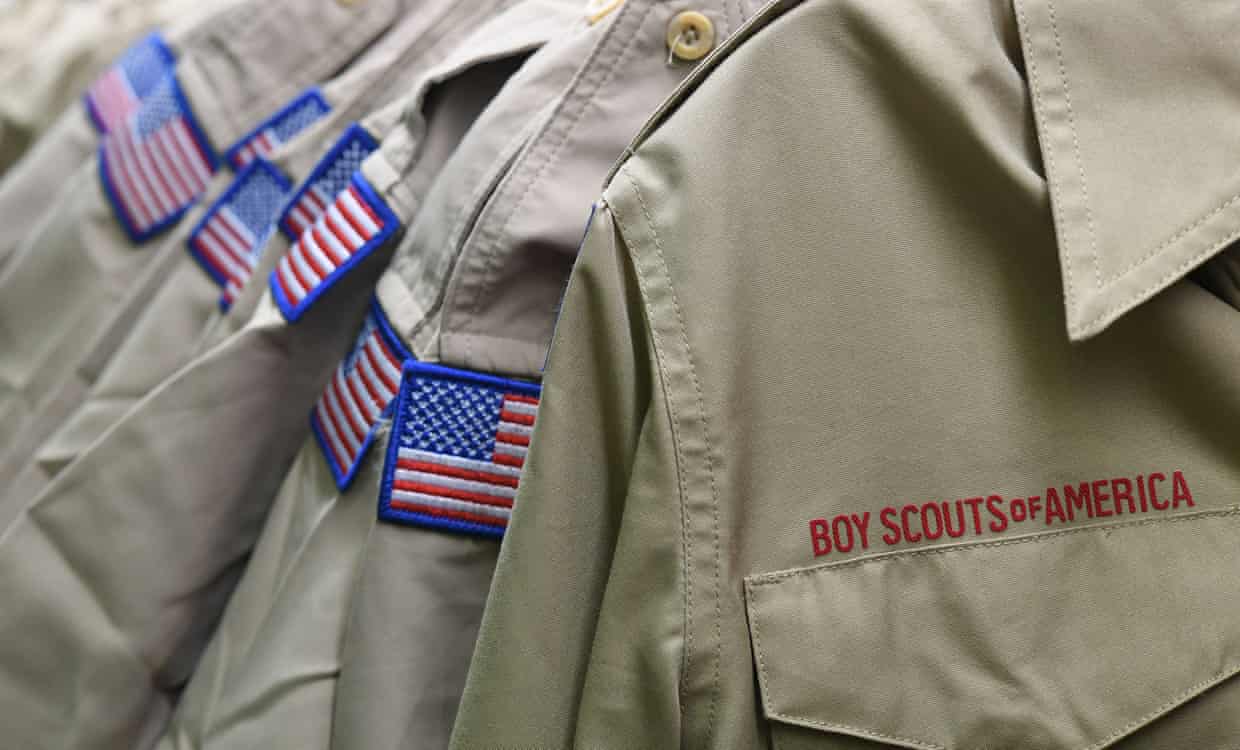
Pentagon threatens to cut ties with Scouting America over ‘core values’
The Pentagon is again threatening to sever ties with Scouting America unless the organization formerly known as the Boy Scouts of America reverts to “core values” and realigns itself with service to “God and country”.A warning to end the US military’s longstanding partnership with one of the nation’s largest and most popular youth organizations came in a Monday night post to social media by the Pentagon spokesperson, Sean Parnell, who insisted the scouting movement “lost its way” in a 2025 rebrand that promoted inclusivity and included admitting girls and LBGTQ+ members.Donald Trump’s defense department under its head, Pete Hegseth, has previously railed against being “woke” in the US military, including diversity, equity and inclusion (DEI) programs, and suggested that women lack the physical strength to be effective combat troops.Hegseth first proposed withdrawing government support for the scouting movement in a memo to Congress in November. The Washington Post reported on Tuesday that a separate draft memo outlining the plan has been circulating in recent days

Three-quarters of cancer patients in England will survive by 2035, government pledges
Three in four cancer patients in England will beat cancer under government plans to raise survival rates, as figures reveal someone is now diagnosed every 75 seconds in the UK.Cancer is the country’s biggest killer, causing about one in four deaths, and survival rates lag behind several European countries, including Romania and Poland. Three-quarters of NHS hospital trusts are failing cancer patients, a Guardian analysis found last year, prompting experts to declare a “national emergency”.In a new plan to be published on Wednesday, ministers will pledge £2bn to resolve the crisis by transforming cancer services, with millions of patients promised faster diagnoses, quicker treatment and more support to live well.Some cancer performance targets have not been met by the NHS since 2015

Cost of UK’s drug price deal with US will come out of NHS budget
The cost of the government’s drug pricing deal with the Trump administration will come out of the NHS budget instead of the Treasury’s and could eventually reach £9bn a year, campaigners fear.Patrick Vallance, the science minister, has confirmed that the costs – initially an extra £1bn over three years– will be borne by the Department of Health and Social Care, which funds the NHS in England, and not the Treasury.His admission, in a letter to the Commons science, innovation and technology committee, is the first time the government has specified which Whitehall department would foot the bill.It comes amid growing concern among Labour, Liberal Democrat, Green and Scottish National party MPs that ministers have been evasive about the costs involved and risk that the NHS may have to cut services in order to pay the 25% higher prices for new drugs that ministers agreed to.The £1bn is the estimated extra cost for the first three years of the 10-year deal the government announced on 1 December

Ministers to crack down on profiteering in care sector and make renewed fostering push
Private providers of child social care in England will be pushed out of the system if they are found to be profiteering, the children’s minister has said.Josh MacAlister, who is in charge of overhauling the care system for children, also called for a fostering equivalent of the Homes for Ukraine scheme to provide homes for tens of thousands of children.Announcing a major push to find homes for 10,000 foster children as part of a bid to rebalance child social care away from private providers, MacAlister said the state was “failing to provide the lifelong, loving relationships that these kids need”.MacAlister led an independent review of child social care under the last Tory government before becoming an MP and then minister. He said his message to private providers was: “If you want to be part of this system in the future, don’t price-gouge; don’t profiteer

Council and community could join up on housing | Letters
John Harris is absolutely right to draw attention to the tragic lack of council housing provision in the UK, and his visit to the new homes at Rainbow Way in Minehead, Somerset, is a welcome reminder that building genuinely affordable, secure homes is both possible and transformational for people’s lives (In Somerset, I found glorious proof that England can build great council houses. So what is holding us back?, 25 January). The emotional testimony from residents who now have stability and dignity in their housing reinforces how urgently we need similar projects across the country.However, my own experience working on the East Quay project in the adjacent town of Watchet reinforced another uncomfortable truth: local authorities do not always have the will or imagination to take the initiative and improve things for their residents.In Watchet, it was not the local council that led progressive change, but a remarkable community group, the Onion Collective

Cyber-attack and yacht insurer agrees £8bn deal in latest UK stock market exit

Drax insiders privately raised concerns over its sustainability claims, court papers show

UK services sector job cuts continue as companies automate, PMI survey shows

Striking Starbucks workers urge customers to delete coffee chain’s app
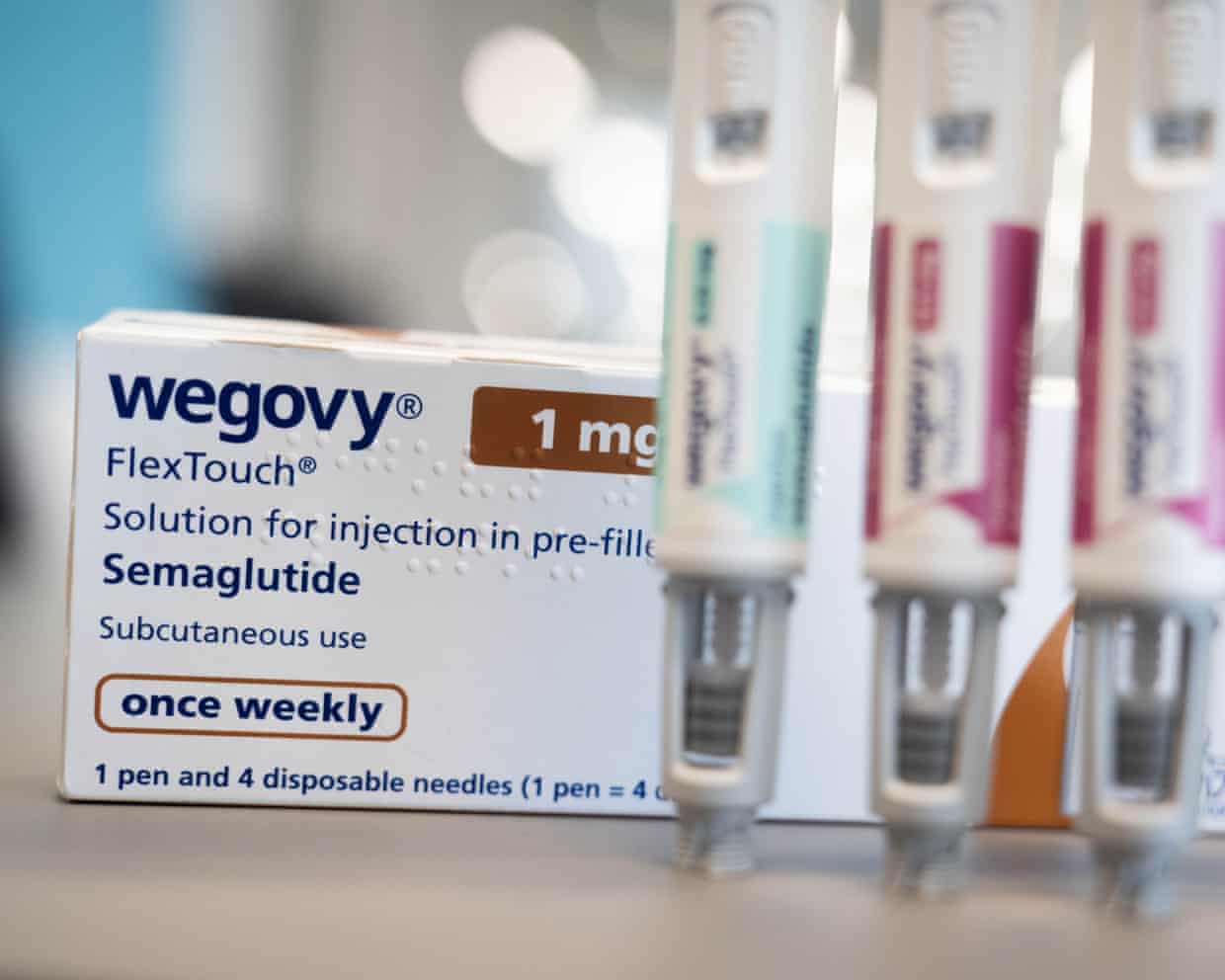
Wegovy and Ozempic maker forecasts sharp drop in revenue for 2026

Santander takes fresh swipe at City watchdog as its car loan scandal bill tops £460m