Mitchell Starc’s bat-and-ball double whammy at dusk propels Australia into the light | Geoff Lemon

England endured their tormentor’s late batting stand and when tourists surrendered to 97 for three the bowler attackedIf you really squinted – perhaps with the aid of a 36-hour plane trip or a handful of 1970s anxiety medication – there was a time when you could have claimed England had pulled off a tactical masterstroke,When the looming threat of the day was Mitchell Starc bowling in the gloaming at around 6pm Brisbane time, perhaps the smart play was to let him bat in the hot sun for four hours first, tuckering him out so your openers could smash him,It may have been a calculation Starc also considered when wondering whether to throw the bat or to keep on grinding out runs,In the end, he valued more that each of them added to Australia’s lead,The team’s principal bowling weapon burnished his series contribution with 77 runs from 141 balls, 22 runs below his highest score and three deliveries below his longest.
Scott Boland similarly produced his second-longest innings, riding shotgun with an unbeaten 21 from 72 balls, a partnership that wore England thin.In a world where Test cricket is speeding up, it is interesting how the newest tweak to the day-night format creates an incentive for old tactics to come back in.The defensive vigil has always been key to the game, as much as the England setup seems to think fast scoring is the only thing that interests anyone.It turns out that while crowds of people can be exceptionally thick, they can also be more intelligent than you might think.For those watching at a ground, there is always appreciation for a tactically astute slowdown.
That’s what Starc achieved, emerging early in the first session at the fall of Michael Neser’s wicket, and batting deep into the second, taking Australia from 383 for seven all the way up to 491 for nine.The real point, more than the lead that ended up at 177 as the last pair breached 500, was to bat time.What mattered for Australia was to bowl with a new ball at twilight.Where late-innings batting can sometimes be rudderless, this need gave a very clear direction, something to play for, with each over Australia passed representing a little win.Hence the steady and sensible accumulation, with Starc farming the strike for much of the 75-run stand with Boland, only occasionally expressing himself with a boundary lash when the offer was too tempting.
England’s defensive approach, spreading the field while he was on strike as if Boland was the only dismissable batter, let him play the way he wanted,Once the punishment was done, Zak Crawley and Ben Duckett did start without fear at dusk, lashing 48 off 46 balls in a hectic opening passage,But for Australia the trade-off was worth it,Even if Starc’s fatigue was a factor in his wicketless burst – having struck in his first over in the three previous innings this series – his batting had left a huge buffer for less spectacular bowling options such as Neser, bowling straight and skiddy and waiting for a mistake,Even for those who make no claims to coaching cricket, that a straight drive is supposed to go down into the ground at the earliest opportunity is a fundamental point of batting.
That so many England versions in this match have done the opposite, with several from Crawley in the first innings before Pope and Duckett preceded him in the second, says something about their approach.Driving on the up on a fast pitch in Perth meant miscues flew to the cordon, while slower bounce here led to similar shots lifted straight.Crawley’s several strikes just past a bowler and Duckett’s dropped catch were warning enough, but Pope and Crawley nonetheless stayed in the lemming loop until they fell the same way.Sign up to Australia SportGet a daily roundup of the latest sports news, features and comment from our Australian sports deskafter newsletter promotionEngland survived Starc, but still surrendered their position to 97 for three.At which point, back he came.
After a rest, there was pace and there was width outside off-stump.With less than an hour to stumps, there was an England player who needed to ignore it, but he wafted a drive.The culprit was Joe Root, centre of the droughtbreak story and of English resistance in the first innings, underlined their plight.Starc added Jamie Smith in the same fashion not much later, after Boland nicked off Harry Brook, having earlier bowled Duckett.On a day when England had hoped that pair would hurt them in only one discipline, back came the pain in the other.
Like his tilted seam delivery, Starc can get it going both ways.

UK first-time buyers in best position to snap up property in a decade, data shows
Buyers attempting to get on to the property ladder in the UK have received a lift, after figures from Halifax showed they are in the best position to snap up a home in a decade.Britain’s biggest mortgage lender said that the average price of a UK property hit a record high of £299,892 in November, after a marginal month-on-month rise.However, Halifax said when property prices were compared with average incomes, affordability was at its strongest since late 2015.The lender added that taking into account higher interest rates – the average two-year fixed mortgage rate is 4.85%, according to Moneyfacts – mortgage costs as a share of incomewere at their lowest level in about three years

Skipton in Yorkshire named happiest place to live in Great Britain
It is nicknamed “the gateway to the Dales”, is home to one of England’s best-preserved medieval castles and, for trivia fans, was the birthplace of half of Marks & Spencer. Now, the Yorkshire market town of Skipton has been named “the happiest place to live” in Great Britain.It received the accolade from the property website Rightmove, which runs a “happy at home” index that is now in its 14th year. The survey asks residents how they feel about their area based on a range of factors.With its picturesque location on the edge of the Yorkshire Dales, Skipton was ranked particularly highly for its access to nature and green spaces, the friendliness of the people and access to essential services such as schools and doctors

‘Tough market conditions’ hit UK half-year retail sales at Frasers Group
The owner of Sports Direct and Flannels has said sales have fallen at its UK retail businesses amid heavy discounting by rivals and “very subdued” consumer confidence.Frasers, which is controlled by the former Newcastle United owner Mike Ashley, said sales at its UK sports division were down 5.8% in the six months to 26 October to £1.3bn despite growth at the main Sports Direct chain because of “planned decline” at its Game outlets and the Studio Retail online arm.Michael Murray, the chief executive of Frasers Group, which also owns House of Fraser department stores, Jack Wills and dozens of other brands and a number of shopping centres, said “market conditions are tough” and “consumer confidence is very subdued”

Dryrobe wins trademark case against rival waterproof changing coat D-Robe
Dryrobe, the maker of huge waterproof towel-lined coats favoured by cold water swimming fans, has won a trademark case against a smaller label that must now stop selling items under the D-Robe brand within a week.A judge at the high court in London ruled the company was guilty of passing off its D-Robe changing robes and other goods as Dryrobe products and knew it was infringing its bigger rival’s trademark.The ruling described a Dryrobe as “an oversized waterproof coat with a towelled lining, designed for surfers or swimmers to change under whilst also drying them, keeping them warm, and protecting them from the weather”.The company has rigorously defended its brand against being used generically by publications and makers of similar clothing and is expected to seek compensation from D-Robe’s owners for trademark infringement.Dryrobe was created by the former financier Gideon Bright as an outdoor changing robe for surfers in 2010 and became the signature brand of the wild swimming craze
Budget uncertainty triggers plunge in UK construction activity; Trustpilot shares slump after short-seller claims – as it happened
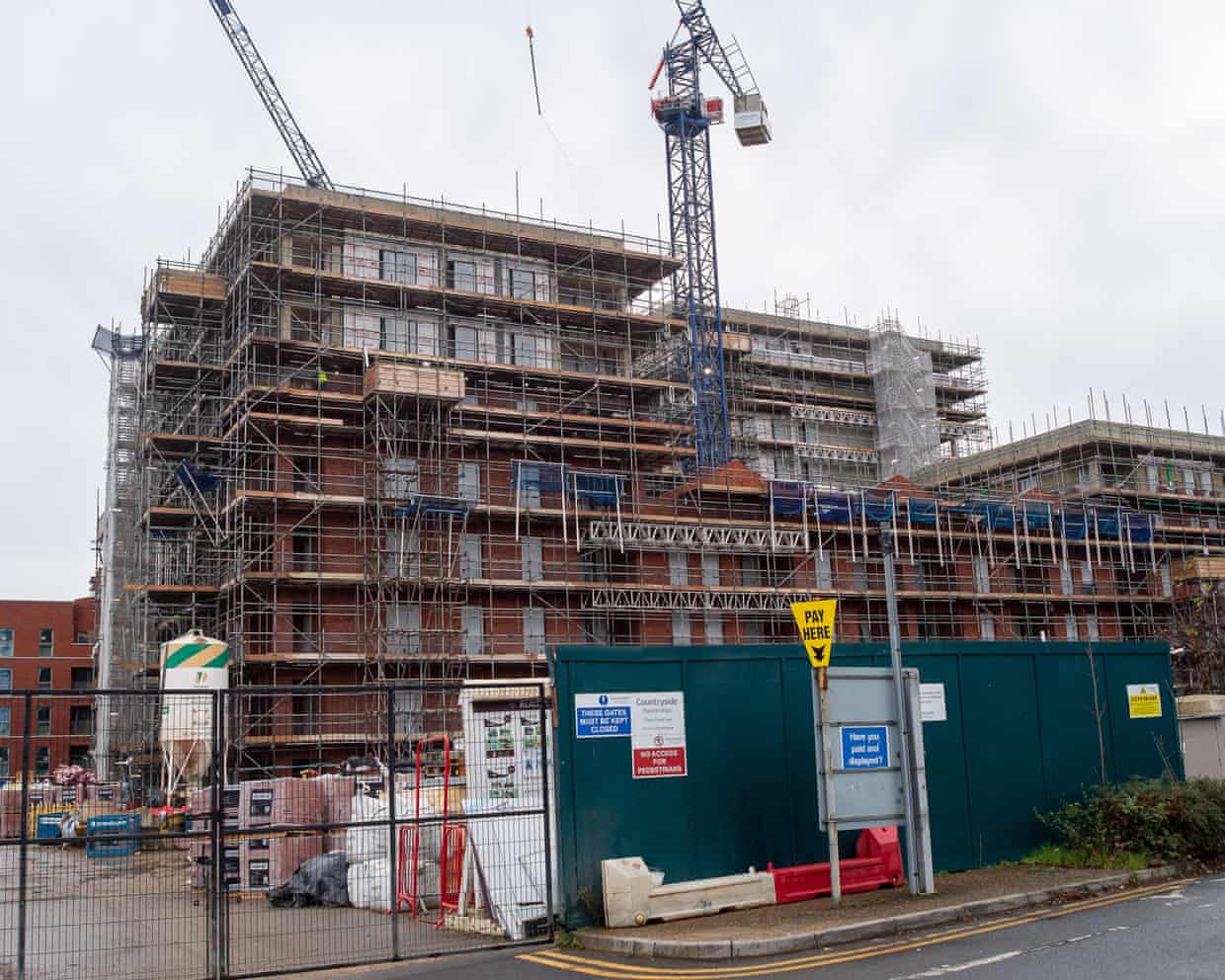
Newsflash: Britain’s construction sector has suffered its sharpest downturn since the first Covid-19 lockdown forced building sites to shut five and a half years ago.Activity across housebuilding, commercial building work and civil engineering all tumbled last month, a new survey of puchasing managers at building firms has found.Construction firms are blaming fragile market confidence, delays with the release of new projects and a lack of incoming new work.The report, by data firm S&P Global, shows there was “a sharp and accelerated reduction in output levels across the construction sector”. Many builders reporting that market conditions were challenging, with new orders slumping at the fastest rate in five and a half years, and job cuts rising
Rachel Reeves will not be investigated over pre-budget briefing, FCA says
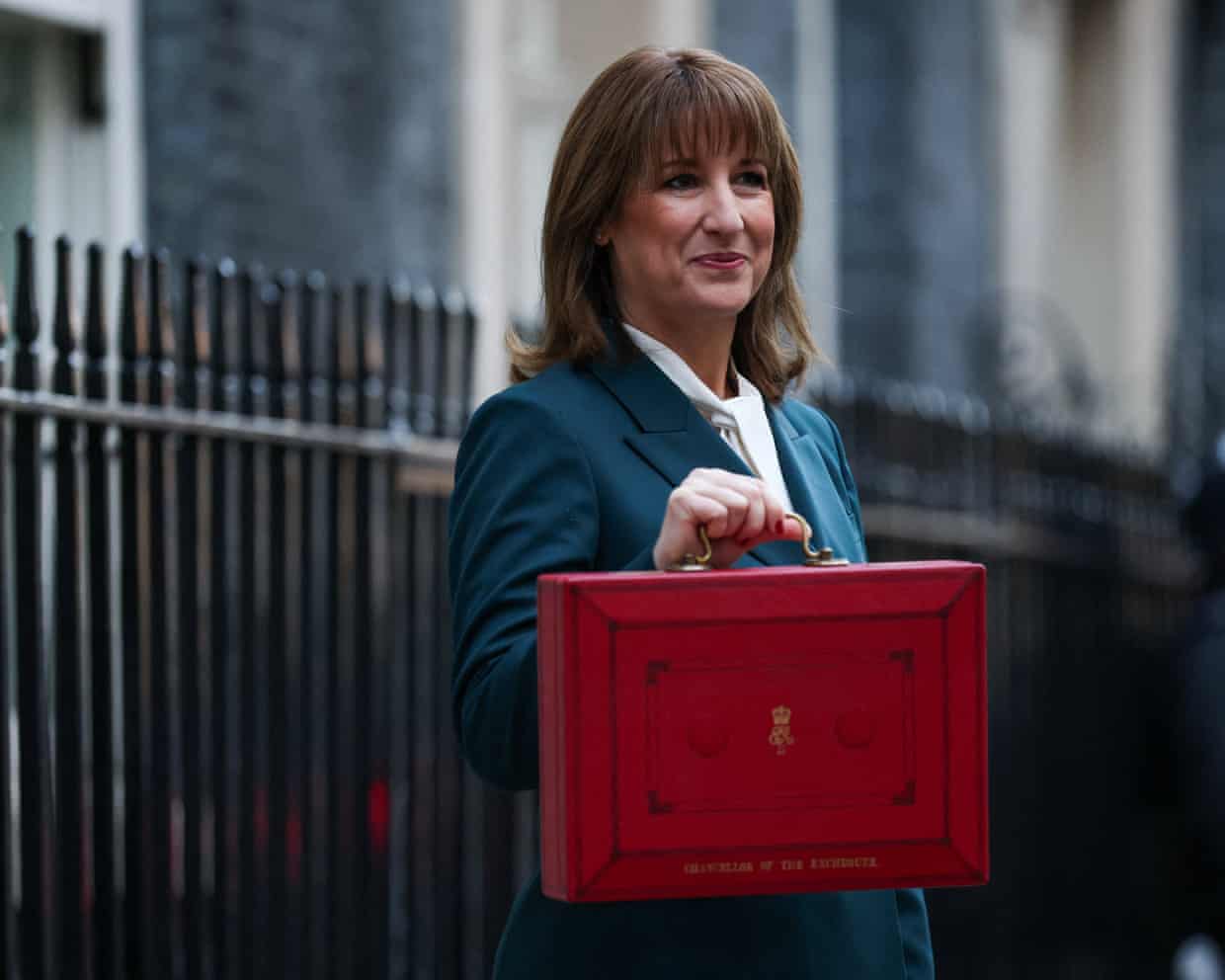
The UK’s financial regulator has decided not to immediately investigate Rachel Reeves and the Treasury over pre-budget briefings but left the door open for further examination of what the Conservatives claimed amounted to market manipulation.In a letter addressed to the chair of the Treasury committee, Meg Hillier, the the chief executive of the Financial Conduct Authority (FCA) said the regulator had turned down requests by politicians including the shadow chancellor, Mel Stride, to open an inquiry into briefings made before last week’s announcement by the chancellor.Nikhil Rathi said the FCA had “not commenced an enforcement investigation” into potential market abuse, but added that the regulator would consider the findings of a Treasury inquiry into pre-budget leaks.On Wednesday, the Treasury minister James Murray said the department’s permanent secretary, James Bowler, would review “security processes” to inform future events. He said the inquiry had the “full support” of Reeves and the “whole Treasury team”

BP to scrap paid rest breaks and most bank holiday bonuses for forecourt staff

Financial markets now certain the RBA will hike interest rates in 2026

‘Urgent clarity’ sought over racial bias in UK police facial recognition technology

New York Times sues AI startup for ‘illegal’ copying of millions of articles

Verstappen on pole for Abu Dhabi F1 title decider but Norris hot on his heels

Noah Caluori brings the speed to help Saracens thrash depleted Clermont