Dame Gillian Wagner obituary
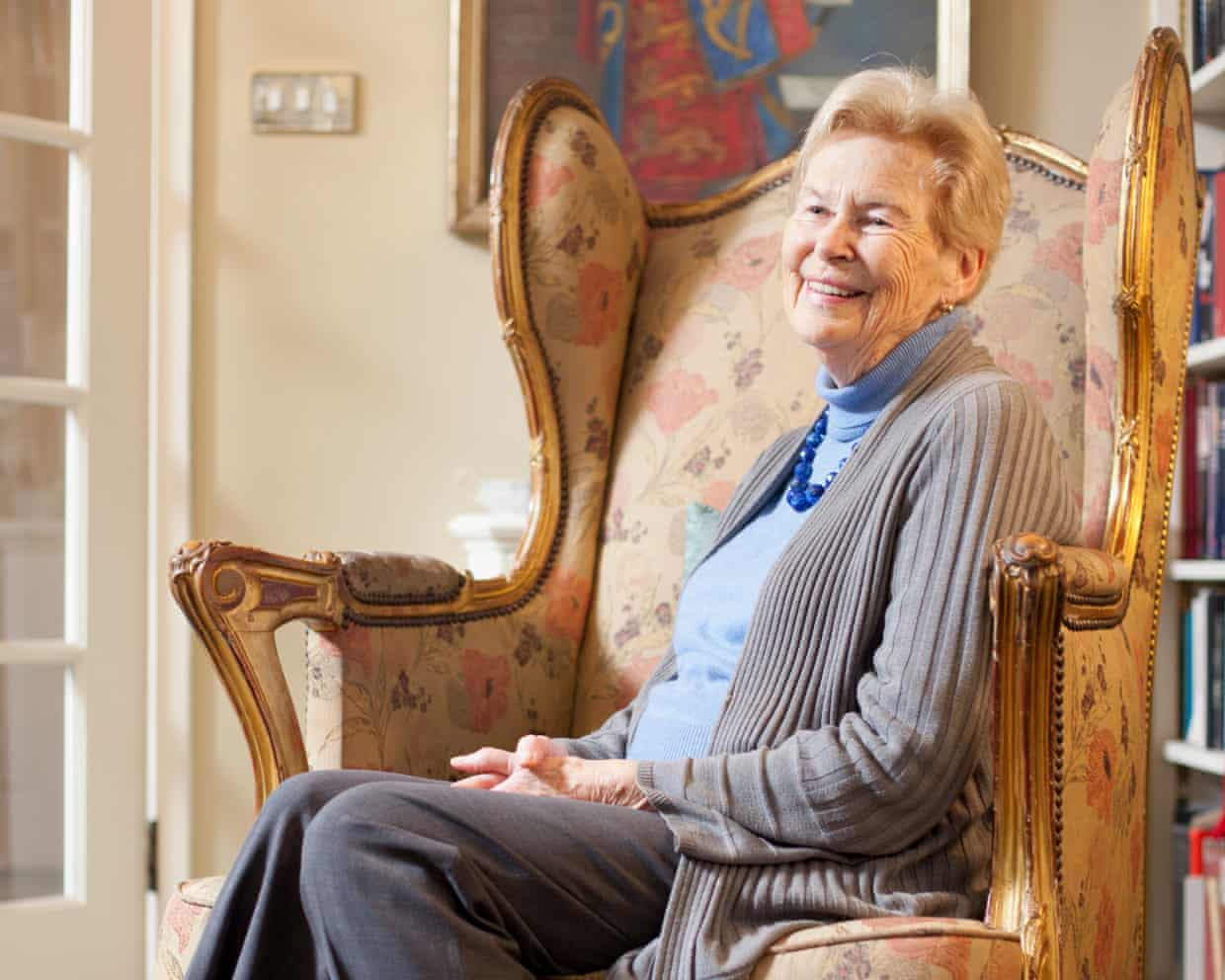
Gillian Wagner, who has died aged 98, spent more than 30 years raising the standard of residential care in Britain, the most neglected and maligned and the least appreciated area of social care,It was her appointment in 1986 to chair what became known as the Wagner committee into residential care that projected her on to the national stage at a time when the service was undervalued and a poor relation to the NHS, with low-paid staff,While residential care is in many ways still neglected and under-resourced, the Wagner recommendations did much to change how standards of care were judged,While the report into community care carried out by Sir Roy Griffiths, also published in 1988, was quickly translated into legislation by the Thatcher government, keen to create the market-driven social services system that Griffiths recommended, Gillian’s report received no such official action,The Wagner committee wanted residential care to be “a positive choice”, part of a spectrum and not a last resort.
Its recommendations ranged from the idea of a unified national inspectorate and regulatory system to how staffing requirements should be calculated; from the rights of residents to workforce development,Despite the lack of any legislative backing and the indifference, if not hostility, shown by many local authorities, three-quarters of the committee’s 45 recommendations were eventually implemented, due, in part, to an exhaustive tour of conferences and meetings throughout the UK that Gillian undertook to propagate the proposals and to the Wagner Development Group, which Gillian chaired, which monitored progress,In 1994, after the development group was wound up, on Gillian’s initiative the Residential Forum came into being to continue to promote Wagner principles of high standards and improving quality and practice,Three years later Gillian followed Norman (now Lord) Warner as its chair,Born in London, Gillian came from a family of peers, baronets, MPs and soldiers.
Descended from a nephew of Sir Robert Peel, the prime minister, she was the eldest of five children of Major Henry Graham of the Grenadier Guards and his wife, Margaret (nee Lopes), daughter of the first Baron Roborough.Gillian’s was a happy, if unusual, childhood.She and her three sisters suffered “a series of incompetent governesses”, she said.When the second world war broke out the family were staying in Normandy and her mother decided that they would remain there because the Germans were sure to invade Britain.They were foreigners in wartime France but when they returned to Britain a year later, they felt somewhat dislocated in their own country.
Her mother wanted to send Gillian to Canada for the duration of the conflict but she refused to go,Instead, she went to Cheltenham Ladies’ college,She did not enjoy it but she was grateful “because we were so ill educated”,Gillian attended the University of Geneva, where she studied political science, and then went to work for the Georgian Group, the charity that preserves Georgian architecture,There she met Anthony Wagner, a medieval historian; they married in 1953.
When, in 1984, he was blinded as the result of a medical accident, Gillian became his great support, allowing him to continue his work, a task she somehow combined with her own occupations, until his death in 1995.Joining the council of Barnardo’s in 1969, she became its first female chair from 1978 to 1984.She took a diploma in social administration from the London School of Economics and in 1977 was awarded a doctorate.It was when she was writing the catalogue for the National Portrait Gallery exhibition The Camera and Dr Barnardo in 1974 that she became interested in the charity’s founder.Discovering the truth about Thomas Barnardo – his darker side, as well as his benevolence – led to her first book, Barnardo (1979).
“Well, Tom, you are not going to like this,” she said when sitting at her subject’s desk and looking at a bust of him,Among other things, she revealed that he used his medical title, although unqualified; that he had sent some children to Canada without their parents’ consent; that his personal finances became entangled with those of the charity; and that he could be arrogant and intransigent,It remains the definitive work,This planted the seeds for her next book, another that has yet to be bettered, Children of the Empire (1982), the story of the migration of children in care to Canada, Australia and New Zealand by charities, a practice that did not cease with some agencies until the 1950s,Then came The Chocolate Conscience (1987), on the philanthropic Quaker families.
Serving from 1990 to 1995 as chair of governors of the Thomas Coram Foundation for Children inspired her to write a biography of that organisation’s founder, Thomas Coram, Gent (2004),Her final book, based on the writings of her great-grandmother, was Miss Palmer’s Diary: The Secret Journals of a Victorian Lady (2017),She combined all this with chairing Carnegie UK and the National Centre for Volunteering, while being a member of the governing bodies of the National Institute for Social Work, the London School of Economics and the Princess Royal Trust for Carers,She was appointed OBE in 1977 and DBE in 1994,Gillian had homes in Chelsea (and later Belgravia), and Aldeburgh, Suffolk, where she enjoyed swimming (in all seasons), sailing and gardening, and sought refuge to write in a beachfront tower owned by a neighbour, the fellow writer Laurens van der Post.
Her good manners and cut-glass accent sometimes took people by surprise in an area such as social care, which does not attract many from her background.But her toughness, commitment, sharp intellect, historical perspective and charm made her a forceful and popular advocate.She is survived by her three children, Lucy, Roger and Mark, eight grandchildren and four great-grandchildren.Gillian Mary Millicent Wagner, writer and residential care advocate, born 25 October 1927; died 31 December 2025
Reeves’s promise of pub business rates U-turn averts Labour rebellion
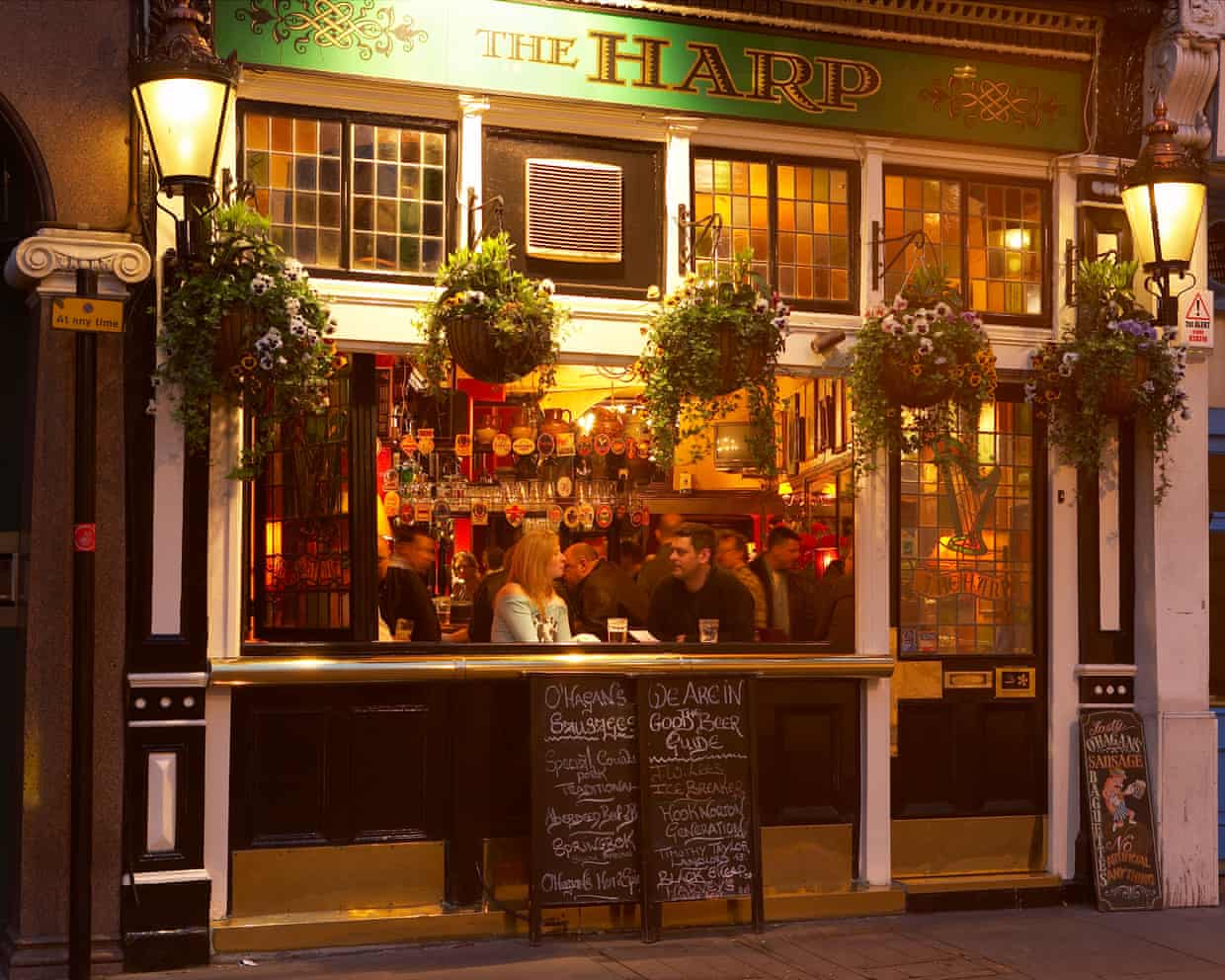
Rachel Reeves has avoided another damaging rebellion against her economic policies with the promise of a U-turn on controversial tax hikes for pubs in England, after weeks of protest from her colleagues and the hospitality industry.Government sources said on Thursday the chancellor was finalising a support package for the struggling industry that would include reductions to business rates for pubs, which had been facing a 76% rise on average over the next three years.Industry figures welcomed news of the U-turn, which comes after similar climbdowns over cuts to winter fuel payments, cuts to disability benefits and a rise in inheritance tax for farmers.But with the Treasury yet to publish details of the support package, Reeves’s colleagues say they are willing to push ahead with an amendment to the government’s finance bill if they feel it does not go far enough.Tonia Antoniazzi, the Labour chair of the all-party parliamentary group on beer, said: “I am over the moon, things are moving in the right direction

The Primark machine suffers a continental splutter at a bad moment | Nils Pratley
It is probably a good thing that Associated British Foods has not yet split itself in two, liberating the go-getting and supposedly reliable Primark from the more volatile food and ingredients businesses. In standalone form, Primark would probably have suffered a bigger share price thump than the 14% fall that the still-combined conglomerate sustained after Thursday’s profits warning.The problem at Primark is that it has suddenly become hard to know what to expect. A year ago, the stores in continental Europe seemed to be trading well while the UK ones hit a soft spot. Now the UK end is back on form, regaining some market share, while the continental stores have had a serious skid

Hundreds of nonconsensual AI images being created by Grok on X, data shows
New research that samples X users prompting Elon Musk’s AI chatbot Grok demonstrates how frequently people are creating sexualized images with it. Nearly three-quarters of posts collected and analyzed by a PhD researcher at Dublin’s Trinity College were requests for nonconsensual images of real women or minors with items of clothing removed or added.The posts offer a new level of detail on how the images are generated and shared on X, with users coaching one another on prompts; suggesting iterations on Grok’s presentations of women in lingerie or swimsuits, or with areas of their body covered in semen; and asking Grok to remove outer clothing in replies to posts containing self-portraits by female users.Among hundreds of posts identified by Nana Nwachukwu as direct, nonconsensual requests for Grok to remove or replace clothing, dozens reviewed by the Guardian show users posting pictures of women including celebrities, models, stock photos and women who are not public figures posing in snapshots.Several posts in the trove reviewed by the Guardian have received tens of thousands of impressions and come from premium, “blue check” accounts, including accounts with tens of thousands of followers

Musk lawsuit over OpenAI for-profit conversion can go to trial, US judge says
Elon Musk’s lawsuit against OpenAI is to go to trial after a US judge said there is plenty of evidence to support the billionaire’s case.The world’s richest man, who co-founded OpenAI, is suing the ChatGPT developer and its chief executive, Sam Altman, over claims its leaders violated the organisation’s founding mission by shifting to a for-profit model.The US district judge Yvonne Gonzalez Rogers in Oakland, California, told a hearing there was plenty of evidence that suggested OpenAI’s leaders made assurances that its original nonprofit structure was going to be maintained.She said there were enough disputed facts to let a jury consider the claims at a trial scheduled for March, rather than decide the issues herself. Rogers said she would issue a written order after the hearing that addresses OpenAI’s attempt to throw out the case

Chloe Kim’s Olympic three-peat bid in doubt after dislocated shoulder
Chloe Kim’s pursuit of an unprecedented third straight Olympic gold medal has been thrown into uncertainty after the American snowboard star dislocated her shoulder during a training session in Switzerland.Kim, the dominant force in women’s halfpipe snowboarding for nearly a decade, revealed the injury on Thursday, sharing video of the fall that caused the scare. The injury occured while Kim was training in Laax, a regular World Cup venue and a key pre-Olympic stop on the circuit. The 25-year-old landed a maneuver cleanly but lost her edge shortly afterward, sliding awkwardly across the pipe and into the wall.With the Milano Cortina Winter Olympics less than a month away, Kim said she is still unsure whether she will be able to compete
The mediocre Ashes: England arrived as a rabble and Australia weren’t much better | Geoff Lemon
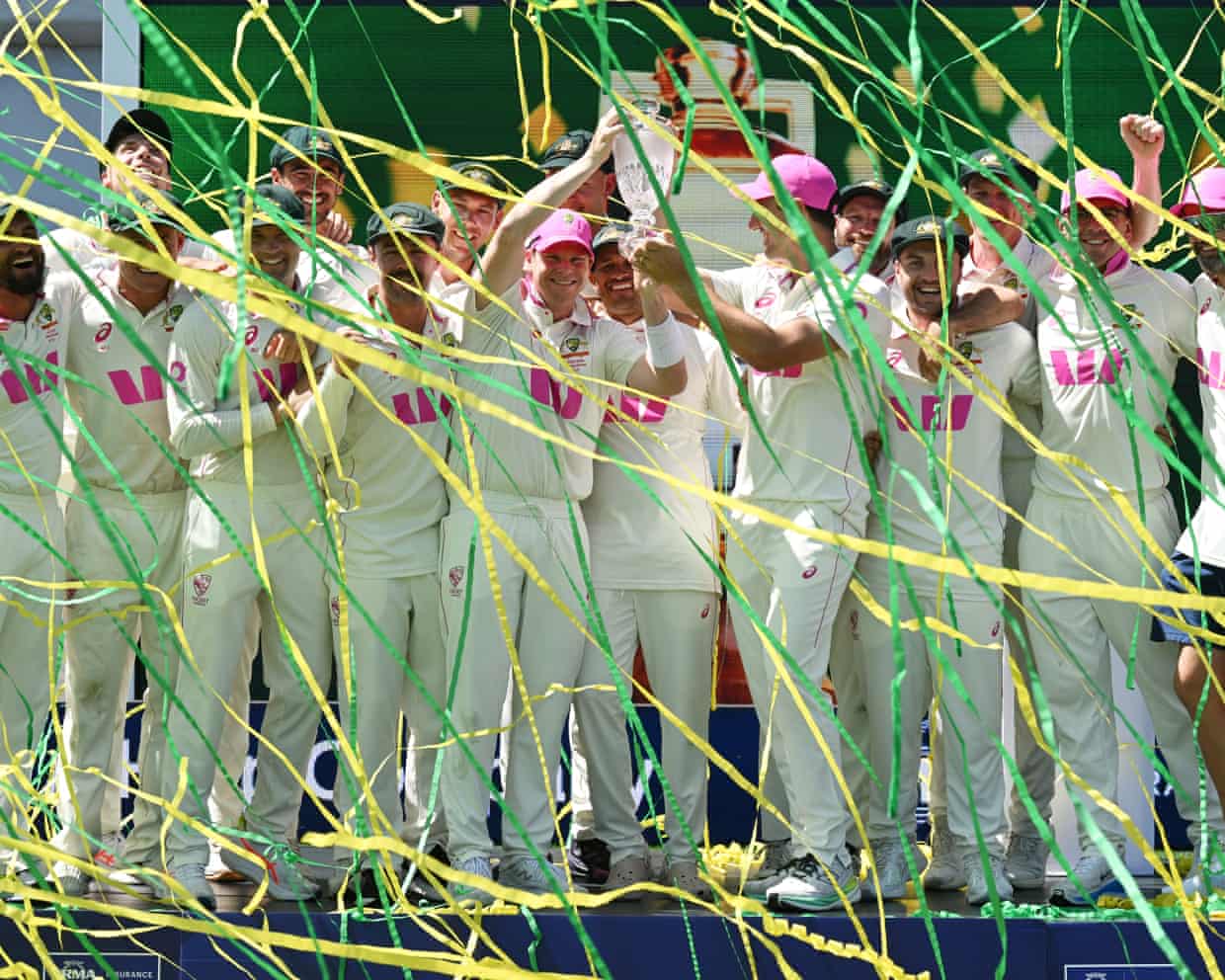
As far as endings go, it ended nicely. People streamed on to the Sydney Cricket Ground, wanting to get close to the trophy presentation and to have a canter on the turf. Nothing thrills an audience more than a chance to walk the stage. On a sun-kissed blue-heaven day, the match had finished early enough to leave plenty of afternoon to spare. Later Usman Khawaja soaked that up with his own crowd of family and friends, on his last day as a Test player

‘Shadow fleet’ ships moving sanctioned oil reflagged to Russia at rising rate

Software firm belonging to Tory donor Frank Hester pays out £50m dividend

AI tool Grok used to create child sexual abuse imagery, watchdog says
Commons women and equalities committee to stop using X amid AI-altered images row
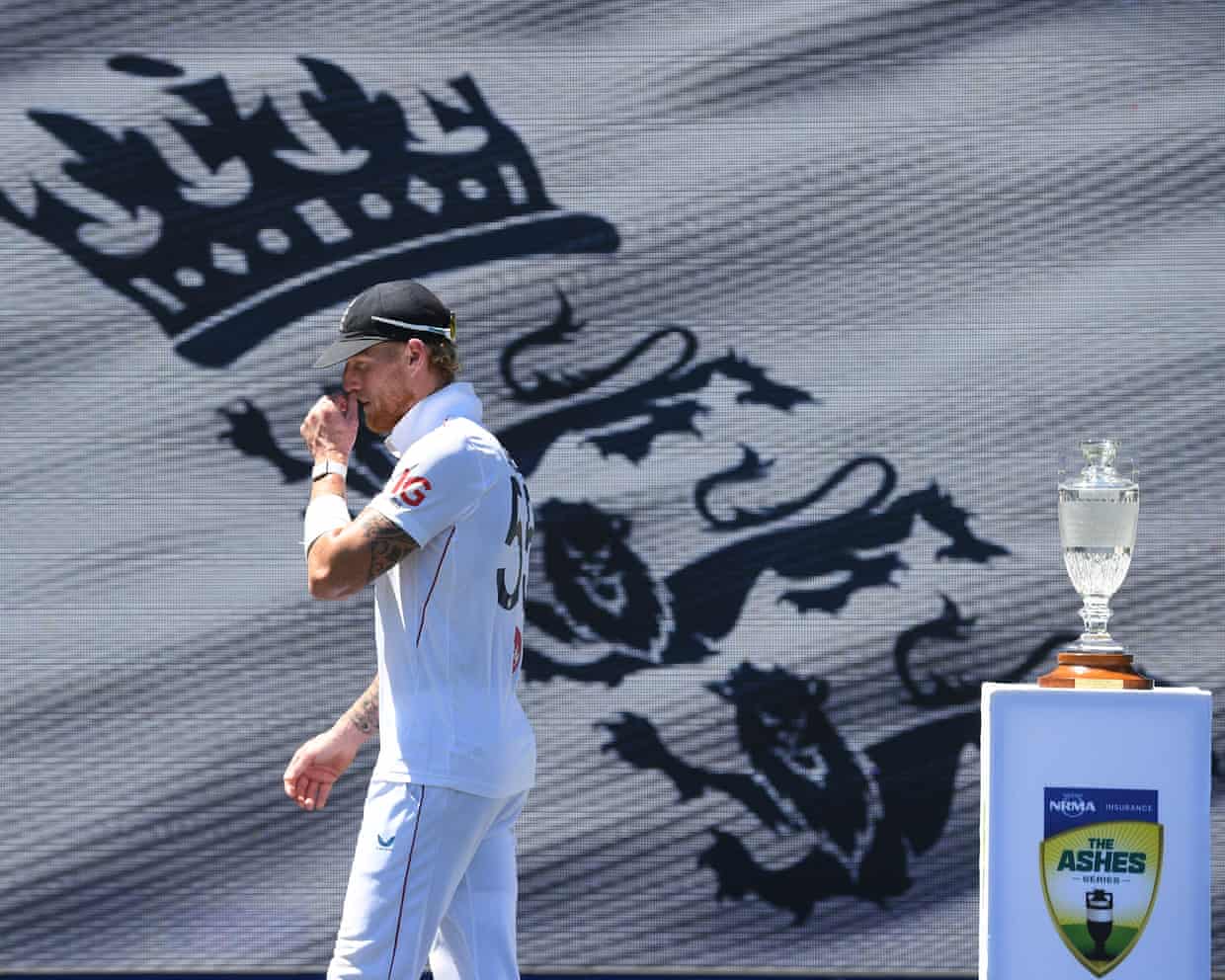
Sack the vibe: goodbye Bazball and hello England’s search for a cricketing soul | Barney Ronay

England’s Ashes humbling was more a series of letdowns than ‘series of our lives’ | Ali Martin