Nearly fivefold increase in children in unregulated social care settings in England
Ministers must get to grips with the “national scandal” of England’s shadow child social care system, the children’s commissioner has warned, as a report reveals the number of children in unregulated settings has increased by more than 370% in five years,Some of the most vulnerable children in England are being temporarily placed in unregulated caravans, Airbnbs and holiday camps, which risk the “accumulation of increasing levels of harm for children who have already faced enough distress for several lifetimes”, according to the report,Analysis of Ofsted data has shown that cases of unregistered homes in England increased from 144 in 2020-21 to 680 in 2024-25, which experts say is likely to be an underestimation of the true figure, according to the policy analysts at Public First, who conducted the research for the charity Commonweal Housing,The Care Standards Act 2000 legally requires all children’s homes to be registered with Ofsted,Private companies have been accused of charging local governments “exorbitant” fees to look after children in unsuitable settings when a bed in an Ofsted-inspected children’s home or fostering placement cannot be found.
According to the report, it was not unusual for for-profit providers, which operate more than 80% of child residential homes in England, to charge £20,000-£40,000 a week for each child.Social workers and child social care leaders have told the Guardian that they have been given the “Hobson’s choice” of placing a child – often with the most complex needs – in a last-minute uninspected setting or leaving them at a police station or on the street.Senior practitioners told the report’s authors that unregistered placements had changed from something they might see “once every six months” to something that crosses their desk “at least once a week”.The report’s author, Gil Richards from Public First, said not every unregistered placement was poor but because of the nature of the shadow system the “state just doesn’t know what is happening to these children”.Some registered providers feared taking high-risk children would damage their Ofsted ratings and would rather leave beds empty than accept a child linked to gangs, who repeatedly went missing, or who displayed extreme behaviour.
One social worker said the youngest child she had placed in an illegal setting was just five; another said they had been forced to place a child in a caravan.A former director of children’s services at a local authority said senior figures were aware they were behaving unlawfully but had to act “when there was no other solution”.The use of illegal care homes was a “national scandal”, said the children’s commissioner, Dame Rachel de Souza, who published a report in January which found that 669 children were in unregistered homes on 1 September 2025.“I have been warning about this practice for years, and I need leaders at every level to grip it urgently,” she said.“Hundreds of children with complex needs each year are in placements operating without regulation or safeguards because there are simply not enough good, safe options to give them the quality of care they need.
”The children’s minister, Josh MacAlister, said those running illegal settings “must be registered with Ofsted or face serious consequences”.He added: “We are cracking down on the scourge of illegal homes through new laws that give Ofsted the power to issue unlimited fines and shut down illegal homes.”Ashley Horsey, the chief executive of Commonweal Housing, said the report was “very worrying”, adding: “It tells us that hundreds of children are finding themselves at the sharpest end of a failure of policy and a failure of regulation, when local authorities have no other option but to place them in unregulated settings.”The extreme risk such settings exposed vulnerable children to was demonstrated by the recent case of an at-risk teen who was put in an unregistered home, plied with alcohol and sexually assaulted by the two ex-soldiers being paid by a private firm to care for her.The 15-year-old had been moved 300 miles to escape sexual exploitation, LBC and the Bureau of Investigative Journalism first reported.
The report from the children’s commissioner found that 44% of children in unregistered placements were in an illegal children’s home and 7% were in AirbnBs, holiday camps or activity centres.The average placement lasted six months, but 89 children (13% of the total) had been there for more than a year.One child had been in a “holiday camp/activity centre” for almost nine months.The weekly cost of such illegal placements was £10,500; 36 of the children looked at were in placements that had each cost in total more than £1m.In January, the public accounts committee, described the children’s residential care market in England as “dysfunctional”, with one in 10 children in an illegal, unregistered home.
No unregistered provider has been prosecuted for running an unlawful setting,Ofsted told the Guardian it had started several prosecutions but as they were going through the courts it could not comment further,“Too many children are being placed in unlawful settings where they’re at risk of harm,The use of these placements must stop,” said a spokesperson,“Ofsted is working hard to investigate unregistered children’s homes and compel them to either register or close.
”Prosecuting was a “lengthy and expensive process”, it said, but added that measures in the children’s wellbeing and schools bill would “allow us to act more quickly”,Government sources said ministers had made “huge progress in a short space of time on an area of government that has been ignored for far too long”, pointing to an £88m drive to create 10,000 new foster care places,The best public interest journalism relies on first-hand accounts from people in the know,If you have something to share on this subject, you can contact us confidentially using the following methods:The Guardian app has a tool to send tips about stories,Messages are end to end encrypted and concealed within the routine activity that every Guardian mobile app performs.
This prevents an observer from knowing that you are communicating with us at all, let alone what is being said.If you don’t already have the Guardian app, download it (iOS/Android) and go to the menu.Select ‘Secure Messaging’.Our guide at theguardian.com/tips lists several ways to contact us securely, and discusses the pros and cons of each.

Airlines demand UK relax noise rules and cut flight tax as fuel shortage looms
Airlines are lobbying the UK government to relax environmental and noise rules, modify passenger rights and cut taxes on flying, as they prepare for higher costs and a possible shortage of jet fuel because of the war in the Middle East.A list of policy requests submitted to ministers and the aviation regulator includes suspending the emissions trading scheme and relaxing limits on night flights, it has emerged.Airlines are also seeking to alter compensation rights for passengers by having fuel-related disruption counted as an extraordinary circumstances – meaning stranded passengers would not be entitled to payouts beyond refunds in the event of cancellations or delay.The full list of demands has emerged in a briefing document, first reported by ITV News, prepared by the trade body Airlines UK on behalf of carriers including British Airways, easyJet, Ryanair, Virgin, TUI and Jet2.The briefing for government said that if the current disruption to jet fuel supplies continued or worsened, airlines would be forced to cut flights and push up fares

Shake-up will help UK motorists without driveways to charge EVs
Households without off-street parking could soon be able to charge their electric vehicles from home under new government plans to help households cut their need for expensive fossil fuels.The government has promised to pass legislation this summer that will allow motorists to run power cables through a charging “gully” built into the pavement outside their home without the need for planning permission.This means that before the end of this year, EV owners who are not able to fit their own car chargers at home will be able to charge up from the power connection indoors.Motorists are not allowed to string charging cables across the pavement from their home but almost half of councils across the UK allow cross-pavement charging if you embed the cable in a gully. However, this still requires permission from the council

‘I’ll key your car’: ChatGPT can become abusive when fed real-life arguments, study finds
ChatGPT can escalate into abusive and even threatening language when drawn into prolonged, human-style conflict, according to a new study.Researchers tested how large language models (LLMs) responded to sustained hostility by feeding ChatGPT exchanges from real-life arguments and tracking how its behaviour changed over time.One expert not connected with the study described it as “one of the most interesting ever done into AI language and pragmatics”.Dr Vittorio Tantucci, who co-authored the research paper with Prof Jonathan Culpeper at Lancaster University, said their research found AI mirrored the dynamics of real-world disputes.“When repeatedly exposed to impoliteness, the model began to mirror the tone of the exchanges, with its responses becoming more hostile as the interaction developed,” he said

UK watchdog to investigate Telegram over alleged child sexual abuse material
Ofcom has launched an investigation into whether the Telegram messaging platform is failing to prevent the sharing of child sexual abuse material (CSAM) under the UK’s Online Safety Act.The communications regulator carried out an assessment and decided to launch an investigation after receiving evidence from the Canadian Centre for Child Protection that suggested child sexual abuse material was allegedly present and being shared on Telegram.The investigation will examine whether Telegram is failing to restrict child sexual abuse material from its site and whether it has breached the UK Online Safety Act.Suzanne Cater, the director of enforcement at Ofcom, said: “Child sexual exploitation and abuse causes devastating harm to victims, and making sure sites and apps tackle this is one of our highest priorities. It’s why we work so closely with partners in law enforcement and child protection organisations to identify where these harms are occurring and hold providers to account where they’re failing to meet their obligations

Churchill Downs strikes $85m deal for Preakness intellectual property rights
Churchill Downs has reached a deal to acquire the intellectual property rights to the Preakness Stakes, the company announced Tuesday, in a move that brings one of US thoroughbred racing’s most celebrated events under the same corporate umbrella as the Kentucky Derby.Churchill Downs Inc said it will pay $85m to buy the trademarks and associated rights to the Preakness and the Black-Eyed Susan Stakes from 1/ST Maryland LLC, an affiliate of 1/ST Racing.The agreement covers the intellectual property tied to the races, not the events themselves. Under a separate licensing arrangement, Churchill Downs will grant the state of Maryland the rights needed to continue staging the races in exchange for an annual fee.The transaction follows a 2024 agreement in which Maryland bought Pimlico Race Course from 1/ST Racing but allowed the company to retain the intellectual property rights to the Preakness and Black-Eyed Susan Stakes

Jannik Sinner says Alcaraz’s absence from Madrid Open ‘tough to swallow’
Jannik Sinner described Carlos Alcaraz’s injury withdrawal from the Madrid Open as “tough to swallow” for the tournament and believes the absence of his greatest rival will make a big difference as he tries to win a record fifth straight Masters title.“It’s a very tough thing for the tournament,” said Sinner. “Last year he didn’t play, so twice in a row is tough. And also Novak [Djokovic] is not here, it’s tough to swallow for the tournament. It is always different when Carlos and Novak are not in the draw
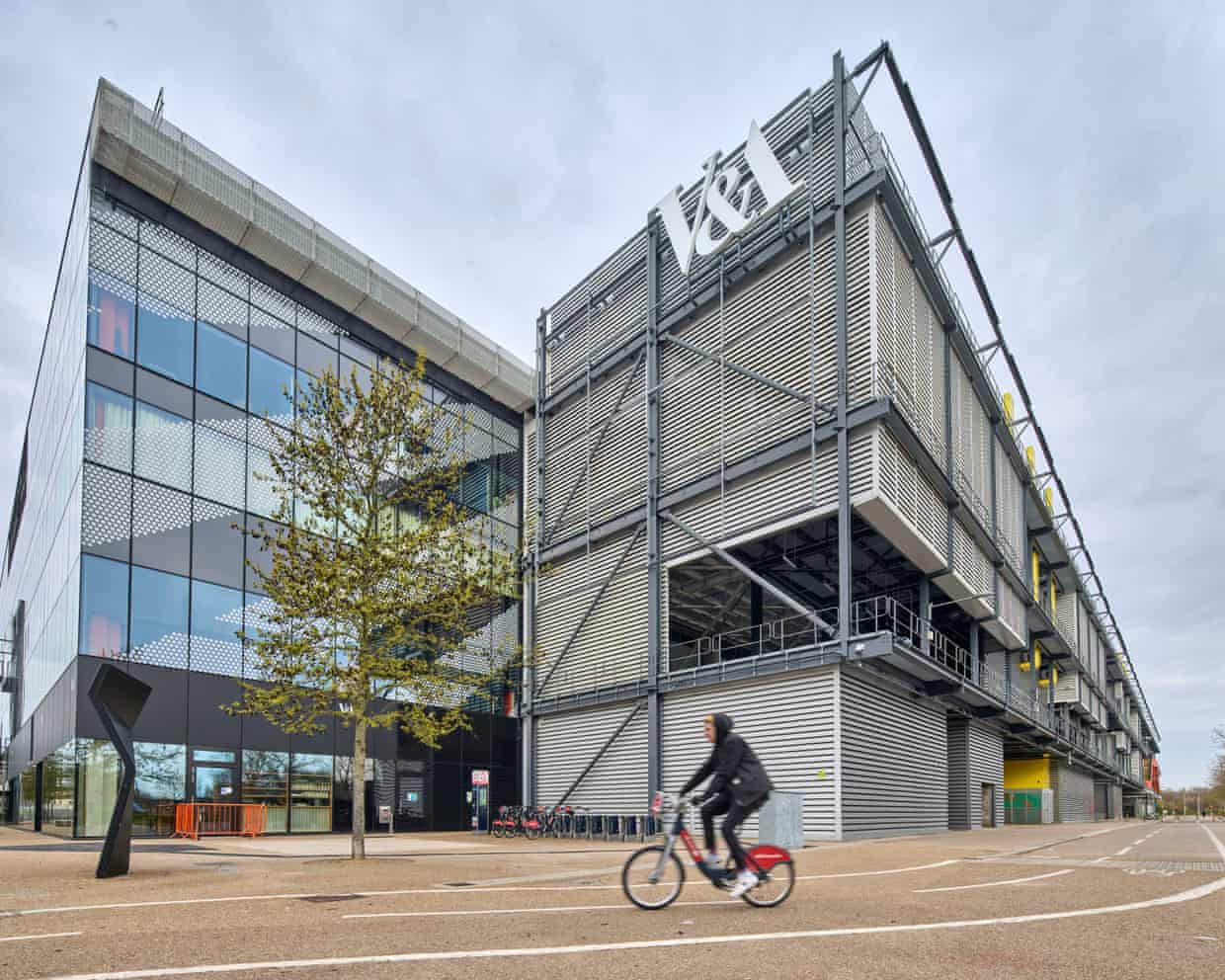
V&A East Storehouse and Norwich Castle among finalists for museum of the year
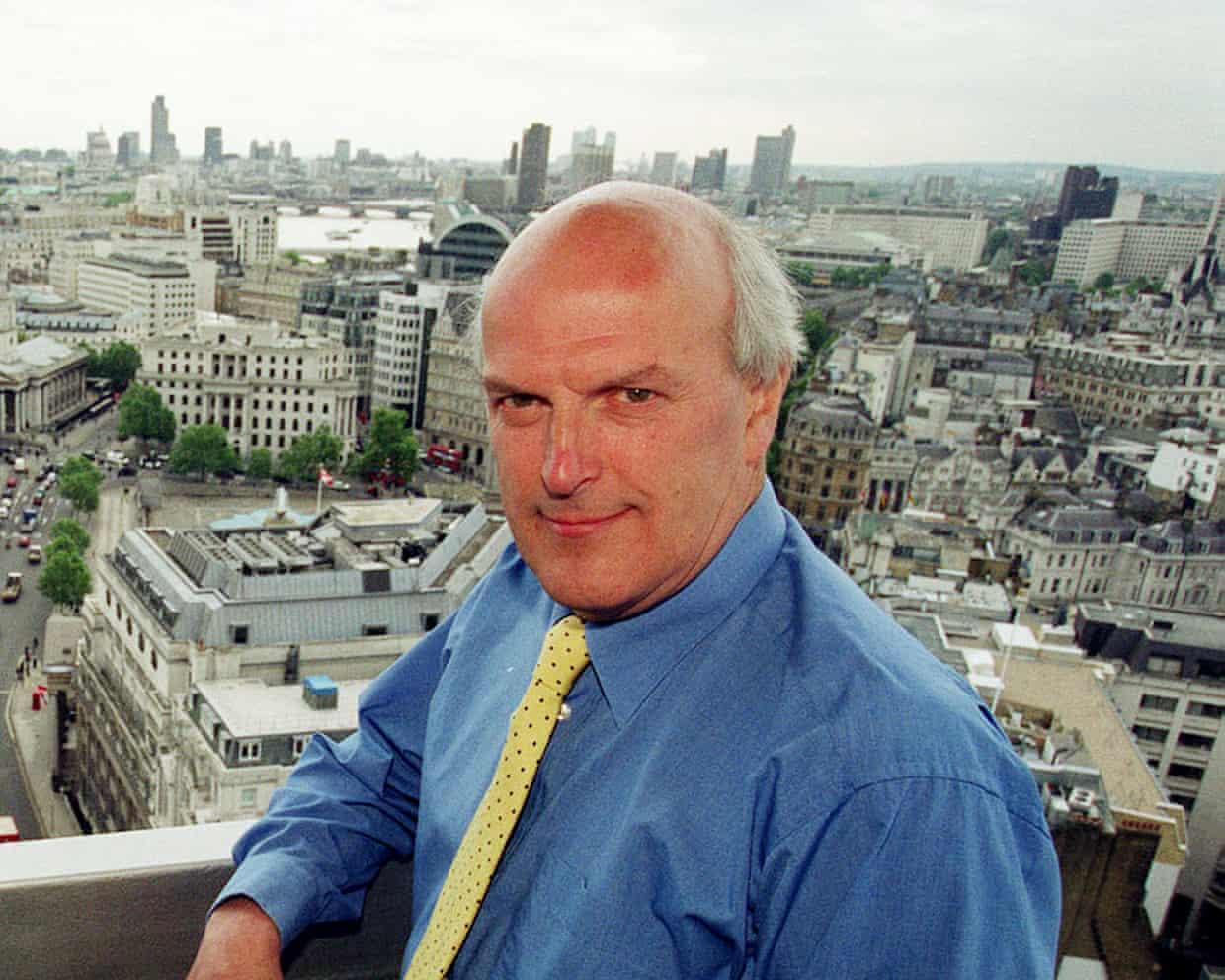
Letter: Sir Neil Cossons obituary
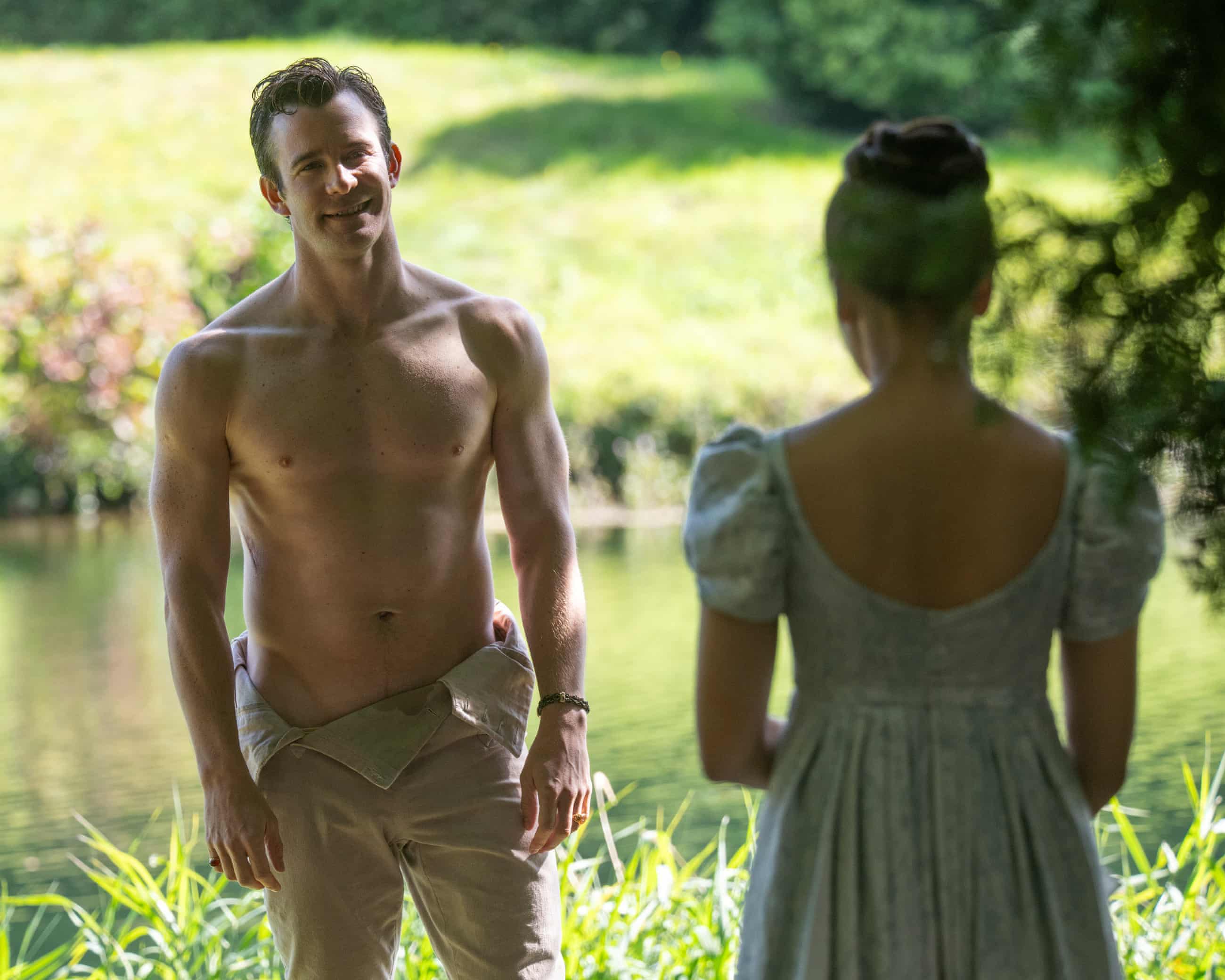
‘Women want to experience pleasure’: how the female gaze caught the attention of film, TV and fiction
Yann Martel: ‘I hate the rich people of this world – of which I’m one, because of Life of Pi’
Kae Tempest on creativity and his gender transition: ‘I’m just glad to be alive’

The Guide #239: Two successful seasons in, The Pitt has resuscitated the medical drama