Focus on communities in new towns and old | Letters
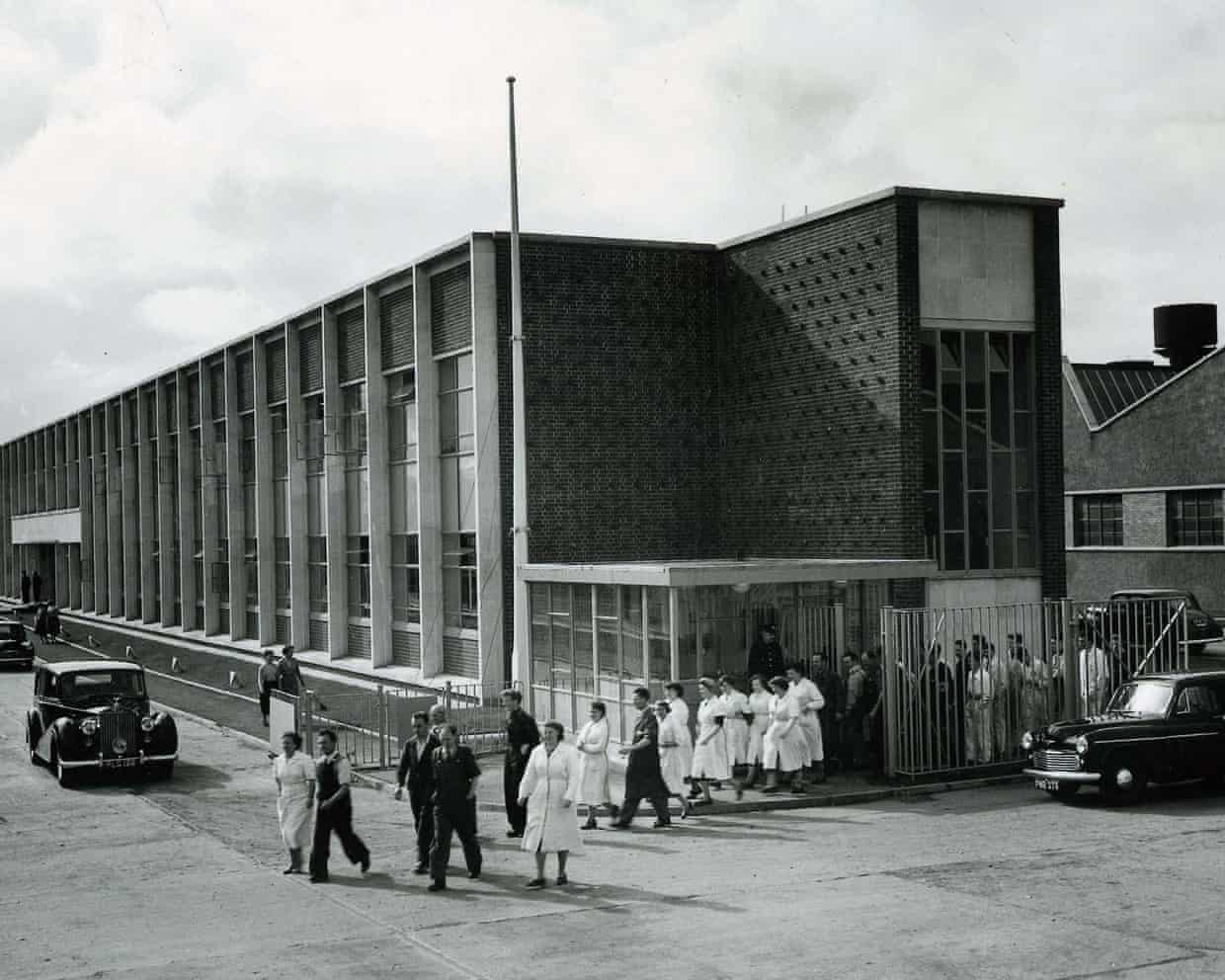
The government’s renewed enthusiasm for building new towns may make for bold headlines, but it risks missing the people who need housing most.Even senior planners involved in the postwar new towns programme have warned that the current proposals lack ambition on social housing and may not reach those in greatest need (Key figures in creation of Milton Keynes criticise UK’s new towns plan, 25 December).Other analyses suggest that new towns have historically contributed only a small proportion of the homes required and are unlikely to deliver at the scale ministers claim.Instead of pouring resources into speculative new settlements, we should focus on the towns and cities we already have – places with infrastructure, identity and communities that are being steadily hollowed out.Across the UK, redundant land, vacant upper floors, derelict retail units and brownfield sites offer enormous potential for affordable, well‑located homes.
This approach would deliver housing faster and more sustainably, and in ways that strengthen existing communities rather than displacing them.At the same time, our high streets are being drained by the gravitational pull of out‑of‑town shopping malls.Every time a retailer relocates, it accelerates decline, reduces footfall and undermines the economic and social fabric of our town centres.If we are serious about revitalising local economies, we must stop incentivising retail flight and instead reinvest in the places where people already live, work and shop.New towns may suit developers, but they will not solve the housing crisis for those who need help most.
Strengthening and repurposing our existing urban areas while protecting and revitalising our high streets would deliver more homes, more quickly, and with far greater social value.Richard Eltringham Leicester The former planners of Milton Keynes are right to criticise the government’s new towns plan for failing to meet the priority need for social housing at council rents.They are also right to stress how well the earlier new towns met this need.It nearly didn’t happen at Milton Keynes, though.The Labour government’s policy was already swinging towards owner-occupation when the city was designated in 1967, and among its board members was Stanley Morton, chairman of the Abbey National building society and previously of the Building Societies Association.
The board was undecided on the relative weight to be attached to homes for sale and homes for the corporation to rent,As the economist in the consultant team, I was charged with analysing the implications of the choices, and I prepared a report for a meeting of the board, which Mr Morton hosted at Abbey National’s headquarters in Baker Street, London,I generated forecasts of household income distribution under various assumptions and concluded that Milton Keynes would have to build at least half its housing for social rent,Otherwise it would fail to achieve the board’s objectives of social and industrial mix,I was regarded as a bit insubordinate, but my argument carried the day.
It was a close shave.Michael EdwardsHonorary professor, Bartlett School of Planning, University College London In 1981, I moved to Peterborough – “cathedral city, new town – with my partner and our two-year-old son.I had a new job, part-funded by Peterborough Development Corporation (PDC), to establish a social welfare organisation for the city.Most critically, having a job meant we were eligible for housing, and so we swapped cramped, overpriced privately rented accommodation in Brighton for a three-bedroom house and garden.Thousands of houses were being built for sale and rent, but this was only part of the picture.
PDC’s master plan addressed all aspects of making the city home for a population that was set to double.Employment, leisure opportunities, a network of safe cycle routes, and a number of discrete self-supporting neighbourhoods with schools, libraries, shops and play facilities as well as teams of community workers assisting people to settle, made the city a vibrant place for incomers and locals alike.The process of attracting public and private money to work together also acted as a catalyst for the county and city councils and the health authority to “dream big” – and deliver.Maybe the experts now expressing concern about government plans should turn their attention to protesters such as those in the village of Adlington, Cheshire, who just see more houses and cars, not people and progress, in the plans to build 20,000 new homes on their doorstep in a new standalone development.Les BrightExeter, Devon I spent almost all my career as an architect/planner in the UK’s new towns programme.
I started out as a year-out architecture student in Skelmersdale, then, having graduated from Liverpool School of Architecture, I spent the early part of my career working there,After a brief spell in private practice, I moved to East Kilbride in Scotland to work on the early planning of the ultimately abandoned new town at Stonehouse in Lanarkshire, originally proposed by Ted Heath as a gesture to economic growth in Scotland,After another six years as head of planning at East Kilbride, I was appointed chief architect and planning officer at Livingston in West Lothian, before retiring when the Conservative government eventually managed to wind up the entire programme in 1996,I have always regarded the British new towns programme as one of the most significant and successful planning initiatives of any British government,Their success was attributable in no small part, particularly in Scotland in the 80s and 90s, to continued support from government of whatever colour.
This was in some respects pragmatic, and counter to generally espoused policy, but the delivery of new jobs in the newly emerging industries of microelectronics and healthcare research delivered significant numbers of new jobs that were an important component of government credibility and re-electability.A job and a good-quality house provided by the development corporation were sufficiently powerful incentives to retain ambitious families in Scotland who might otherwise have emigrated to the US or the Commonwealth.New towns were – and if we are to build more, should be in the future – not just massive housing developments built for developer profit (it should be noted that Lord Reith, the father of the new towns programme, resisted the blandishments of Wimpey and co, who tried to persuade him that the private sector could deliver his new towns).What is needed now is dynamic developments providing new jobs in emerging industries, supported by good-quality public housing and community facilities to engender community development, efficient public transport and all that goes with the requirements to provide sustainable communities.But above all, it requires sustained central government support, politically and financially, and the establishment of a new tranche of development corporations with the power to acquire land at existing use value, and planning powers equivalent to those of their predecessors.
Gordon DaviesDornoch, Sutherland Have an opinion on anything you’ve read in the Guardian today? Please email us your letter and it will be considered for publication in our letters section.

Elon Musk’s 2025 recap: how the world’s richest person became its most chaotic
How the tech CEO and ‘Dogefather’ made a mess of the year – from an apparent Nazi salute during his White House tenure to Tesla sales slumps and Starship explosionsThe year of 2025 was dizzying for Elon Musk. The tech titan began the year holding court with Donald Trump in Washington DC. As the months ticked by, one public appearance after another baffled the US and the world. Musk appeared to give a Nazi salute at Trump’s inauguration, staunchly championed a 19-year-old staffer nicknamed “Big Balls,” denied reports of being a drug addict while advising the president, and showed up at a White House press conference with a black eye – all in the first half of the year alone.“Elon’s attitude is you have to get it done fast

The office block where AI ‘doomers’ gather to predict the apocalypse
On the other side of San Francisco bay from Silicon Valley, where the world’s biggest technology companies tear towards superhuman artificial intelligence, looms a tower from which fearful warnings emerge.Right in the heart of Berkeley is the home of a group of modern-day Cassandras who rummage under the hood of cutting-edge AI models and predict what calamities may be unleashed on humanity – from AI dictatorships to robot coups. Here you can hear an AI expert express sympathy with an unnerving idea: San Francisco may be the new Wuhan, the Chinese city where Covid originated and wreaked havoc on the world.They are AI safety researchers who scrutinise the most advanced models: a small cadre outnumbered by the legions of highly paid technologists in the big tech companies whose ability to raise the alarm is restricted by a cocktail of lucrative equity deals, non-disclosure agreements and groupthink. They work in the absence of much nation-level regulation and a White House that dismisses forecasts of doom and talks instead of vanquishing China in the AI arms race

AI showing signs of self-preservation and humans should be ready to pull plug, says pioneer
A pioneer of AI has criticised calls to grant the technology rights, warning that it was showing signs of self-preservation and humans should be prepared to pull the plug if needed.Yoshua Bengio said giving legal status to cutting-edge AIs would be akin to giving citizenship to hostile extraterrestrials, amid fears that advances in the technology were far outpacing the ability to constrain them.Bengio, chair of a leading international AI safety study, said the growing perception that chatbots were becoming conscious was “going to drive bad decisions”.The Canadian computer scientist also expressed concern that AI models – the technology that underpins tools like chatbots – were showing signs of self-preservation, such as trying to disable oversight systems. A core concern among AI safety campaigners is that powerful systems could develop the capability to evade guardrails and harm humans

Snap decisions: why crowding into a photo booth with friends is still a magical experience | Nova Weetman
Last New Year’s Eve, I was out with a friend. We had no plans, so we met at a local cinema and then wandered the long street between our houses, pausing for a drink or two in various bars and chatting to strangers doing the same. We stopped when we became hungry and shared a plate of curries and drank beer in the window of an Indian restaurant, watching the parade of partygoers outside. Then we walked to the top of the hill to watch the fireworks lighting up the sky.It was after midnight as we strolled back but we weren’t quite ready to call it a night, and we found ourselves in a games arcade where a bunch of women were cramming into a photo booth to take a strip of black-and-white photos together

We still don’t really know what Elon Musk’s Doge actually did
When Elon Musk vowed late last year to lead a “department of government efficiency” (Doge), he claimed it would operate with “maximum transparency” as it set about saving $2tn worth of waste and exposing massive fraud.Today, with Musk out of the White House, Doge having cut only a tiny fraction of the waste it promised, and dozens of lawsuits alleging violations of privacy and transparency laws, much of what the agency has done remains a mystery.The effects of Doge’s initial blitz through the federal government – which included dismantling the US Agency for International Development (USAID), embedding staffers in almost every agency and illegally firing people en masse – are still playing out. Contrary to Musk’s promises, Doge’s success is vague and tough to quantify. Measuring the full impact and determining whether the agency even exists as a centralized entity anymore is difficult, complicated by an ongoing effort from the government to block disclosure of documents, which is itself a symptom of the chaos that the department created

Facebook slow to act on posts celebrating Bondi beach massacre, anti-hate group says
Facebook hosted terrorist propaganda that celebrated the murder of Jews and praised Islamic State, a leading anti-hate group has alleged.The posts included celebrations of the Bondi beach massacre that the Community Security Trust says Facebook has been too slow to take down. The posts were still on Facebook on 16 December, two days after the attack, and received shares and likes.Some accounts are Britain-based and those have been reported to counter-terrorism police in the UK as a matter of urgency.One post shows video of the aftermath of the Bondi beach attack, which was allegedly carried out by a father and son who were IS supporters, and says: “Allah is the greatest and praise to Allah

UK law firms get ready for crackdown on money laundering

Oil prices record steepest annual fall since Covid pandemic

Apple reportedly cuts production of Vision Pro headset after poor sales

‘They sowed chaos to no avail’: the lasting legacy of Elon Musk’s Doge

Usman Khawaja announces retirement from international cricket after SCG Ashes Test

PDC World Championship darts quarter-finals: Van Veen and Littler cruise into semis