How AI is actually changing day-to-day work

Hello, and welcome to TechScape.I’m your host, Blake Montgomery, chuffed about One Battle After Another’s big win at the Oscars.This week, we’re examining how artificial intelligence is changing the everyday reality of white-collar work in the US, the roots of the current appetite for AI in war, and the United Kingdom’s phantom datacenters.As part of the Guardian’s Reworked series on AI’s effect on modern work, we published two stories this week on how specific jobs are changing: those of university professors and Amazon’s technical employees.Both groups are wrestling with profound shifts.
Humanities professors find their students able to outsource tasks like writing that are meant to develop critical thinking, which leaves those same students with little learning from the completion of their assignments.Some Amazon corporate employees say that they face an opposite problem: They hear from their managers that AI can speed up all their tasks, but they find the tools of automating their work slow it down, impeding their work rather than improving it.They find themselves evaluated on the frequency with which they use AI tools that perform their tasks worse than they would unassisted, a confusing conundrum.In a statement, Amazon disputed the characterization that AI encumbered its workers rather than enabling them.When Silicon Valley entrepreneurs talk about AI altering everything about work, they may be right, but there is often a utopian tone to their predictions that glosses over the discomfort of rapid change.
Disruption is a mess in its particulars, which both of these stories demonstrate.Alice Speri reports on humanities’ professors angst: In fields most explicitly associated with the production of critical thought – what is collectively referred to as the “humanities” – most scholars see AI as a unique threat.With the potential for AI to increasingly substitute independent thought, a pressing question becomes even more urgent: what exactly is a university education for?The Guardian spoke with more than a dozen professors – almost all of them in the humanities or adjacent fields – about how they are adapting at a time of dizzying technological advancement with few standards and little guidance.By and large, they expressed the view that reliance on artificial intelligence is fundamentally antithetical to the development of human intelligence they are tasked with guiding.They described desperately trying to prevent students from turning to AI as a replacement for thought, at a time when the technology is threatening to upend not only their education, but everything from the stock market to social relations to war.
Most professors described the experience of contending with the technology in despairing terms.“It’s driving so many of us up the wall,” one said.“Generative AI is the bane of my existence,” another wrote in an email.“I wish I could push ChatGPT (and Claude, Microsoft Copilot, etc) off a cliff.”Read more: ‘I wish I could push ChatGPT off a cliff’: professors scramble to save critical thinking in an age of AIVarsha Bansal reports on the struggles of Amazon’s technical employees:More than half a dozen current and former Amazon corporate employees, in roles ranging from software engineer to user experience researcher to data analyst, told the Guardian that Amazon is pressing employees to integrate AI across all aspects of their work, even though these workers say this push is hurting productivity.
They say Amazon is rolling out AI use in a haphazard way while also tracking their AI use, and they’re worried the company is essentially using them to train their eventual bot replacements.All of this, they said, is demoralizing.When Dina, a software developer based in New York, joined Amazon two years ago, her job was to write code.Now, it’s mostly fixing what artificial intelligence breaks.The internal AI tool she’s expected to use, called Kiro, frequently hallucinates and generates flawed code, she says.
Then she has to dig through and correct the sloppy code it creates, or just revert all changes and start again,She says it feels like “trying to AI my way out of a problem that AI caused”,“I and many of my colleagues don’t feel that it actually makes us that much faster,” Dina said,“But from management, we are certainly getting messaging that we have to go faster, this will make us go faster, and that speed is the number one priority,”Just days after speaking to the Guardian, Dina was laid off.
Read more: Will AI take Australian jobs, or is it just an excuse for corporate restructure?Two recent events prefigured how essential artificial intelligence would be to the US and Israel’s war on Iran.The first demonstrates just how much the debate over AI in war has changed: In 2018, Google employees scuttled any military use of its AI with major protests.How remote that debate seems in a moment when Anthropic is suing the Department of Defense in a bid to continue, not stop, its work with the US military.Anthropic is fighting Trump officials not over if its AI should be used in war, but how.The second, Israel’s technologically turbocharged invasion of Gaza, precedes the disastrous targeting of an Iranian girls’ school less than a month ago that left hundreds dead, many of them children.
The kind of mass targeting enabled by AI and put to the test in Gaza has been replicated in Tehran and beyond.My colleague Nick Robins-Early writes on Google, Anthropic, and the Pentagon:Anthropic’s refusal to remove safety guardrails and the Pentagon’s subsequent retaliation have highlighted longstanding concerns over the use of AI for conflict.However, the fight has shown how much the goal posts have moved in less than a decade when it comes to big tech’s ties to the military.In 2018, thousands of Google employees launched a protest against a program to analyze drone footage for the DoD called Project Maven.Eight years later, and Google announced just this week that it would provide its Gemini artificial intelligence to provide the military a platform for creating AI agents to work on unclassified projects.
After Google dropped the Project Maven contract in 2019, Palantir took it over,Maven is now the name of the classified system that military personnel use to access Anthropic’s Claude, according to the Washington Post,Avner Gvaryahu writes in an essay arguing that AI firms have become the new defense contractors:Israel’s recent war in Gaza has been described as the first major “AI war” – the first war in which AI systems have played a central role in generating Israel’s list of purported Hamas and Islamic jihad militants to target,Systems that processed billions of data points to rank the probability that any given person in the territory was a combatant,Whether or not an algorithm selected this school, it was selected by a system that algorithmic targeting built.
To strike 1,000 targets in the first 24 hours of the campaign in Iran, the US military relied on AI systems to generate, prioritize, and rank the target list at a speed no human team could replicate,Gaza was the laboratory,The strike at the Shajareh Tayyebeh elementary school in Minab in southern Iran is the market,The result is a world in which the most consequential targeting decisions in modern warfare are made by systems that cannot explain themselves, supplied by companies that answer to no one, in conflicts that generate no accountability and no reckoning,That is not a failure of the system.
That is the system.California billionaires up political action with multimillion-dollar donationsTrump administration reportedly set to be paid $10bn for brokering TikTok dealWith $200m to spend on the midterms, crypto hopes to repeat its 2024 success: ‘It’s the most critical time’‘Invasive’ AI-led mass surveillance in Africa violating freedoms, warn expertsNigeria’s online content creator market has boomed.Can the skit-makers and streamers make it pay?India’s scattered workforce: the chatbot keeping families in touch during emergenciesThe datacentre investment boom is one of the biggest infrastructure gambles of this era, and Britain may be uniquely exposed.My colleagues Aisha Down, Robert Booth and Dan Milmo report on the UK’s phantom datacenters:On Friday, more than three years since the launch of ChatGPT unleashed the AI hype, the UK reported zero GDP growth for January.The Monday prior, the Guardian exposed a fissure in the AI edifice.
An investigation found the UK’s flagship AI deals, many announced with great fanfare during Donald Trump’s state visit last September, are not as they were described in government and corporate press releases.Key projects are delayed or improbable, crucial “investments” are in fact vague agreements between mostly US tech companies, desperately being spun by ministers as an engine for economic growth.Most emblematically, the Guardian’s investigation featured a site in Loughton, Essex, that the government said would host “the largest UK sovereign AI datacentre” by the end of 2026.The then technology secretary, Peter Kyle, called it “a fresh start for our economy and for working people”.A year later it was still being used as a scaffolding yard with almost zero chance of being open when billed.
After the Guardian’s investigation, Nscale confirmed it had bought the land on which the computer is to be built – eight months after it said it did in January 2025.It still does not have planning permission but said on Friday it was planning to start construction before July and would switch on the datacentre between April and July 2027.Apple iPad Air M4 review: still the premium tablet to beatSamsung Galaxy S26 Ultra review: its huge screen blocks shoulder surfers from spying on youNew study raises concerns about AI chatbots fueling delusional thinkingThis CEO warns that Democratic voters are most at risk from automation | Arwa MahdawiMeta reportedly plans sweeping layoffs as AI costs increaseGoogle scraps AI search feature that crowdsourced amateur medical advice

‘People will always hate but my opinion is all that matters’: GB sprinter Amy Hunt on fame, abuse and becoming ‘an icon’
The 23-year-old who went viral last year has plenty of targets for 2026, starting with the World Indoor Championships in PolandAmy Hunt’s mind is flashing back to the moment she unwittingly went viral last September. As untrammelled joy charged through her body, the BBC asked about her unusual journey from an English degree at Cambridge to a shock 200m world championship silver medal. Hunt’s response quickly became a cri du coeur to young girls everywhere: “You can be an academic badass and a track goddess.”As the 23-year-old prepares for the World Indoor Championships in Poland that start on Friday, she reveals her remark was entirely spontaneous. “As soon as I said it, I was like: ‘Oh my gosh, I’m on the BBC, can I even say that? Are they going to bleep that out?’” she says, smiling
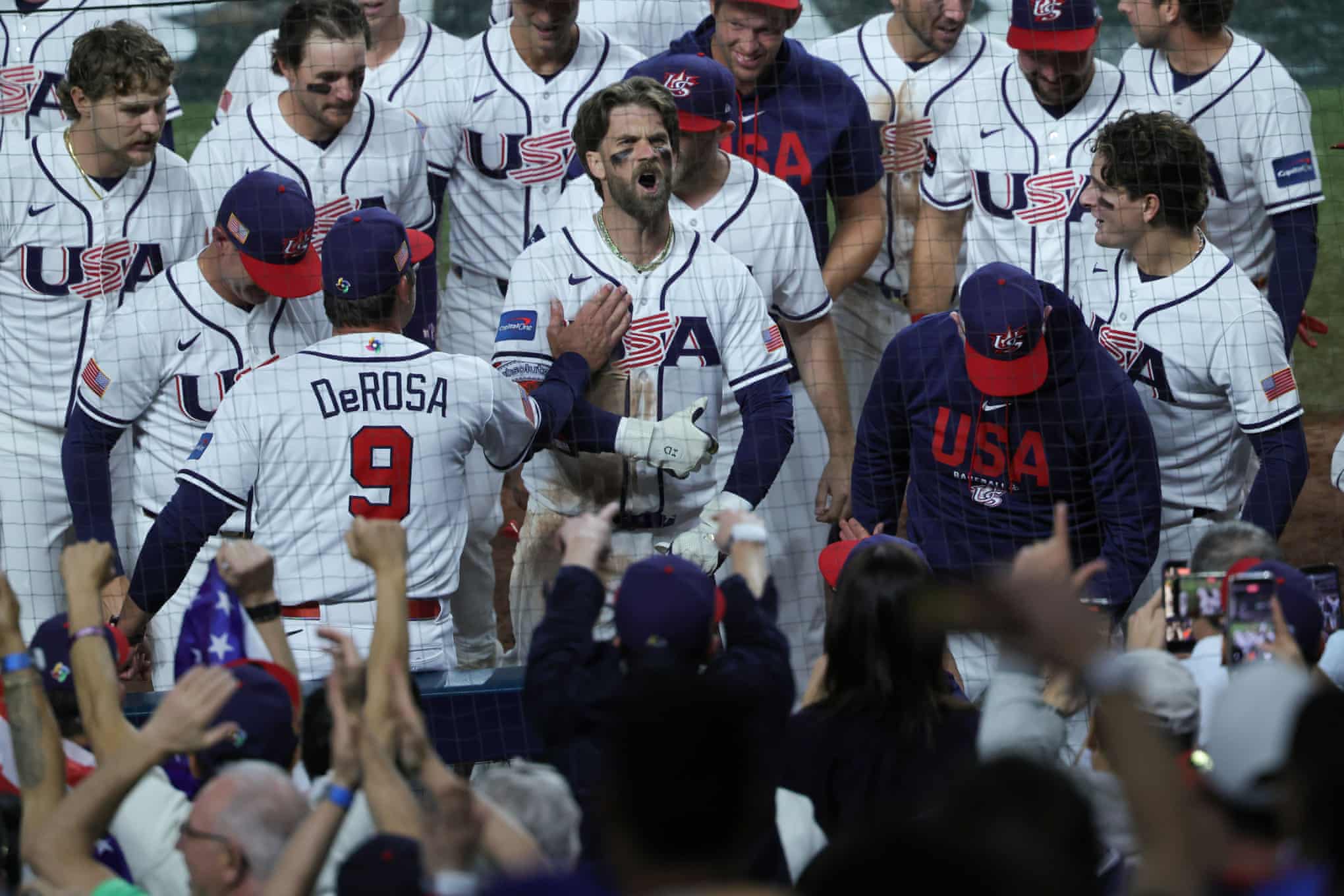
Other nations danced for joy at the World Baseball Classic. Team USA played toy soldiers
On the morning of the World Baseball Classic final between the United States and Venezuela, the headline of the New York Times daily briefing read, “America, alone,” in reference to the unwillingness of the country’s traditional allies to join the war with Iran. The revived rhetoric of America First, once a restoration of the isolationist, often Nazi-sympathetic sentiments of the 1930s, has coalesced into current policy, status, attitude: America by itself, making its own rules, intent on largely playing alone by them.Venezuela won the final, thrillingly, 3-2 over Team USA, but not before the hosts extended that isolationism with a sourness that produced a comically vapid extension of American bravado, and nearly undermined a tournament that in its 20th year is at last becoming one of baseball’s great successes.The WBC was a two-week block party. Canada, fresh off the Toronto Blue Jays’ American League pennant, reached the quarter-finals for the first time

The Spin | ‘It was a crazy time’: why big auction paychecks don’t always equal superstardom
“Some people do recognise me occasionally and it’s always nice to have a chat about cricket.” Graham Napier has a few minutes between appointments. As a fire safety officer in Suffolk the 46-year-old former Essex all-rounder “goes everywhere, schools, cafes, barbershops, churches …” to install and service fire extinguishers. It’s not lost on him that as a player he was often the one responsible for pyrotechnics.On a June evening in 2008 Napier blasted 152 not out off 58 balls for Essex in a televised T20 Blast match against Sussex
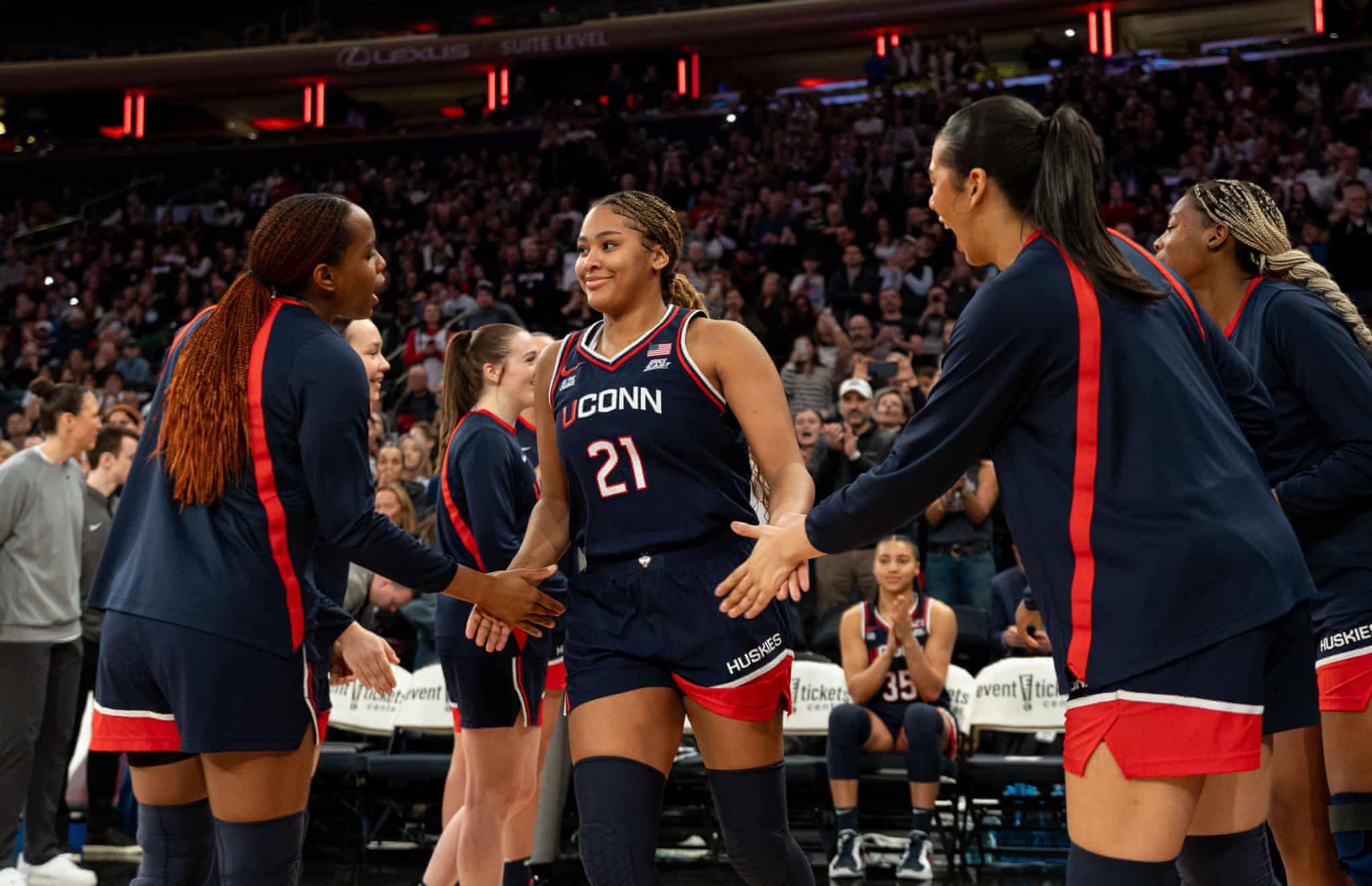
Are unbeaten superteams like the UConn Huskies bad for basketball?
Fans love watching an underdog cause an upset. The problem is that unbeaten teams are unbeaten for a reasonA classic narrative, dating back to the classic matchup of David v Goliath, is the underdog v the favorite.The only problem is that the underdog is an underdog for the reason. Sure, everyone loves it when a David wins, but Goliath usually swats him away with predictable ease and then pounds him into the dirt. Which leads to a problem: who, other than devoted fans of the team in question, roots for the perennial champions? Isn’t that a bit like watching Hoosiers and rooting for the big kids to beat Gene Hackman’s scrappy underdogs? Or watching Rocky IV and rooting for Drago?In women’s college basketball, 12 Division I teams have finished the regular season and conference tournaments undefeated since 2009

March Madness 2026 men’s predictions: who will cut down the nets in Indianapolis?
Who are the players to watch? Which Cinderella team could break your bracket? Our contributors pick the winners, sleepers and upsets for this year’s men’s NCAA TournamentThe annual bevy of trivia that accompanies an NCAA Tournament. Have you heard there are two Miamis? Did you know Nebraska have never won a men’s tournament game? Are you aware that the Queens Royals have a “spirit animal” called Buddy the Street Dog? Even more importantly, I’m looking forward to watching enough basketball over the next three weeks to crack 68/68 on the Sporcle quiz of this year’s mascots. EBThat first Thursday and Friday remain two of the great days on the American sports calendar: noon-to-midnight hoops, four games on screen at a time, buzzer-beaters detonating out of nowhere and a campus or small college town you’ve never heard of suddenly becoming the center of the basketball universe. (And, to no one’s surprise, billions in lost productivity.) The NCAA Tournament still trades in the romance that anything, and anyone, can take over March

From the Pocket: Andrew Dillon needs authenticity and nuance, not AFL talking points
In 2023, the late Sam Landsberger wrote a piece in the Herald Sun recalling how Andrew Dillon came to work at the AFL. Dillon was driving down Punt Road in the early 2000s after playing a game for amateur club Old Xaverians. Senior AFL administrator Ben Buckley, who was recruiting for an in-house counsel, was in the next lane and spotted his former Xavs teammate. “Hey Dills,” he shouted across traffic, “you’re a lawyer, aren’t you?”A quarter of a century later, a line from North Melbourne coach Alastair Clarkson in an interview with Jay Clark jumped off the page on Sunday. “I spoke to Gil [McLachlan] on Tuesday night and he says: ‘This will all be resolved by the end of next week,’” Clarkson said

Sky considers ending controversial UAE news joint venture

HelloFresh hit by sales slump as people lose appetite for meal kits

Fuel rations and no air con: south-east Asian nations race to conserve energy

US postal service will run out of money by February 2027, says agency chief

Reeves plans to give England’s regional leaders a share of national tax revenues

Oil and gas prices rise again after Iran attacks production facilities