H
recent
H
HOYONEWS
HomeBusinessTechnologySportPolitics
Others
  • Food
  • Culture
  • Society
Contact
Home
Business
Technology
Sport
Politics

Food

Culture

Society

Contact
Facebook page
H
HOYONEWS

Company

business
technology
sport
politics
food
culture
society

© 2025 Hoyonews™. All Rights Reserved.
Facebook page
businessSee all
A picture

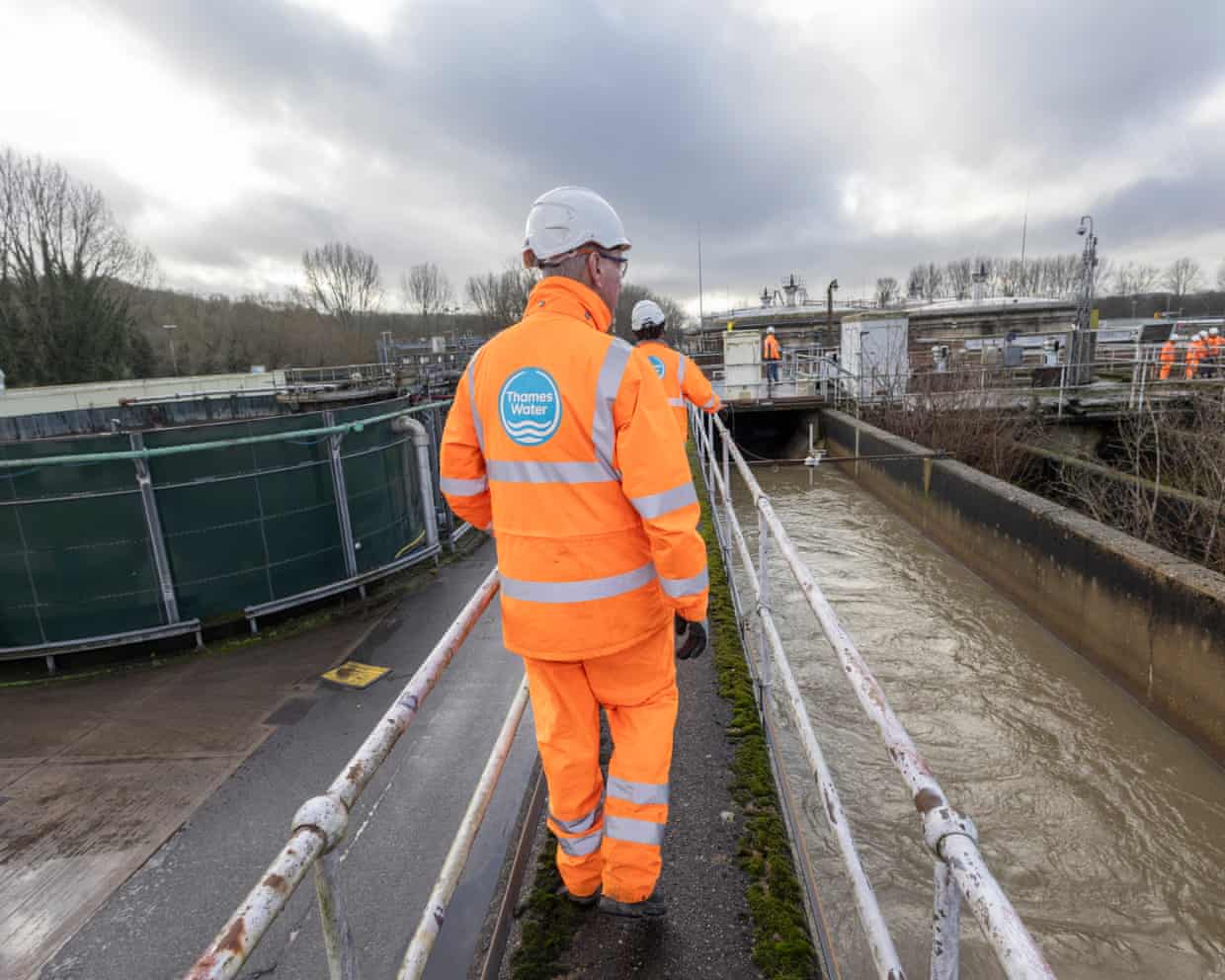
‘People yearn for stability’: the Thames Water sewage plant at frontline of its crisis

It is a grey day in a wet week but one of Thames Water’s neglected plants is still coping. Wastewater is being pumped into the vast Maple Lodge sewage treatment centre in Rickmansworth, just off the M25, at a rate of about 3,000 litres a second, within capacity.The site manager points out the first-line screens that catch everything that will not pass through a 5mm filter. A “sheep” – a bundle of wet wipes, sanitary pads, cotton buds, condoms and indigestible bits of sweetcorn – is rotating at one edge. Credit cards and false teeth have been known to end up here

about 15 hours ago
A picture

Criminals ‘systematically’ targeting UK shops, costing £400m last year, say retailers

Criminal gangs are “systematically” targeting shops, retailers have warned, with 5.5m incidents of shoplifting detected last year, costing the industry an estimated £400m.The British Retail Consortium (BRC) has warned over “endemic” violence towards shop workers – who faced an average 36 incidents of violence involving a weapon every day last year – and said high levels of theft was causing “anxiety” among retail staff.Helen Dickinson, the chief executive of the BRC, called on police to consistently prioritise tackling retail crime and commit “dedicated resourcing” to the problem.The BRC research comes after the government put forward new legislation to back a stand-alone offence for assaulting a retail worker and to remove a £200 threshold for “low level” theft, which has a maximum six-month custodial sentence

about 16 hours ago
A picture

Crypto exchange Binance may have funded Iranian entities, reports say

Shortly after Donald Trump pardoned Changpeng Zhao, the Binance founder, last fall, company employees revealed the cryptocurrency exchange may have funded Iranian entities with billions of dollars, according to a report by the New York Times.The discovery was made by a group of internal Binance investigators, who reportedly found that people in Iran had accessed more than 1,500 accounts on the crypto platform. Two of those accounts allegedly saw $1.7bn move to Iranian-backed groups that included Yemen’s Houthi militants throughout 2024 and 2025, according to the Wall Street Journal.The company investigators say they reported those transactions to Binance’s executives, but then were reportedly disciplined

about 21 hours ago
A picture

Progress on gender equality at top of UK’s biggest firms ‘achingly slow’

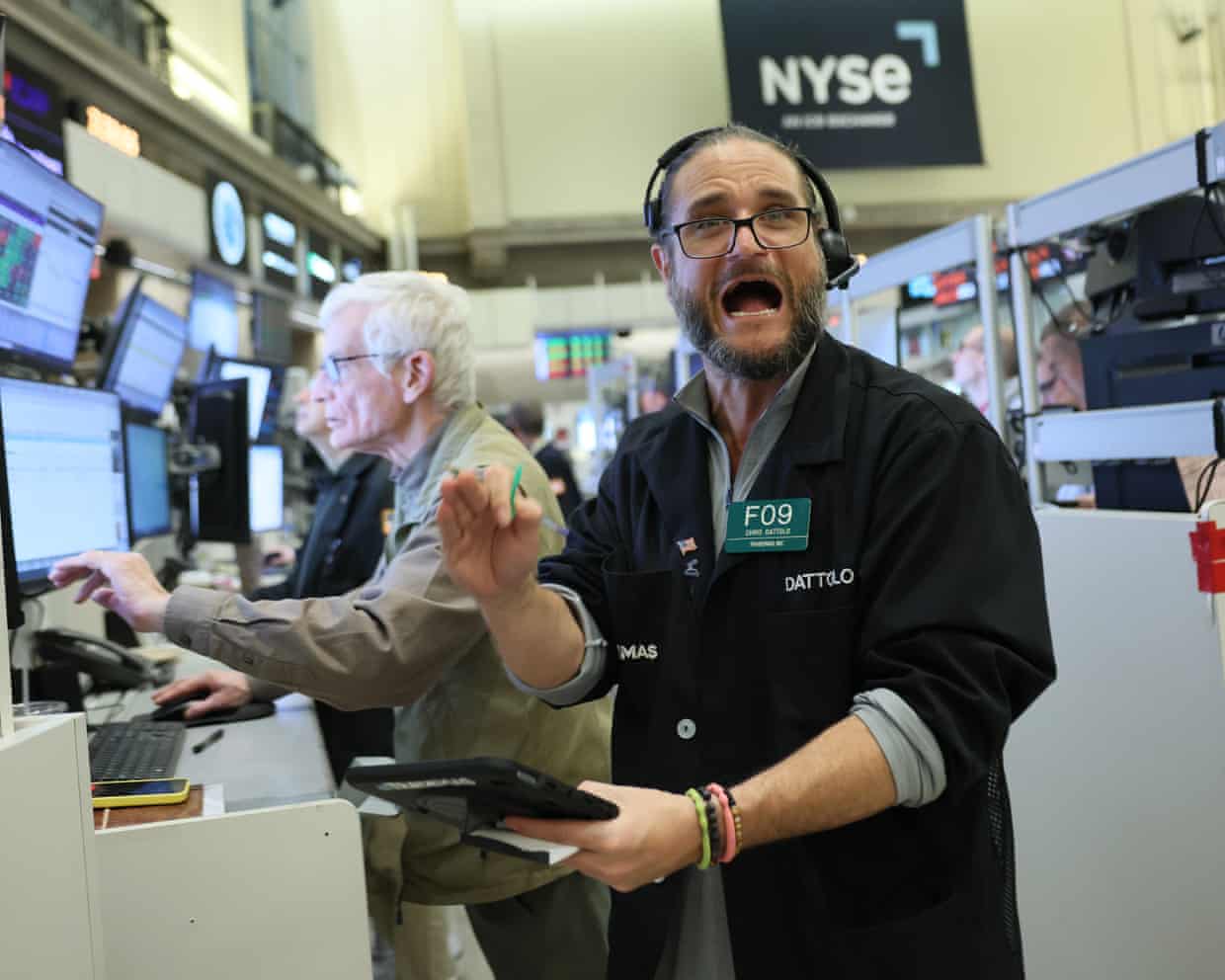
Campaigners have bemoaned the “achingly slow” progress made on gender equality at the top of Britain’s biggest businesses, as research showed blue-chip firms had missed key targets and there were only nine female bosses at FTSE 100 companies.The average number of female FTSE 100 chief executives did not move last year, according to the government-backed FTSE Women Leaders Review.They were Allison Kirkby at BT, Zoë Yujnovich at National Grid, Milena Mondini de Focatiis at Admiral, Stella David at Entain, Louise Beardmore at United Utilities, Margherita Della Valle at Vodafone, Amanda Blanc at Aviva and Cindy Rose at WPP.The report also considered Emma Walmsley at GSK and Liv Garfield at Severn Trent, although both women left their roles in December, as well as Carol Howe, the interim chief executive of BP, who is due to be replaced by Meg O’Neill in April.Debra Crew left the drinks group Diageo last summer after two years in which the company’s share price dropped more than 40%
about 22 hours ago
A picture

Trump threatens ‘more powerful and obnoxious’ tariffs, amid confusion in UK and EU; Wall Street drops – as it happened

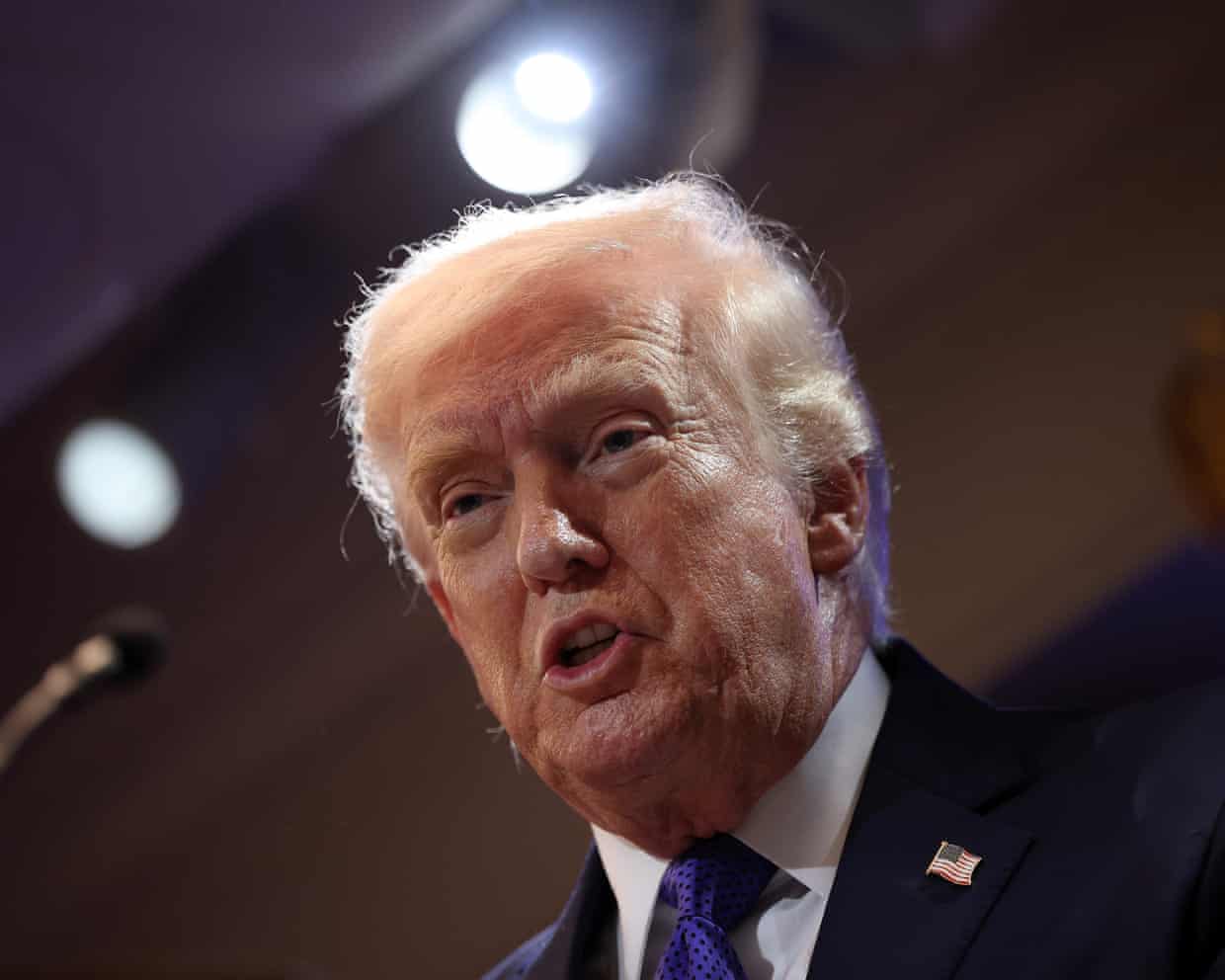
Donald Trump has declared that he can use tariffs in a ‘much more powerful and obnoxious way’ than he has thus far.Posting on his Truth Social network, the US president again attacked the supreme court for ruling against his sweeping global tariffs last Friday – calling them ‘incompetent’.He also claims the justices have ‘‘accidentally and unwittingly’ expanded his presidential powers on tariffs.Trump writes:double quotation markThe supreme court (will be using lower case letters for a while based on a complete lack of respect!*) of the United States accidentally and unwittingly gave me, as President of the United States, far more powers and strength than I had prior to their ridiculous, dumb, and very internationally divisive ruling.For one thing, I can use Licenses to do absolutely “terrible” things to foreign countries, especially those countries that have been RIPPING US OFF for many decades, but incomprehensibly, according to the ruling, can’t charge them a License fee - BUT ALL LICENSES CHARGE FEES, why can’t the United States do so? You do a license to get a fee! The opinion doesn’t explain that, but I know the answer! The court has also approved all other Tariffs, of which there are many, and they can all be used in a much more powerful and obnoxious way, with legal certainty, than the Tariffs as initially used
1 day ago
A picture

Stock markets stumble as global trade faces more Trump tariff uncertainty

Stock markets stumbled on Monday as Donald Trump pushed ahead with fresh tariffs on the US’s trading partners despite a supreme court strike-down and growing opposition from domestic voters.Uncertainty over the status of global trade deals spooked investors, triggering a drop in US shares prices including on the Dow Jones industrial average, which tumbled 1.6% by Monday’s closing. The S&P 500 and Nasdaq 100 fell 1.4% and 1

1 day ago
sportSee all
A picture

The Breakdown | Six Nations half-term report: France are flying while England’s decline is steep

about 11 hours ago
A picture

If you think politics shaped these Winter Olympics, just wait until LA 2028

about 11 hours ago
A picture

Australia beat India by six wickets in first women’s cricket one-day international – as it happened

about 12 hours ago
A picture

US basketball player Jarred Shaw escaped execution in Indonesia, but his prison ordeal continues

about 12 hours ago
A picture

‘Resilience is the biggest lesson’: Raducanu is ready for revival after setbacks

about 15 hours ago
A picture

‘Landmark moment’: Emma Lawrence to become first woman to call NRL games

about 20 hours ago

‘A feedback loop with no brake’: how an AI doomsday report shook US markets

about 7 hours ago
A picture


US stock markets have been hit by a further wave of AI jitters, this time from yet another viral – and completely speculative – warning about the impact of the technology on the world’s largest economy,The latest foreboding is from Citrini Research, a little-known US firm that provides insights on “transformative ‘megatrends’”,Its post on Substack, which it called a “scenario, not a prediction”, rattled investors by portraying a near future in which autonomous AI systems – or agents – upend the entire US economy, from jobs to markets and mortgages,Citrini’s scenario begins now and ends in June 2028, with US unemployment cresting over 10% and an Occupy Silicon Valley movement setting up camp outside OpenAI and Anthropic’s offices,In the interim, a series of events triggered by the widespread use of AI agents guts software companies and ripples outwards, hitting private credit and mortgages, and leading to an unchecked downward spiral.

Speculative as it is, the scenario has unnerved investors,The S&P dropped more than 1% on Monday, and the software component of the index fell to its lowest level since Trump’s “liberation day” tariff announcement in April,Doubtless some of the wobble is attributable to Trump’s latest tariffs, but Uber, American Express, Mastercard and DoorDash, specifically named in Citrini’s report, all lost between 4% and 6%,“It’s real doomsday porn stuff, which is always lapped up by readers and market commentators and the press,” said Neil Wilson, an analyst at Saxo Capital Markets,“I don’t think it’s necessarily going to play out as they see it, but it’s a bit of a wake-up call that the economy already no longer resembles the one just a few years ago.

”Citrini’s scenario evolves as follows:The scenario begins with AI agents undergoing a “jump in capability”.This has already happened.Citrini refers to Anthropic’s Claude Code and OpenAI’s Codex, both of which have wowed users with their performance in recent months.The agents dent software-as-a-service companies such as Monday.com, Zapier and Asana, because they offer businesses a cheaper way to do in-house tasks , for example, managing databases and organising workflows.

This forces businesses such as Oracle that rely on long-term contracts with customers into “a race to the bottom” on pricing.Meanwhile the AI agents wreak havoc elsewhere.The scenario imagines every consumer deciding to use their own personal agent to transact and conduct business.This completely sidelines companies that monetise “friction” in the economy, such as travel and estate agencies that operate as middlemen in processes such as booking holidays or buying property.Instead of using DoorDash, developers – and civilians – code up their own food delivery apps, all of which compete, fragment the market, and destroy the margins of legacy businesses.

Business for Uber and other ride-sharing apps also evaporates,Instead of using Visa and Mastercard, AI agents decide to do all business in cryptocurrency, because transaction costs are cheaper,This guts traditional payment providers,To Citrini, this is a logical endpoint for tireless AI agents that have the time and capability to optimise everything,“Habitual app loyalty, the entire basis of the business model, simply didn’t exist for a machine,” it writes.

In the real world, Uber, DoorDash, Mastercard and American Express shares have all fallen this week on the back of this scenario,Traditional narratives about progress envision the latest technologies creating new jobs as they destroy others,Not so with AI,“AI is now a general intelligence that improves at the very tasks humans would redeploy to,Displaced coders cannot simply move to “AI management” because AI is already capable of that,” Citrini writes.

Instead, white-collar workers redeploy en masse into unstable, gig-economy jobs – the writers describe a hypothetical friend of theirs laid off from Salesforce driving for Uber.This in turn suppresses wages in the sector.The layoffs meanwhile drive down consumer spending.Companies, suffering from weakening demand, decide to invest not in workers but in more AI.This is “a feedback loop with no natural brake”, Citrini writes.

The consequences are far-reaching when the wallets of the 10% of US workers who account for 50% of consumer spending suddenly snap shut.The scenario imagines that job losses and the evisceration of software companies will ripple out into broader markets in two ways: through defaults in private credit and a mortgage crisis.Private credit firms, or lenders that are not banks, have been involved in restructuring a number of software businesses in recent years, taking out loans based on those businesses’ predicted annual revenue far into the future.The example Citrini gives is how Hellman & Friedman and Permira, an asset manager, took Zendesk, a software company, private in 2022 for $10.2bn (£7.

6bn).The acquisition included a loan structured around the assumption that Zendesk’s revenue would be stable.After AI agents, that assumption is no longer holds.This leads to “the largest private credit software default” in history.It should be contained to software, writes Citrini, but it isn’t, because the capital on the balance sheets of the asset managers includes life insurance policies and “the savings of American households”.

Regulators downgrade this software debt, which contributes to a 2027 crash,Meanwhile, there is a mortgage crisis,White-collar workers no longer have white-collar jobs and are unable make repayments on their home loans,“People borrowed against a future they can no longer believe in,” writes Citrini,All this makes the negative feedback loop worse.

The first-order spiral is companies laying off workers, which weakens demand and consumer spending, which in turn leads companies to invest in more AI and lay off more workers.The second-order spiral is that the private credit turmoil and mortgage concerns mean that markets tighten, consumer confidence is shaken, there are more layoffs and more mortgage impairment.“Each reinforces the other,” writes Citrini.No financial policy tools exist to address this, because the crisis that is happening in the real economy – job losses and suppressed wages and spending – is not a result of tight financial conditions that central banks can address, but of investment in AI, which makes “human intelligence less scarce and less valuable”.The upshot is a crash in late 2027, driven by the mortgage markets.

It wipes out 57% of the S&P,Citrini imagines the crash will throw governments into a crisis they will be unable to manage,“The system wasn’t designed for a crisis like this,The federal government’s revenue base is essentially a tax on human time,People work, firms pay them, the government takes a cut,” it writes.

“The government needs to transfer more money to households at precisely the moment it is collecting less money from them in taxes,”AI companies, however, are doing well,The big-tech players who build and sell AI models are making fabulous sums,Because their companies make up a large share of the markets, the economy looks great on paper,Citrini has a term for this: ghost GDP, that is “output that shows up in the national accounts but never circulates through the real economy”.

The social fabric frays and a movement styled after Occupy Wall Street blockades the offices of AI firms for weeks on end.Citrini’s scenario ends with a caution: “This is the first time in history the most productive asset in the economy has produced fewer, not more, jobs.Nobody’s framework fits, because none were designed for a world where the scarce input became abundant.So we have to make new frameworks.Whether we build them in time is the only question that matters.

”The impact of the Citrini scenario has startled some commentators, including experts who say AI tools are not yet capable of enacting it.Stephen Innes, a managing partner at SPI Asset Management, says AI thought pieces have become market movers.“We have watched this market absorb wars, sticky inflation, banking tremors and tariff theatrics with a shrug, yet a widely circulated Substack thought piece is enough to knock it sideways,” he said.