Carlton coach Michael Voss accuses media of bullying after Elijah Hollands incident

Embattled Carlton coach Michael Voss has defended his staff and accused the media of bullying as the spotlight intensifies on the club for allowing Elijah Hollands to play last week during a mental health episode.Hollands behaved erratically in the match against Collingwood and is now in hospital, and speculation has focused on how Voss’s staff had allowed the young player to take the field given his struggles were obvious even from the stands.Fronting a large press pack on Thursday at Princes Park ahead of Saturday’s match against Fremantle, Voss said he wanted to respect the AFL’s investigation into the club’s actions on the night and “we accept that we need to look at process”.But he said that in a “complex situation that has history and background” his staff deserve praise.“I’m proud of my people, and the process itself will take care of itself, and we need to put our support behind that,” he said.
“We’ve unfortunately rather than make this a private challenge, we’ve made this a public event.“The commentary, the conversation, the ball-by-ball play, we’ve unfortunately made it that, and in some ways – I’ll be really honest – it’s felt like bordering on bullying.”When asked to clarify who was being bullied, Voss was explicit.“I think our people are being bullied, and I think [the media] bully for outcomes, and all I’d just say is that we need to take into consideration the people who are involved in this,” he said.“I mean, this impacts families.
”He said the media commentary had been jumping to conclusions.“Rather than show compassion and empathy through a really difficult situation, [the media] are being really judgmental with knowing little facts, without understanding history and background, and [they] have drawn [their] own outcomes.”When Hollands spoke two years ago of his personal challenges it was a “significant” moment, Voss said, adding “the last couple of years haven’t been smooth sailing for him or us.”The coach said he had not spoken to Hollands directly in recent days, instead communicating with his family.Voss maintained he and the club were committed to maintaining the privacy of the player.
“You can have your commentary, that’s what [the media] do,” he said.“What we are charged to do is ensure that we maintain the privacy of the player, and if that means that there’s judgment in behind that towards me, and there’s a few bullets that need to come our way, well we’ll take it.“We’ve all been impacted in some way, as families and you individually, maybe there’s a few here that have struggled with some mental health in recent times, maybe it’s been a family member, maybe it’s been a friend, maybe it’s been a loved one.“And all I just ask is … ‘what would you want right now?’ And that’s all we ask.”In Australia, support is available at Beyond Blue on 1300 22 4636, Lifeline on 13 11 14, and at MensLine on 1300 789 978.
In the UK, the charity Mind is available on 0300 123 3393 and Childline on 0800 1111,In the US, call or text Mental Health America at 988 or chat 988lifeline,org,

AI hallucinations found in high-profile Wall Street law firm filing
The elite Wall Street law firm Sullivan & Cromwell has told a court that a major filing it made in a high-profile case contained errors resulting from hallucinations generated by artificial intelligence.Andrew Dietderich, the co-head of the firm’s global restructuring group, apologised in a letter to the New York federal judge Martin Glenn on Saturday for the string of mistakes, which included inaccurate citations.The errors, uncovered by the law firm Boies Schiller Flexner (BSF), which was also working on the case, included misquoting the US bankruptcy code and citing cases incorrectly in a filing made on 9 April.In multiple instances, S&C, which employs more than 900 lawyers and has one of the top reputations for corporate work in the US, filed inaccurately summarised conclusions made in other cases using AI.“We deeply regret that this has occurred,” said Dietderich in the letter

‘An element of exploitation’: the world of TikTok child skincare influencers
In a TikTok video a young girl – her age anywhere between 10 and 15 – sits unboxing package after package of products she says were sent to her by skincare brands. She calls it a “PR haul”.In another video, a 16-year-old opens a box of products she received from a well known brand. She says: “I know I have younger people watching,” before reading out a note from the brand that says: “Can’t wait for you to share your thoughts.”This is the rapidly growing world of children’s skincare, in which online influencers as young as 13 accept free products from brands and promote them to their followers

UK could face ‘hacktivist attacks at scale’, says head of security agency
The UK could face “hacktivist attacks at scale” if it becomes embroiled in a conflict and the impact could be similar to recent high-profile ransomware incidents, according to the head of the country’s online security agency.Richard Horne, chief executive of the National Cyber Security Centre (NCSC), will warn today that nation states now account for the most significant incidents the NCSC deals with.“Were we to be in, or near, a conflict situation, the UK would likely face hacktivist attacks at scale. With similar effects and sophistication to the ransomware attacks we see today. But … no option to pay a ransom to help recover,” the NCSC chief will say in a speech on Wednesday opening the annual CyberUK conference in Glasgow

Rental platform unnecessarily collected the data of millions of Australians, privacy commissioner finds
An online rental platform has been urged to stop collecting users’ personal information after the Australian privacy commissioner found the gathering of “excessive” data compounded the vulnerability of tenants amid the housing crisis.RentTech platforms are increasingly used by real estate agents in Australia for people applying for rental properties to submit applications and supporting documentation. The Australian Housing and Urban Research Institute has identified 57 different rent platforms operating in Australia.An Ahuri report released in January found while providing personal information is necessary for rental agreements, the “over-collection of data poses significant risks to renters’ data security and privacy”.In a first-of-its-kind determination against one of the platforms, published on Wednesday, the privacy commissioner, Carly Kind, found 2Apply, operated by InspectRealEstate, had collected excessive personal information in an unfair manner

Apple’s Tim Cook leaves behind complicated legacy on privacy
In his 15 years as Apple’s top executive, Tim Cook has projected an image of the company as a champion of privacy rights. As he prepares to leave that role in September, that legacy has come back into focus. Cook trumpeted the iPhone maker’s commitment to privacy at home in the US and the EU, calling privacy “a fundamental right” but his acquiescence to government demands abroad call his dedication to protecting users into question.Cook cemented Apple’s pro-privacy reputation in 2015 when he resisted the FBI’s demands to unlock the iPhone of a mass shooter in San Bernardino, California. The company played up that public image in 2019 with playful ads that read, “Privacy

‘I’ll key your car’: ChatGPT can become abusive when fed real-life arguments, study finds
ChatGPT can escalate into abusive and even threatening language when drawn into prolonged, human-style conflict, according to a new study.Researchers tested how large language models (LLMs) responded to sustained hostility by feeding ChatGPT exchanges from real-life arguments and tracking how its behaviour changed over time.One expert not connected with the study described it as “one of the most interesting ever done into AI language and pragmatics”.Dr Vittorio Tantucci, who co-authored the research paper with Prof Jonathan Culpeper at Lancaster University, said their research found AI mirrored the dynamics of real-world disputes.“When repeatedly exposed to impoliteness, the model began to mirror the tone of the exchanges, with its responses becoming more hostile as the interaction developed,” he said

Lewis Moody ‘picking up baton’ left by Doddie Weir with MND fundraising cycle ride

South Africa struggling to secure UK TV deal to screen England Test series
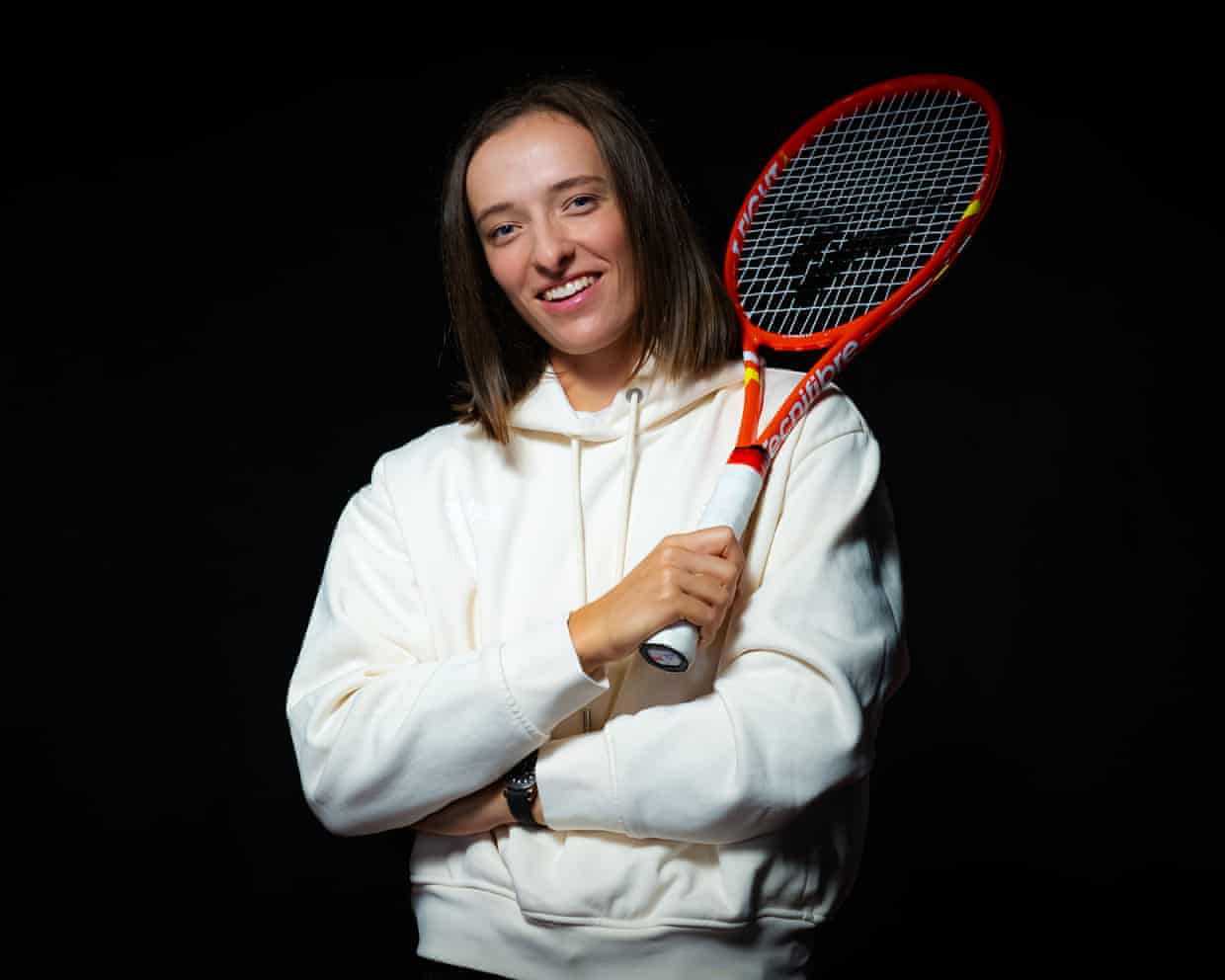
‘Tennis is about being fluid’: How Iga Swiatek is drawing on her time with Rafael Nadal to regain No 1 spot
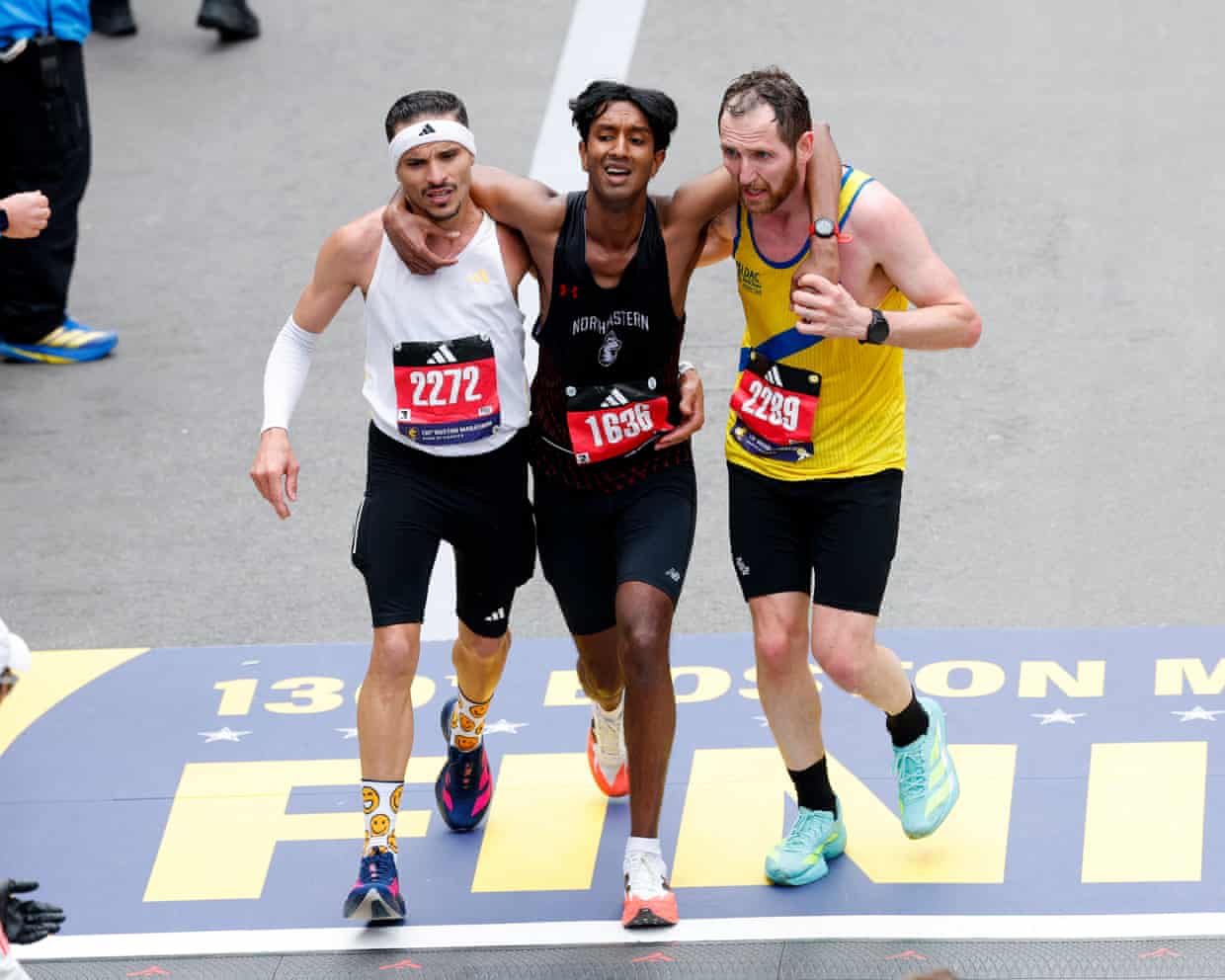
‘Two are stronger than one’: Boston Marathon duo praised for helping struggling runner cross finish line

London Marathon organisers believe two-day event could bring £400m economic boost

Ryder Cup tickets hit record Europe high at £434 a day in Ireland next year