Middle East war creating ‘largest supply disruption in the history of oil markets’, as Brent crude hits $100 again – as it happened
Time to recapOil prices have jumped again after a statement from Iran’s new leader said the crucial Strait of Hormuz should remain closed.Brent crude has climbed by 10% to over $101 a barrel, on track to end the day over the hundred dollar a barrel mark for the first time in the crisis.US crude is also up 10% at $96.55 a barrel.Crude prices jumped after Iran’s supreme leader, Ayatollah Mojtaba Khamenei apparently called for national unity and said that all US bases in the region should close or face attacks.
The strait of Hormuz will remain closed in order to pressure Iran’s enemies, Khamenei reportedly said.Oil had already climbed after Iran escalated its retaliation over the conflict, with strikes on several ships in the Gulf.The International Energy Agency has warned that the war in Iran has cut the region’s oil and gas production by at least 10m barrels of oil a day.In its latest oil report, the IEA says:double quotation markWith crude and oil product flows through the Strait of Hormuz plunging from around 20 mb/d before the war to a trickle currently, limited capacity available to bypass the crucial waterway, and storage filling up, Gulf countries have cut total oil production by at least 10 mb/d.In the absence of a rapid resumption of shipping flows, supply losses are set to increase.
Economists have warned that higher energy prices run the risk of creating ‘stagflation’, where inflation jumps and growth fizzles out,The US White House are reportedly planning to temporarily waive a century-old maritime law that requires American ships be used to transport goods between US ports,President Trump has also claimed that the surge in oil is good for the US, arguing:double quotation mark“The United States is the largest Oil Producer in the World, by far, so when oil prices go up, we make a lot of money,”PS: Greenpeace have warned that a disaster is waiting to happen as “85 large oil tankers” are trapped in the Persian Gulf, amid attacks on ships,Nina Noelle at Greenpeace Germany, which has been mapping oil tankers trapped in the area and potential impacts of an oil spill, says:double quotation mark“Right now, there are dozens of tankers carrying billions of litres of oil trapped in the Persian Gulf as mines are being laid and missiles are hitting ships,This is an environmental disaster waiting to happen.
A single oil spill in the Gulf could damage this fragile marine habitat beyond repair with devastating consequences for people, animals, and plants in the region, adding to the terrible human toll this illegal war has already taken on local communities.“The US-Israel attack on Iran and subsequent strikes by Iran on neighbouring Gulf countries has shown once again that our dependence on fossil fuels is a constant threat to peace, security and prosperity.When oil and gas prices surge, fossil fuel giants rake in more profits while everyday people are hit by higher costs for heating, electricity, transport and food.Time to recapOil prices have jumped again after a statement from Iran’s new leader said the crucial Strait of Hormuz should remain closed.Brent crude has climbed by 10% to over $101 a barrel, on track to end the day over the hundred dollar a barrel mark for the first time in the crisis.
US crude is also up 10% at $96.55 a barrel.Crude prices jumped after Iran’s supreme leader, Ayatollah Mojtaba Khamenei apparently called for national unity and said that all US bases in the region should close or face attacks.The strait of Hormuz will remain closed in order to pressure Iran’s enemies, Khamenei reportedly said.Oil had already climbed after Iran escalated its retaliation over the conflict, with strikes on several ships in the Gulf.
The International Energy Agency has warned that the war in Iran has cut the region’s oil and gas production by at least 10m barrels of oil a day.In its latest oil report, the IEA says:double quotation markWith crude and oil product flows through the Strait of Hormuz plunging from around 20 mb/d before the war to a trickle currently, limited capacity available to bypass the crucial waterway, and storage filling up, Gulf countries have cut total oil production by at least 10 mb/d.In the absence of a rapid resumption of shipping flows, supply losses are set to increase.Economists have warned that higher energy prices run the risk of creating ‘stagflation’, where inflation jumps and growth fizzles out.The US White House are reportedly planning to temporarily waive a century-old maritime law that requires American ships be used to transport goods between US ports.
President Trump has also claimed that the surge in oil is good for the US, arguing:double quotation mark“The United States is the largest Oil Producer in the World, by far, so when oil prices go up, we make a lot of money,”Bloomberg Economics have estimated that a one-month closure of the strait of Hormuz would drive Brent toward $105 a barrel.A three-month shutdown could push peak prices near $164, according to their modelling of the impact of a prolonged halt in traffic.Estimates from Bloomberg @economics: Strait of Hormuz being closed for 3 months would get Brent crude #oil up to $164/barrel pic.twitter.com/KupcvdQbLiThe Trump administration is reportedly preparing to issue temporary waivers for a century-old maritime law requiring American-built ships be used to transport goods between US ports.
The Jones Act (Merchant Marine Act of 1920) is a federal law which dictates that goods shipped between US ports are transported on ships that are US-built, owned, and operated,This rather protectionist measure is designed to protect America’s domestic maritime industry,Bloomberg reports that a 30-day waiver for the Jones Act will be introduced, to allow foreign tankers to help supply refiners on the East Coast with fuel from the Gulf Coast and elsewhere in the US,That might reduce the risk of energy shortages within the US, but won’t help ease the supply problems through the Gulf following the Iran war…,The Jones Act was previouly waived in 2017, to help speed up the delivery of supplies to Puerto Rico after Hurricane Maria.
UN agency the International Maritime Organization has called an extraordinary council meeting to discuss the situation in Middle East.The IMO says the session will be held in London on 18 to 19 March, and will focus on the impact on shipping and seafarers in the Arabian Sea, the Sea of Oman and the Gulf region, particularly in and around the strait of Hormuz.Brent crude has just hit the $100/barrel mark again, as investors react to Iranian Supreme Leader Mojtaba Khamenei’s call to keep the strait of Hormuz closed.The international benchmark is trading at $100.20 a barrel, back towards levels hit very early in today’s session when attacks on tankers in the Gulf pushed up energy prices.
The US dollar is acting as a popular ‘flight to safety’ trade, as investors try to shelter from the fallout from the Middle East conflict.The dollar index, which measures the greenback against a basket of rival currencies, is up almost 0.4% today.That strength has pushed the pound down over half a cent, to $1.3350.
Finanial markets will experience their maximum panic over the Iran war within the next one to three weeks, consultancy Alpine Macro predicts today.That panic will come, Alpine say, as investors digest the possibility of escalation, potential closure of the Strait of Hormuz, and possible disruptions in the Red Sea.Alpine had originally predicted the conflict would last up to three weeks – but now sees it lasting around two months.Dan Alamariu, chief geopolitical strategist at Alpine Macro, says:double quotation mark“We initially estimated the conflict to last 1-3 weeks, with a maximum of two months.As the war unfolds, we now expect something closer to roughly two months, though the dynamics remain self-limiting.
”And how might it end? Alpine predicts an informal ceasefire in which all parties can claim victory.US crude oil is also moving higher, after Mojtaba Khamenei said the strait of Hormuz should remain closed.West Texas Intermediate (WTI) oil is up 8.7% today at $94.92 a barrel, towards levels last seen on Monday (when crude smashed its way through the $100 mark).
If WTI rises over $100/barrel again, and stays there, it would increase the risks of a recession.Jim Smigiel, chief investment officer at SEI, says:double quotation mark“The situation in the Middle East remains fluid, with the closure of the Strait of Hormuz impacting a significant amount of global oil capacity and pushing WTI crude above the $100 threshold.Historically, a price spike of this magnitude - above the highest level of the prior three years - is a well-known precursor to recessions and equity bear markets.While higher energy prices increase the risk of accelerating inflation, the dynamics are complex to model.Central bankers must now weigh these inflationary pressures against labor market risks, a balancing act that has defined the global economy across several supply shocks in recent years.
”Oil is nudging back towards the $100 mark, after Iranian Supreme Leader Mojtaba Khamenei said on Thursday the strait of Hormuz should remain closed as a tool of pressure,In a message read out by a state TV broadcaster, the first the new supreme leader has issued since he was appointed to succeed his slain father, Mojtaba said all U,S,bases in the region should be closed as they would be attacked,Brent crude is now trading above $99 a barrel, having hit $101.
59 barrel early today before dipping back into double figures.As predicted, Wall Street’s main indexes have opened lower.The surge in the oil price back towards $100 a barrel today, after Iran escalated its attacks, is fanning inflation fears.The Dow Jones industrial average has dropped by 519 points, or 1.1%, to 46,897 points in early trading.
Most stocks on the DJIA are down, led by construction equipment maker Caterpillar (-3.1%) and Goldman Sachs (-2.8%).The broader S&P 500 share index index is down 0.95%.
Donald Trump has posted on Truth Social that the US will be making “a lot of money” from higher oil prices:double quotation markThe United States is the largest Oil Producer in the World, by far, so when oil prices go up, we make a lot of money.BUT, of far greater interest and importance to me, as President, is stoping an evil Empire, Iran, from having Nuclear Weapons, and destroying the Middle East and, indeed, the World.I won’t ever let that happen! Thank you for your attention to this matter.President DONALD J.TRUMPFact check: Leaving aside the president’s spelling of ‘stopping’ (I’m not one to cast aspersions!), the profits of higher oil prices won’t be shared evenly.
A recent paper showed that after the 2022 oil price surge in the US, 50% of the windfall benefit from higher prices in the sector went to the wealthiest 1% of individuals, via the stock market.The bottom 50% of people received only 1%.That’s from my colleague Heather Stewart’s column on Sunday:
Middle East war creating ‘largest supply disruption in the history of oil markets’
Oil markets are facing the “largest supply disruption in history” as the war in Iran continues to block tankers from shipping millions of barrels of crude each day, the world energy watchdog has warned.The International Energy Agency (IEA) said the supply shock ignited by Iran’s effective blockade of the strait of Hormuz meant the world faced a deeper crisis than after the Yom Kippur war of 1973 and the 2022 outbreak of war in Ukraine.The warning came as Iran issued a statement that was said to be the first from its new supreme leader, Mojtaba Khamenei, to call for the vital trade artery to “remain closed”, in a blow to hopes of a resolution to the crisis.In response, global oil prices passed $100 (£75) a barrel on Thursday as widespread Iranian attacks on energy facilities in the Middle East overshadowed a vast release of government reserves.In an attempt to calm concerns over oil supplies, the IEA ordered the largest release of government reserves in its history on Wednesday, when its 32 members unanimously agreed to release 400m barrels of emergency crude

Antibiotics need coordinated G7 investment | Letter
Recent coverage of the pipeline of new antibiotics (Pipeline of new drugs to fight superbugs is ‘worryingly thin’, experts warn, 11 March) is a timely reminder that antimicrobial resistance is one our most urgent health crises. The reason the pipeline is so thin is a fundamental market failure.One of the most logical ways to protect antibiotics is to limit their use to the most essential cases, but this means fewer antibiotics sold. If revenues are limited, companies have less incentive to invest in developing and manufacturing new antibiotics. This is where policy intervention is crucial

UK regulator examines IT glitch that enabled bank customers to see others’ accounts on app
The UK information regulator is examining an IT glitch that enabled some customers of Lloyds, Halifax and Bank of Scotland to see other users’ transactions when they logged into their banking app.The Information Commissioner’s Office (ICO) said it was “aware of an incident affecting some online banking services” and that it would make inquiries.Worried bank customers posted on social media they feared they had been hacked when they checked their account and were greeted with the details of other people’s finances, including cash withdrawals and benefits payments.In a Facebook post, the consumer champion Martin Lewis said people had been messaging about “being shown other people’s transactions”.In response, the founder of MoneySavingExpert was inundated with close to 2,000 comments from worried bank customers
Middle East war creating ‘largest supply disruption in the history of oil markets’, as Brent crude hits $100 again – as it happened
Time to recapOil prices have jumped again after a statement from Iran’s new leader said the crucial Strait of Hormuz should remain closed.Brent crude has climbed by 10% to over $101 a barrel, on track to end the day over the hundred dollar a barrel mark for the first time in the crisis.US crude is also up 10% at $96.55 a barrel.Crude prices jumped after Iran’s supreme leader, Ayatollah Mojtaba Khamenei apparently called for national unity and said that all US bases in the region should close or face attacks
John Lewis pays first annual staff bonus in four years as profits rise
The owner of John Lewis and Waitrose has paid an annual bonus to workers for the first time in four years after underlying profits rose by 6%.The retail group’s 69,000 employees – which it calls partners – will share £35m, the equivalent of 2% of salary, after it recorded an increase in sales and profits. The payout amounts to about one extra week of pay.Sales at the John Lewis Partnership rose 5% to £13.4bn and profits increased to £134m in the year to 31 January, slightly behind expectations in what the chair, Jason Tarry, called “a subdued market”
Welsh Water to pay £44.7m after ‘unacceptable’ sewage works failings
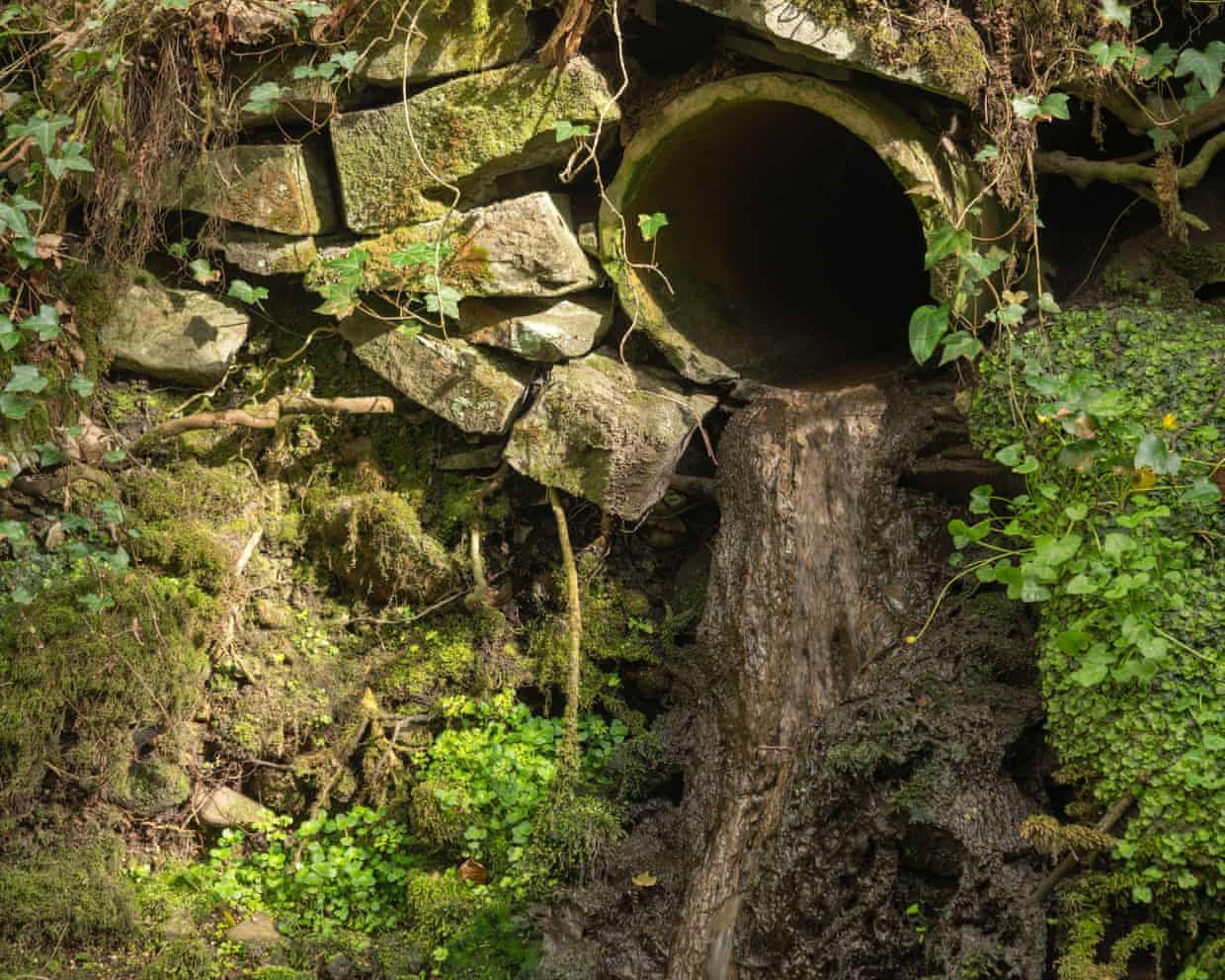
Welsh Water is to pay a proposed £44.7m after the industry regulator found “serious and unacceptable” breaches in the supplier’s sewage and network services.The water authority for England and Wales, Ofwat, said the non-profit Dŵr Cymru, or Welsh Water, failed to properly operate, maintain and upgrade its wastewater network to ensure it could cope with levels of sewage.Ofwat also found the company also did not have “adequate processes in place or oversight by senior bosses”.The planned enforcement package will include £40

Rapper Lil’ Kim to headline both Vivid Sydney and Melbourne’s 2026 Rising festival
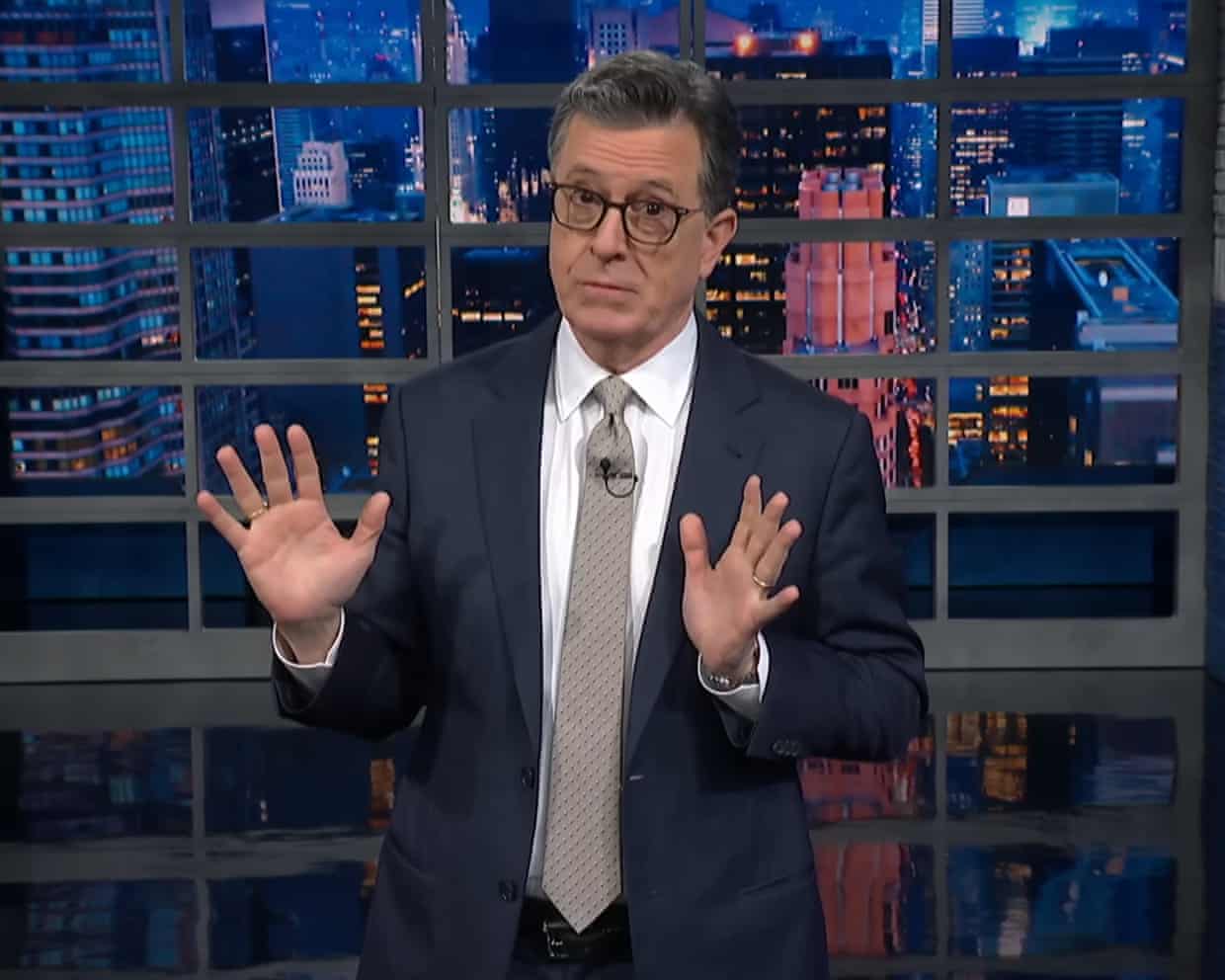
Stephen Colbert on US war in Iran: ‘We’re still no closer to learning what the goal is’

Leap Year is patently ridiculous and widely panned. It’s also the perfect romcom

Womadelaide 2026 review: Grace Jones embraces the compulsion for dancing in the dark times

‘A lot of comedians don’t have a sense of humour’: Jack Dee on his loser Lead Balloon creation Rick Spleen

Jack White: ‘I’m not going to put a painful thing out there for some idiot on the internet to stomp all over’