Water firms sent bailiffs to tens of thousands of homes for debts under £1,000
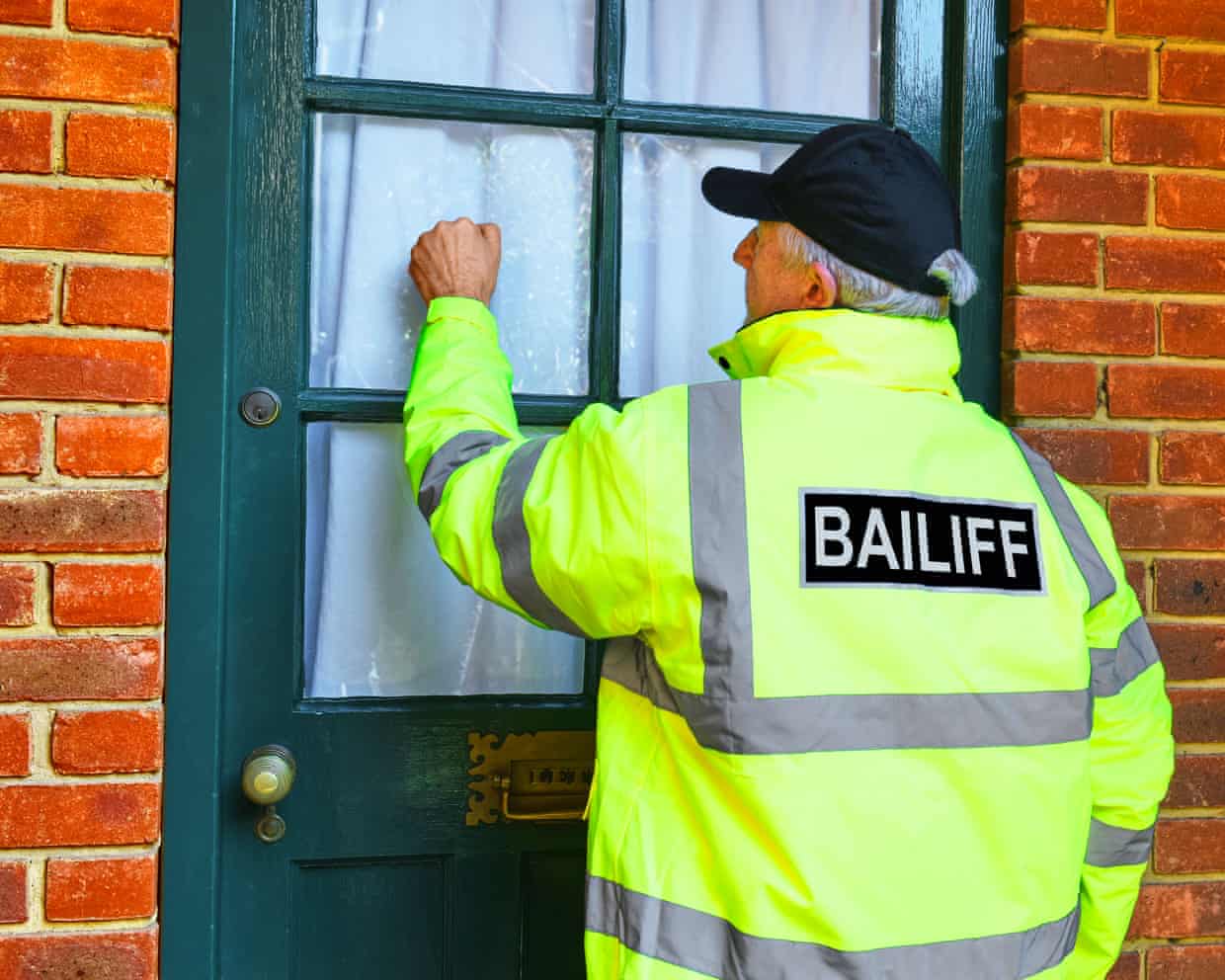
Tens of thousands of people a year have bailiffs sent to their homes by water companies in England and Wales, data shows.Many thousands of these visits by debt collectors were for sums worth under £1,000, according to the data released by the House of Commons environment, food and rural affairs (Efra) committee.Bailiffs are debt collectors instructed by a court, who can seize items from those in debt, including electrical items, jewellery or vehicles.It is a postcode lottery as to whether a water company would send a bailiff to a person’s home to recoup unpaid bills.While Wessex Water has not used bailiffs in 10 years, the water companies that made the most use of bailiffs in 2025 – adjusted for population – were South West Water, Southern Water and Yorkshire Water.
In the financial year 2016-17, Yorkshire Water sent bailiffs to customers’ homes 405 times, but in 2024-25 there were 6,124 bailiff visits,There were also high peaks of overall usage by some companies,In 2022 Severn Trent instructed bailiffs 11,574 times, and in 2019 Southern Water instructed 15,707 bailiffs,The criteria for sending debt collectors to people’s homes varies between water companies,For example, Northumbrian Water told the committee it did not send bailiffs to homes where residents were known to be in receipt of means-tested benefits, whereas Southern Water said these customers were eligible for litigation.
Severn Trent also does not perform checks on whether someone is in receipt of means-tested benefits before instructing a bailiff.Southern does have some limits on who it will pursue.It said that if a customer is suffering from dementia or a critical illness, they will not be pursued for a debt via litigation.The use of bailiffs by water companies that had been found to have broken the law themselves was unfair, the Labour MP John McDonnell said.He said: “Only five directors of water companies have been prosecuted in the last 30 years.
Contrast that with the thousands of mainly poor people the water companies set the bailiffs on each year.“The system is more interested in prosecuting families that are struggling to pay their water bills than the company directors responsible for polluting our rivers and seas while lining their pockets from profiteering at the expense of both their customers and our environment.”Some companies told the committee they were trying to focus the use of bailiffs only on those who could afford to pay their bills but chose not to.Water companies themselves are in a vast amount of debt, which critics have said has made it impossible for them to properly invest in infrastructure.Water companies in England and Wales are now in more than £80bn of debt.
The companies are also liable for £200m of environmental fines for actions such as illegal sewage spills.The Efra committee chair, Alistair Carmichael MP, said: “It is interesting and concerning to see the extent of their use of bailiffs over time and to see such differing approaches.The figures should be seen in the context of various cost of living shocks that have hit households over recent years.“For any family or individual to be subject to legal action is no small matter and can be a cause of severe stress and anxiety.We would urge any company to review its practices and ensure they are as sparing and compassionate as possible.
We have referred this information to Citizens Advice and the Consumer Council for Water for further scrutiny,”A Yorkshire Water spokesperson said: “Our focus for any customer entering arrears is to assess vulnerability and provide support where necessary, through early engagement, financial support schemes, clear communications and signposting to external assistance with financial issues,Enforcement action is a last resort and is only taken against customers who we determine, using internal data and external credit agencies, have the ability to pay their bill but are choosing not to,”A Southern Water spokesperson said: “We work hard to ensure customers who are struggling get the support they need, such as our social tariff schemes,We’re delivering our biggest ever investment plan, spending around £8.
5bn to meet the expectations of our customers in protecting the environment and improving services.”A South West Water spokesperson said: “We only ever use enforcement action as a last resort.Our priority is always to support customers who are struggling, and we offer a wide range of financial support.”A Severn Trent spokesperson said: “We do not want any customer to struggle with their bill, which is why we’ve doubled our financial support.We do sometimes have to act against a tiny minority who we believe can pay their bill, but choose not to – and any use of bailiffs are always a last resort and would never be used for vulnerable customers or those struggling to pay.
”

Actor reaches settlement with Old Vic theatre over Kevin Spacey assault claims
An actor who alleged that he was sexually assaulted by Kevin Spacey has reached a settlement with the Old Vic theatre.Ruari Cannon, who waived his right to anonymity, was an actor at the Old Vic during Spacey’s tenure as artistic director.He claimed that Spacey assaulted him at a theatre after-party at the Savoy hotel and at the Old Vic’s theatre bar on a separate occasion. Spacey has denied the allegations.In a statement, the Old Vic said: “Ruari Cannon and the Old Vic have reached a mutually agreed out-of-court settlement, the precise terms of which are confidential

‘Excellence’: Smithsonian exhibit celebrates HBCUs amid attacks on Black history
At a time when museums and colleges are facing uncertainty and there is a push to limit the acknowledgment of Black history, the Smithsonian’s National Museum of African American History and Culture (NMAAHC) and its five partner historically Black colleges and universities (HBCUs) have launched a new exhibit to put Black history and Black archives at the forefront.At the Vanguard: Making and Saving History at HBCUs, on view at the NMAAHC now through 19 July, was developed as a part of the History and Culture Access Consortium (HCAC). After At the Vanguard leaves the NMAAHC, it will go on tour to each of the universities, along with other locations that request it.The exhibit, which is composed of archival materials and collections from each of the five HBCUs of the partnership – Jackson State University, Florida A&M University, Tuskegee University, Clark Atlanta University and Texas Southern University – is the culmination of years of work by the consortium. With more than 100 objects on display at the NMAAHC, the collection includes rare items, such as one of the only existing color videos of George Washington Carver, the agricultural scientist and inventor, from Tuskegee University

Jon Stewart on US attacks in Iran: ‘A war with no clear purpose, no end in sight’
Late-night hosts delved into the new US regime-change war in the Middle East, after Donald Trump directed the US military to bomb Iran in conjunction with Israel.Jon Stewart opened The Daily Show on Monday in a daze, after Iran state media confirmed that US and Israeli forces killed its supreme leader, Ayatollah Ali Khamenei, over the weekend. The host joked that, for the surprise occasion and chaos that followed, he needed to bring back “a 20-year recurring segment” titled “Mess O’Potamia”.“America, apparently, had to start an entire war to kill an 86-year-old man in ill health and not wait – I don’t know – three weeks to let saturated fat do its thing,” he joked.He then played a clip of Trump, wearing his USA hat, announcing the so-called “Operation Epic Fury” against Iran from his luxury golf course in Florida

‘My guitar was mangled – like my life!’ Goo Goo Dolls on how they made epic ballad Iris
‘I’m grateful to Taylor Swift, and others who have covered it, for introducing the song to a new generation. Three billion streams on Spotify is astonishing!’I was going through a divorce and living in a hotel in West Hollywood when my manager said Warner Brothers were seeking songs for the movie City of Angels. They already had U2, Peter Gabriel and Alanis Morissette, so I thought getting a track on there would draw attention to us. Warners showed me the film and it was like Wim Wenders’ Wings of Desire. They wanted a song for the scene where the angel – played by Nicolas Cage – decides to become human to be with the woman he loves

My cultural awakening: Leonardo da Vinci made me rethink surgery – I’ve since mended more than 3,000 hearts
For one heart surgeon, seeing the Renaissance artist’s anatomical drawings gave him a natural understanding of the body that was often overlooked in modern medical scienceIf you’d asked my teenage self, growing up in a small village in Shropshire, what I wanted to do with my life, I would have talked about art and music long before I spoke of scalpel blades and operating theatres. As an 18-year-old, I intended to go to art school, until my mother sat me down and told me rather bluntly that being an artist wouldn’t earn me much money. As she spoke, a surgical documentary flickered across the screen of the black-and-white television in our living room. I told her, half joking, that that was what I’d do instead. Which is how I ended up repeating my A-levels and fighting my way into medical school, where I qualified in 1975
The Guide #232: From documentary shock to Bafta acclaim – how the screen shaped our understanding of Tourette’s
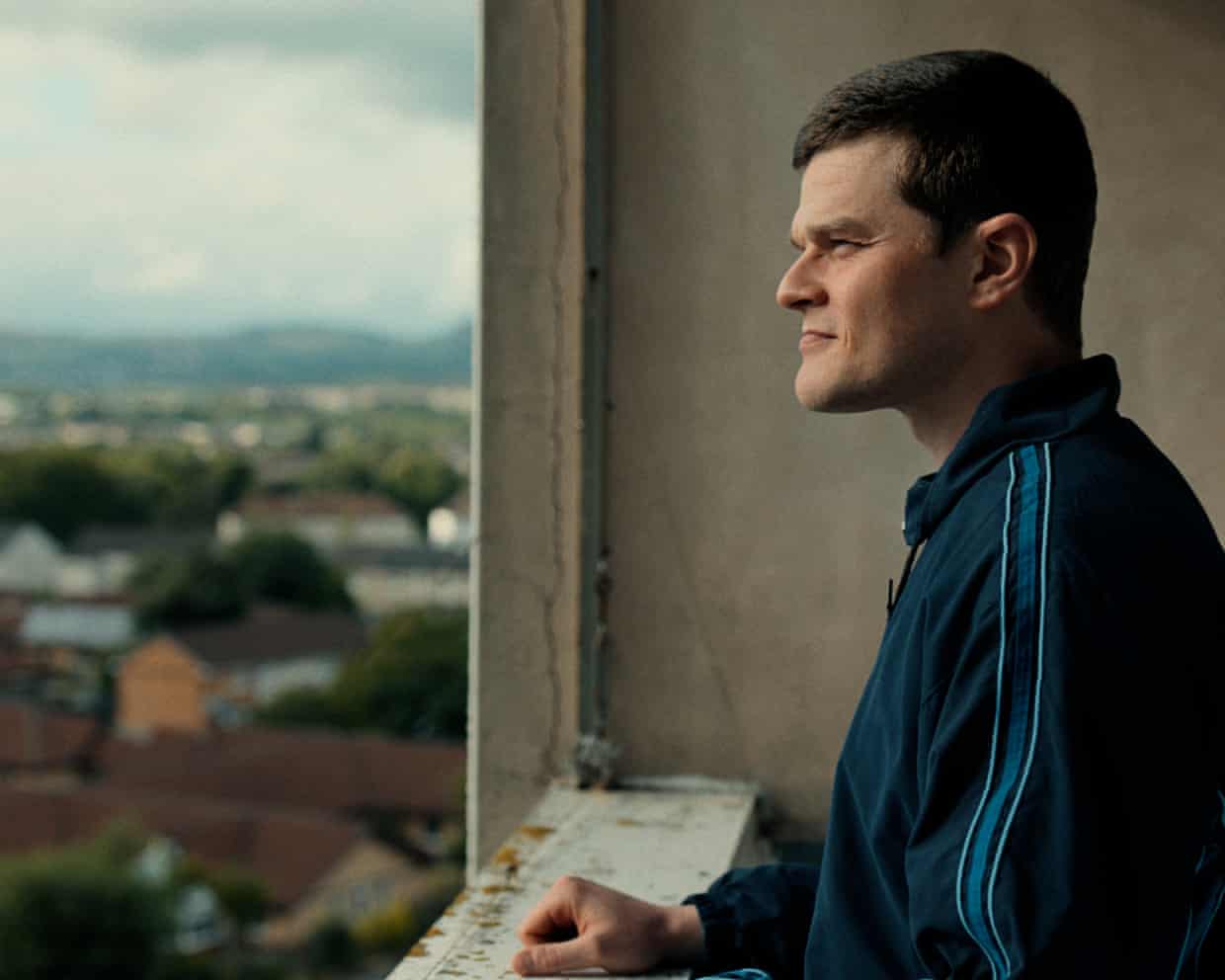
The wildfire surrounding last week’s Bafta ceremony – where Tourette syndrome campaigner John Davidson involuntarily shouted a racial slur at actors Michael B Jordan and Delroy Lindo, and the BBC aired the moment – continues to rage. Criticisms have been levelled at, and investigations opened by, the Beeb and Bafta; hundreds of news stories and comment pieces have been devoted to the incident (if you read anything, make sure it’s this clear-eyed piece from Jason Okundaye, who was at the ceremony); and the climate on social media has been toxic, with much of the ire directed at Davidson himself. It’s an ire that is based on a complete misunderstanding of coprolalia, the form of Tourette syndrome (TS) that Davidson has, which results in the unintended and completely involuntary utterance of offensive or inappropriate remarks.There’s an unhappy irony at play here because Davidson, arguably more than any other person in Britain, has been responsible for raising awareness of TS. There’s an unfortunate symmetry, too, to the fact that the incident was shown on primetime BBC, because that was where Davidson was first brought to national attention as the subject of the landmark 1989 documentary John’s Not Mad

Trump says he fired Anthropic ‘like dogs’ as Pentagon formally blacklists AI startup
Retailers want ‘delightfully human’ AI to do your shopping, but will the chatbots go rogue?

Google Pixel 10a review: cheaper Android is great, but no real advance

Sam Altman admits OpenAI can’t control Pentagon’s use of AI

Elon Musk takes witness stand in trial over Twitter takeover

Joy of teaching English in the age of AI | Letter