US datacenters face slew of problems amid grassroots protests against AI
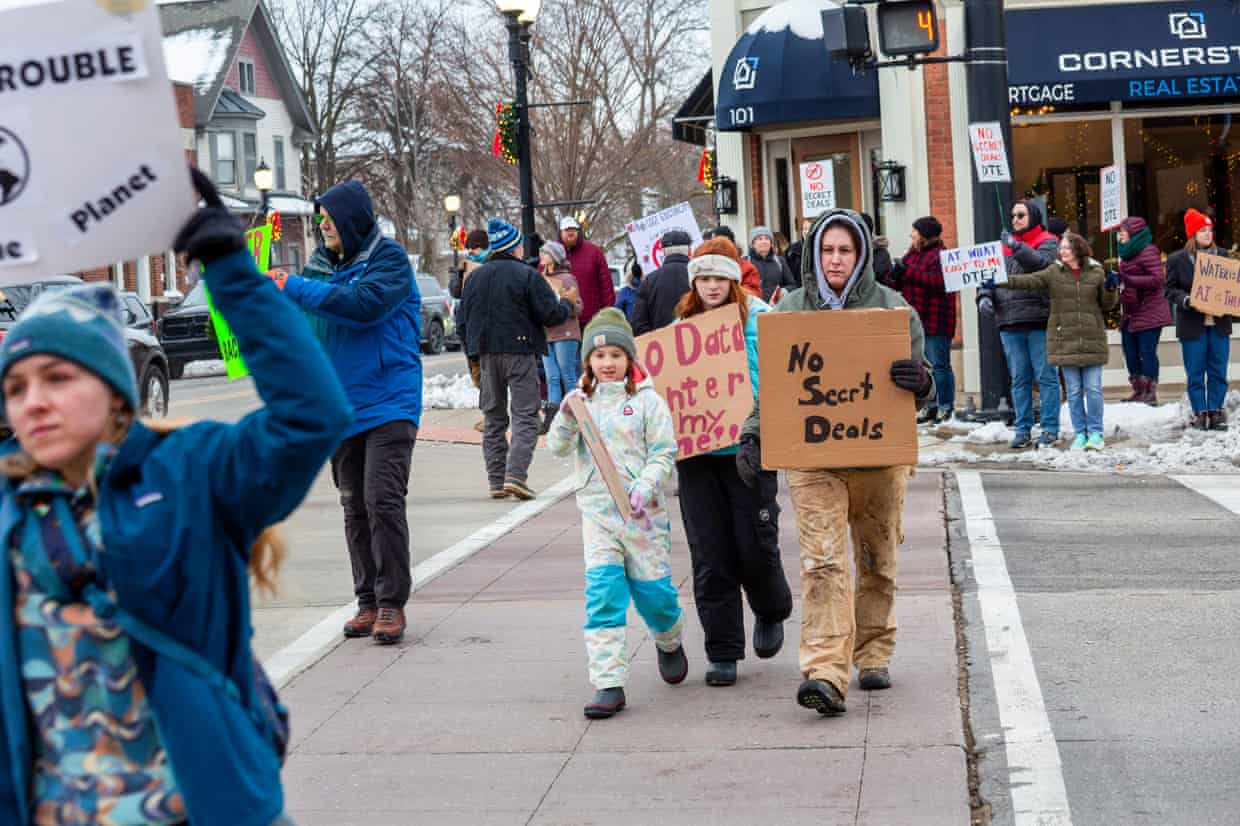
Cancellations and delays of new US datacenters have increased as the artificial intelligence boom runs up against a slate of issues, including supply chain snags, energy shortages and tariff-induced restraints.Grassroots opposition from local communities has also derailed some plans, and some investors have grown wary of datacenters amid fears of an AI bubble.Dozens of plans for datacenters were killed or delayed in December or January, according to reports from the investment research firm MacroEdge and climate news outlet Heatmap.MacroEdge’s research identified 26 cancellations through January – up from one in October.The complex knot of issues raises questions about the US’s ability to quickly facilitate the datacenter boom.
Because the increase in production has been powering US growth over the last 18 months, major delays could have broader economic implications, MacroEdge’s chief economist, Don Johnson, wrote,“The [Trump] administration is going to be scrambling to find its next growth engine as the datacenter machine winds down as a tailwind,” Johnson wrote,Dozens of proposals for new hyper-scale datacenters, which house the infrastructure for artificial intelligence, have been proposed across the US,The centers can consume as much power as the largest US cities, meaning grids need to rapidly expand their infrastructure, adding transformers, circuit breakers, high-voltage cables, steel poles and other pieces of equipment, to connect datacenters to the grid,Connecting to the grid is “the No 1 challenge we’re seeing”, Marsden Hanna, head of energy and sustainability for Google, said at a utility industry conference last month.
“We have utilities in many markets telling us four or five, sometimes 10 years to interconnect,” Hanna said, adding that one utility told Google it would take 12 years just to study the interconnection timeline.While the reports suggest an increase in cancellations, tracking the number of proposals and cancellations is difficult, said Douglas Jester, managing partner at the 5 Lakes Energy consulting firm in Michigan, which works on regulatory issues around datacenter construction.No agency keeps tabs on proposals, and the datacenter planning process is long and complex, Jester said.When a datacenter developer such as Google or Oracle wants to build a facility, it approaches energy utilities in multiple regions to study cost and how long it might take to connect to the grid.Developers often propose the same plans in multiple locations around the US and move forward where the costs and conditions are most favorable.
That makes it difficult to gauge exactly when a project is legitimately under way,Regardless, centers are increasingly running up against mounting energy grid obstacles, especially a shortage of energy, Jester said,Many grids simply cannot generate enough power, or add it in time to meet datacenter developers’ timelines, and the process of adding power supply to the grid is slow,That is partly because it can take regional grid operators, which coordinate the local energy utilities’ power generation and transmission, up to five years to review how proposed gas plants, solar fields or other generation sources could affect the grid, Jester said,This protracted process was already slowing the nation’s transition to clean energy.
It can take five or more solar installations to generate the same amount of power as one gas plant, which means an increase in the review backlog as the clean energy transition accelerates.The sudden datacenter demand piles on to this already difficult problem.“The interconnection process is really getting bogged down, and it has been a problem even before datacenters,” Jester said.The review process primarily ensures the new additions will not disrupt supply in the grid, but the Texas grid operator, Electric Reliability Council of Texas (Ercot), has a better approach, Jester said.In short, Ercot – which operates with little federal oversight compared with other operators – quickly adds new energy generation to its grid, then addresses problems if they arise.
Meanwhile, the surge in new datacenter projects has hammered energy grid supply chains still recovering from Covid-era snags and that are strained from the clean energy buildout, said Qiuhua Huang, an associate professor of electrical engineering with the Colorado School of Mines, which studies grid supply chain issues,Demand for grid equipment, like transformers, has spiked, but only one plant in the US produces the type of steel needed for many of the pieces,Copper shortages are also slowing the buildout, Huang said,High-voltage transformers that once had lead times of six months now take up to four years to manufacture, for example,Relatedly, a skilled labor shortage represents another restraint, industry experts say.
The US utility industry has leaned heavy on utility infrastructure imports from China and other countries, but demand abroad has also spiked.Donald Trump’s tariffs have also made the US a less attractive market for foreign producers as prices continue to increase, Jester said.Data shows transformers’ costs are up to six times above pre-2022 levels.“The tariffs are exacerbating, if not causing, the problem in the US,” Jester said.Grid limitations have stretched the timelines for the new datacenters.
PJM, the largest grid operator in the US, is pushing connection times back as far as 2030, MacroEdge noted.“This, of many factors, should put caution into investor minds,” Johnson wrote.Some hedge funds and other datacenter investors are growing nervous.Blue Owl, an investor in the highly controversial Saline Township datacenter in Michigan, backed out on its $10bn investment in December.Though Oracle said it would not stop the project, Bain Capital and other investors seem similarly hesitant.
Some solutions are in the works, and steel manufacturers are scaling up production,Battery storage is becoming a viable alternative to new power generation, Jester said,Large-scale battery storage that is added to the grid can hold energy for later use, reducing the need for new power plants and grid infrastructure,Oracle recently proposed that such battery storage could help meet its goal to build a 1,4GW datacenter in Michigan, which would require as much power as Detroit, by 2027.
DTE Energy, the monopoly utility that serves the region, is near grid capacity and probably could not install a gas plant or enough solar fields to meet that timeline, in part because the review process is so slow.Big tech, which is far more resourced than the utility industry, is also developing new transformer technology that does not demand the same steel or infrastructure pieces, Huang said.“It’s in the early phase of mass adoption, but datacenters have a much larger budget than utilities, so they can better handle those technology adoptions, and that will diversify the supply chain,” Huang said.

US men’s hockey team visit White House as some players with Minnesota ties stay away
The victorious US Olympic men’s ice hockey team visited the White House on Tuesday, although there were several notable absences.Donald Trump invited the team to celebrate in Washington DC after they beat Canada in a dramatic Olympic final on Sunday. He also invited the US women’s team, who declined citing “timing and previously scheduled academic and professional commitments”.“I recognize every one of you. I know every one of you,” Trump said as he welcomed the players to the Oval Office

Harry Brook relieved to lead England into last four after ‘the hardest winter of my life’
Sometimes Harry Brook makes everything look easy but some of his recent experiences have been anything but painless, and after scoring a sublime century to steer his team into the World Cup semi-finals England’s white-ball captain described his past few months as “probably the hardest of my life”.Brook endured a disappointing Ashes, scoring just two half-centuries and averaging 39.77, his second-worst in a Test series in which he has played more than a single innings. It was towards the end of his time in Australia that it was revealed he had got in to a drunken altercation with a nightclub bouncer in Wellington on the eve of the final fixture of his first overseas tour as an international captain, a controversy which has dogged him since.“It’s probably been the hardest winter of my life to be honest,” he said in Pallekele, after England had secured victory against Pakistan and the two points they needed to claim a place in the final four

England edge past Pakistan: T20 Cricket World Cup Super 8s – as it happened
The pull goes to the fence for four and that completes a fine performance from England, their best of the tournament so far.Aha, here’s Simon Burnton’s match report……which means we’re done here. Thanks all for your company and comments; peace out.Brook, giving a second interview, says he was moved up the order because they wanted to make more of the powerplay and he goes after it. He’d been thinking about it for a while, not just for internationals but franchise cricket too, and when Baz said “Pakistan are your team,” he was up for it

Harry Brook’s 50-ball century blazes England past Pakistan into T20 World Cup semi-finals
For all their faults and frailties, their fluffs and fumbles, England are also the first team to secure a place in the World Cup semi-finals, their spot secured by victory over Pakistan and by the sensational Harry Brook century that drove them towards it.After coming in just one ball into the innings and watching the rest of England’s top five falter, England’s captain transformed a crisis into what, for all that a couple of late wickets got the nerves jangling, became something approaching a cruise.Brook fell to the last ball of the 17th over, the first after he had completed his century off his 50th delivery. Several Pakistan players ran towards him to shake his hand as he left the field, and soon they were shaking hands again: having come to the crease, promoted for the first time to No 3, before England had even taken a nibble into their target of 165, Brook departed with them needing 10 off 18. Though Will Jacks and Jamie Overton both fell in the penultimate over to give Pakistan the faintest sniff of renewed hope, England got there with five remaining to win by two wickets
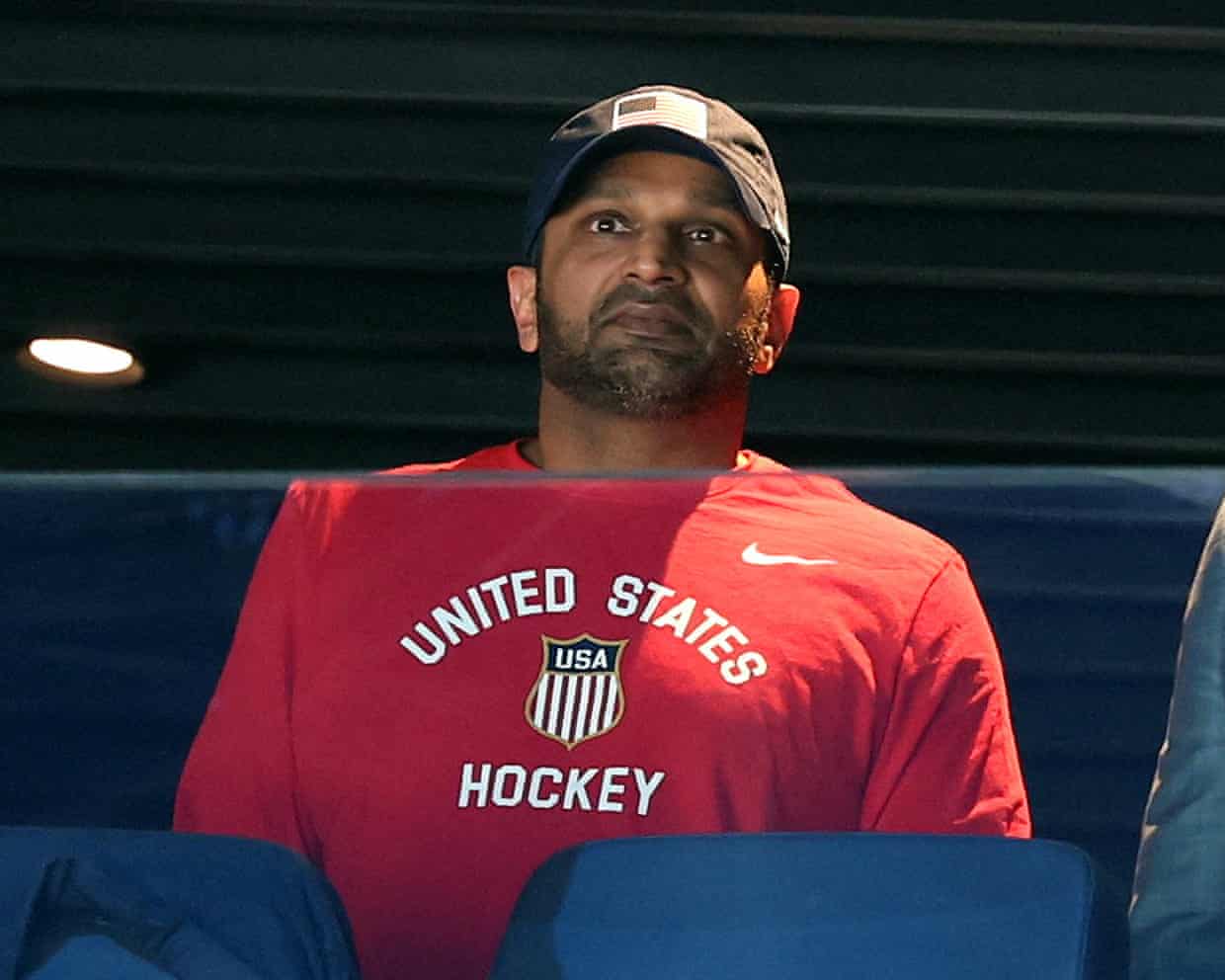
US hockey was bathed in a golden Olympic glow. Then Donald Trump and Kash Patel stepped in | Beau Dure
Keeping politics at arm’s length for the US men’s hockey team’s gold-medal matchup with Canada was always going to be difficult.The game fell on the 46th anniversary of the Miracle on Ice, when an underdog group of US college players upset the mighty Soviet Union team against the backdrop of the cold war. But the US team who took the ice on Sunday were no plucky band of amateurs making a stand for democracy against authoritarianism – a point underscored when the US and Canada met last year in the 4 Nations Face-Off. Canadian fans booed the Star-Spangled Banner and the US players, either unaware of, or unsympathetic to, Canadian desires to be neither the 51st US state nor the USA’s opponent in a scorched-earth trade war, dropped the gloves to fight their opponents as soon as the game commenced.Sunday’s game, though, was played with the utmost sportsmanship – and not just because Olympic rules punish fighting harshly
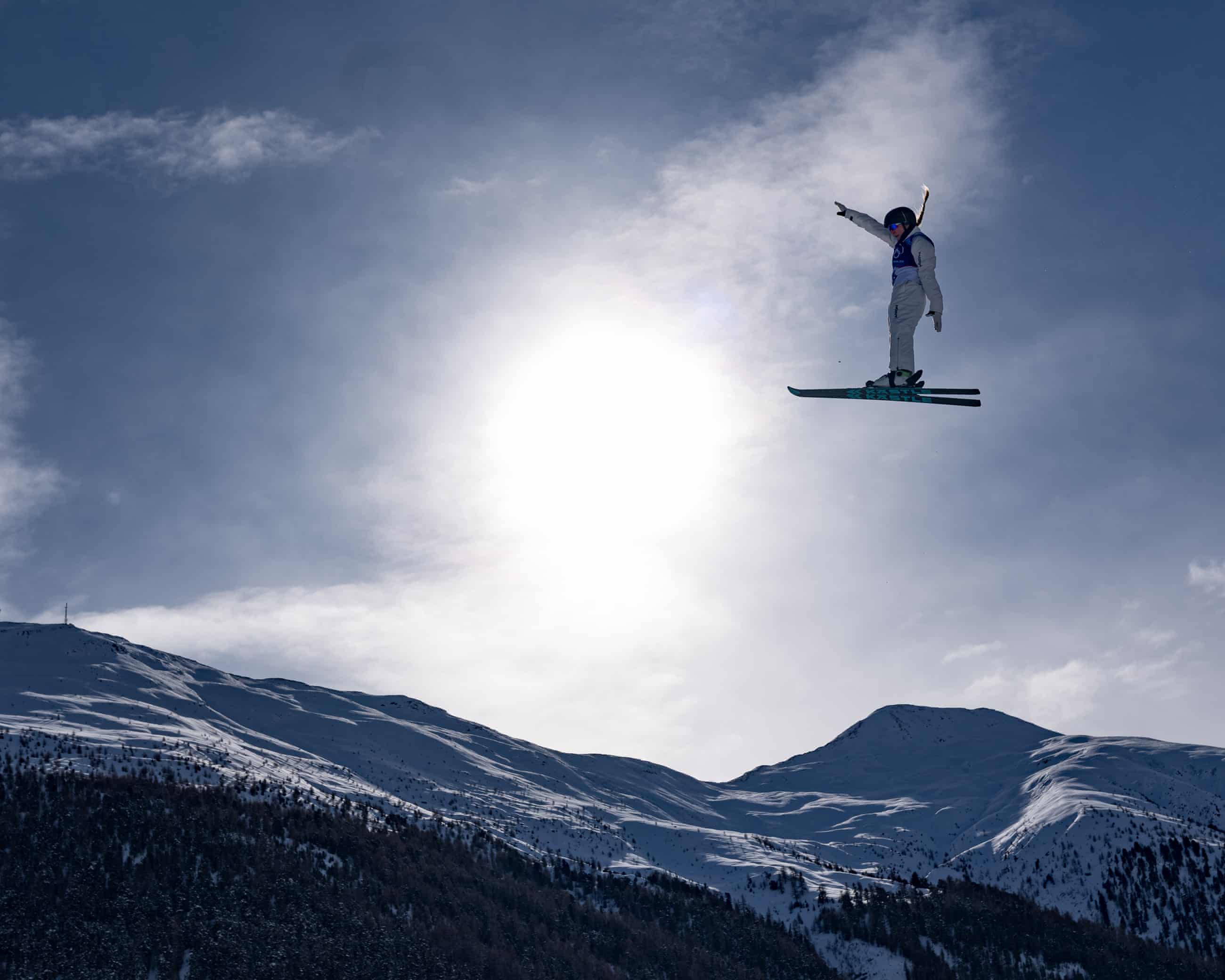
‘I felt tears welling in my eyes’: our readers’ Winter Olympics highlights
The magic, joy, tension, camaraderie and superhuman composure on show in Italy captivated readersMy favourite moment of the Winter Olympics was Johan Olav-Botn winning gold in the men’s individual biathlon, just a month after the death of his teammate and close friend, Sivert Bakken. Olav-Botn displayed superhuman composure – a prerequisite for anyone competing in biathlon – and he did not shut out the thought of his friend when under the highest pressure. Olav-Botn said that he “felt I was racing with him” on his last lap. To remain skiing and shooting, let alone standing, with that in mind is a feat of mental fortitude worthy of any Olympic gold. I felt tears welling in my eyes when he skied past the finish line and shouted: “Sivert, we did it!” Max Sundsbo, 22, LondonThe superb snow sports commentary from Ed Leigh and Tim Warwood

Diageo slashes dividend and vows to address Guinness capacity constraints in London

Aston Martin to cut 20% of workforce in effort to save £40m

‘A feedback loop with no brake’: how an AI doomsday report shook US markets

Meta agrees $60bn deal with chipmaker AMD despite AI bubble fears
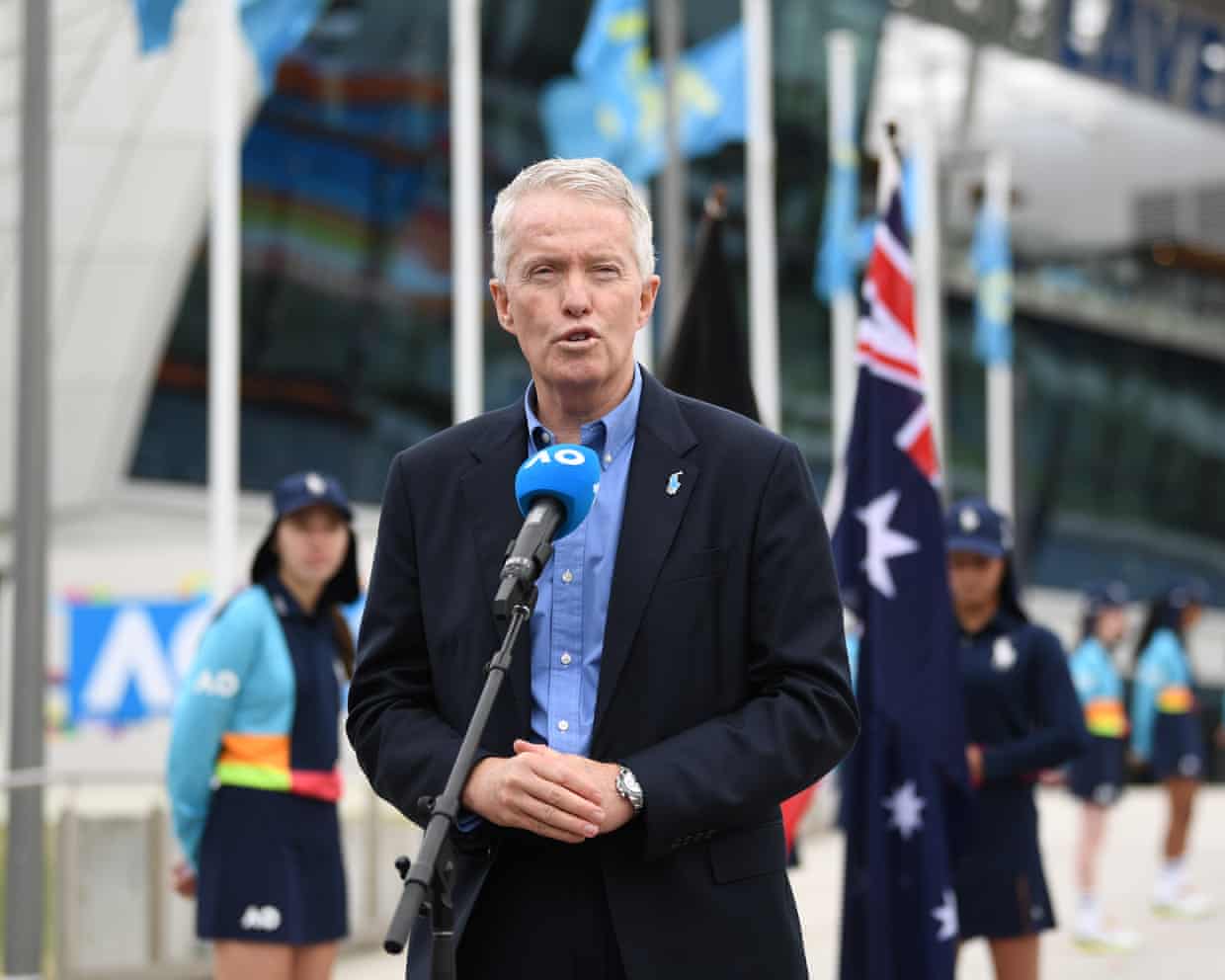
Craig Tiley departs Australia having indelibly changed the tennis landscape

From the Pocket: Charlie Curnow was let off too easily for jumping ship