How Trump’s Iran war could make the world more reliant on coal
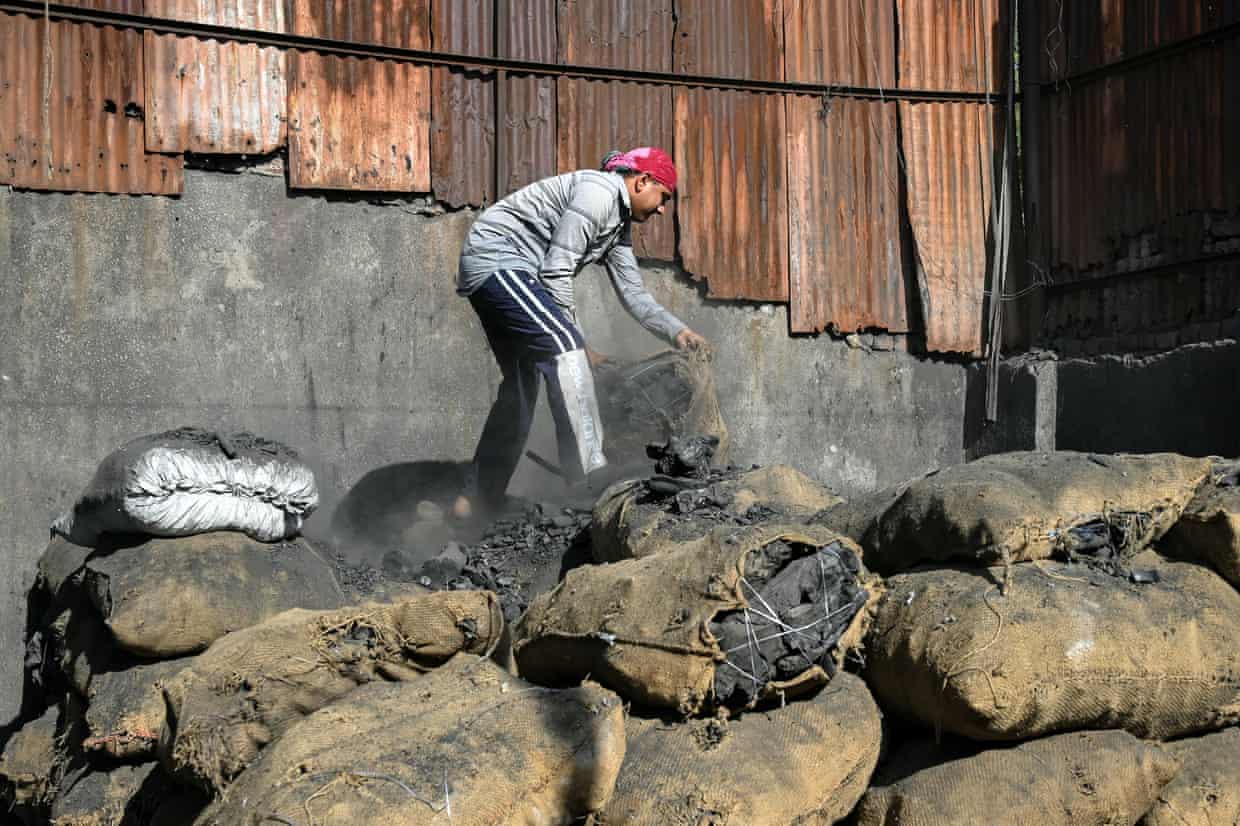
Not two months in office, as the price of west Texas crude approached $14 a barrel, Jimmy Carter, then president, donned a cardigan to speak candidly about his strategy to face the permanent energy shortage he saw in the nation’s future.His “fireside chat” is mostly remembered for asking Americans to lower the thermostat to 65F(18C) in the daytime and 55F at night, an idea that didn’t go down too well in the bitter winter of 1977.Environmentalists fondly recall his promise to research solar power and other renewable sources of energy.But the most consequential commitment Carter made that night, alluded to in subsequent speeches and furthered in his energy agenda, was to aggressively develop domestic sources of coal, what James Schlesinger, appointed by Carter to be the nation’s first energy secretary, called America’s “black hope”.Donald Trump’s America is in a not-too-dissimilar quagmire.
The price of gasoline is higher than it was in the winter of 1977, after inflation, by some accounts threatening to push inflation to its highest in three years.Though the US economy is much less reliant on energy than it was in the 1970s, fear of stagflation, the unholy mix of recession and high inflation, is in the air again.And Trump is doubling down on Carter’s old strategy: to push pedal to the metal to develop US fossil fuels.The energy crisis sparked by the US’s and Israel’s war against Iran makes a strong case for redoubling efforts to replace fossil fuels with renewable energy.Solar and wind power are mostly homemade, not vulnerable to bottlenecks including the strait of Hormuz, where Tehran is throttling the flow of energy the world economy needs.
The rationale is even more powerful in Europe and Asia, which are more dependent on energy imports,Even after the war is over, the new era of global instability (caused largely by the US’s belligerence) could justify investing heavily in renewables to build economic resilience and safeguard national security,As Keir Starmer, the British prime minister, put it: “If we took control of our energy and had homegrown renewables, we could stabilise your bills,”As an extra incentive, this rationale dovetails nicely with the project to wean the world economy from fossil fuels to slow the climate crisis,Unfortunately, sensible though it appears, the proposition is unlikely to prevail.
Because, just like in Carter’s time, doubling down on coal is cheaper,Faced with looming energy shortages, countries around the world will turn to that dirtiest of fuels,Renewables do not, in fact, insulate the energy supply from international upheaval,Notably, wind turbines and batteries require critical minerals that come overwhelmingly from China, which has demonstrated its willingness to leverage this dominance as a geopolitical weapon,More critically, at the moment, the conflict in Iran has raised an additional hurdle to investing in renewable power generation capacity, by pushing up inflation and interest rates around the world, raising the cost of capital.
Coal is just too easy.Consumption worldwide has increased by about 1.3bn tons since 2020, to 8.8bn tons.While this has largely been driven by breakneck demand for energy in India and China, it has also been propelled by crises such as Russia’s invasion of Ukraine, which compelled Europe to stop buying Russian gas.
Despite the rising concerns over climate change and pollution more generally; as world leaders flocked to global climate summits in Rio de Janeiro in 1992, Kyoto in 1997, and Paris in 2015, coal has largely prevailed at the top of the energy supply.In the year 2000, coal supplied 23% of the world’s energy.By 2023 it accounted for 28%.Indeed, changes in energy policy sparked by the war in Iran could unravel much of the progress the world has made toward decarbonization in recent decades, which has been aided by the switch from coal to cleaner gas in power generation.With 20% of the natural gas supply stuck behind the strait of Hormuz, countries in Asia and even in Europe will probably switch some back.
In Asia, the region most affected by the blockade of oil and gas from the Middle East, Japan, India, Bangladesh, the Philippines, South Korea, Thailand and Taiwan have either already ramped up their use of coal or are considering doing so within weeks or days.In Europe, the region most committed to the battle against the climate crisis, Italy said it would postpone the shutdown of its coal-fired power plants for all of 13 years.Germany is also considering switching back on some idled coal plants.More than half a century on, Carter’s energy initiatives offer a cautionary tale about how such crises can affect the energy supply.His enthusiasm for renewable energy was heartfelt.
He famously installed solar panels on the roof of the White House, (later removed by Ronald Reagan).In 1979, he called for the US to obtain 20% of its energy from renewable sources by the year 2000.By the turn of the century, however, renewables – largely biomass – covered just over 4% of the nation’s energy demand.By contrast, coal covered 23%.Decarbonization remains within our reach, of course.
Coal today satisfies only about 9% of energy demand in the United States, slightly less than renewables.But a more unstable world does not further the cause.It puts the effort at risk.

Relationship with Trump may be beyond repair, Keir Starmer told
Keir Starmer has been warned his relationship with Donald Trump may be beyond repair after the US president derided the prime minister for consulting his team about military decisions, in a mocking impersonation.In a new low for UK-US relations, Trump appeared to imitate Starmer in a weak voice during an Easter lunch speech at the White House, and said the UK was “not our best” ally.The episode is Trump’s latest broadside at Starmer and the UK’s “old” aircraft carriers after the prime minister declined to let the US use British military bases for its initial strikes on Iran.Following the latest attack on Starmer, diplomatic and political figures said he was right to brush off the criticism but added that the relationship was very damaged and he would need to redouble efforts to built international relations elsewhere.The US president said the UK “should be our best” ally but had not been during the Iran war, accusing Starmer of prevaricating over sending aircraft carriers

Starmer’s cost of living adviser urges him to extend fuel duty cut in light of Iran war
A cut to fuel duty should be extended to reflect the rise in petrol prices, the government’s cost of living champion has said.Richard Walker, the executive chair of the supermarket chain Iceland, urged Keir Starmer not to raise the levy in September, in light of the conflict in the Middle East.The strait of Hormuz, a crucial trading artery between the Gulf and the Gulf of Oman, has been blockaded since the US and Israel launched attacks on Iran at the end of February.A fifth of the world’s oil passes through the strait, and its closure has sent global prices soaring, putting pressure on the world economy.Fuel duty is frozen until September, when the government will review any rise
Labour challenges Farage over cost of private jet trip to Maldives
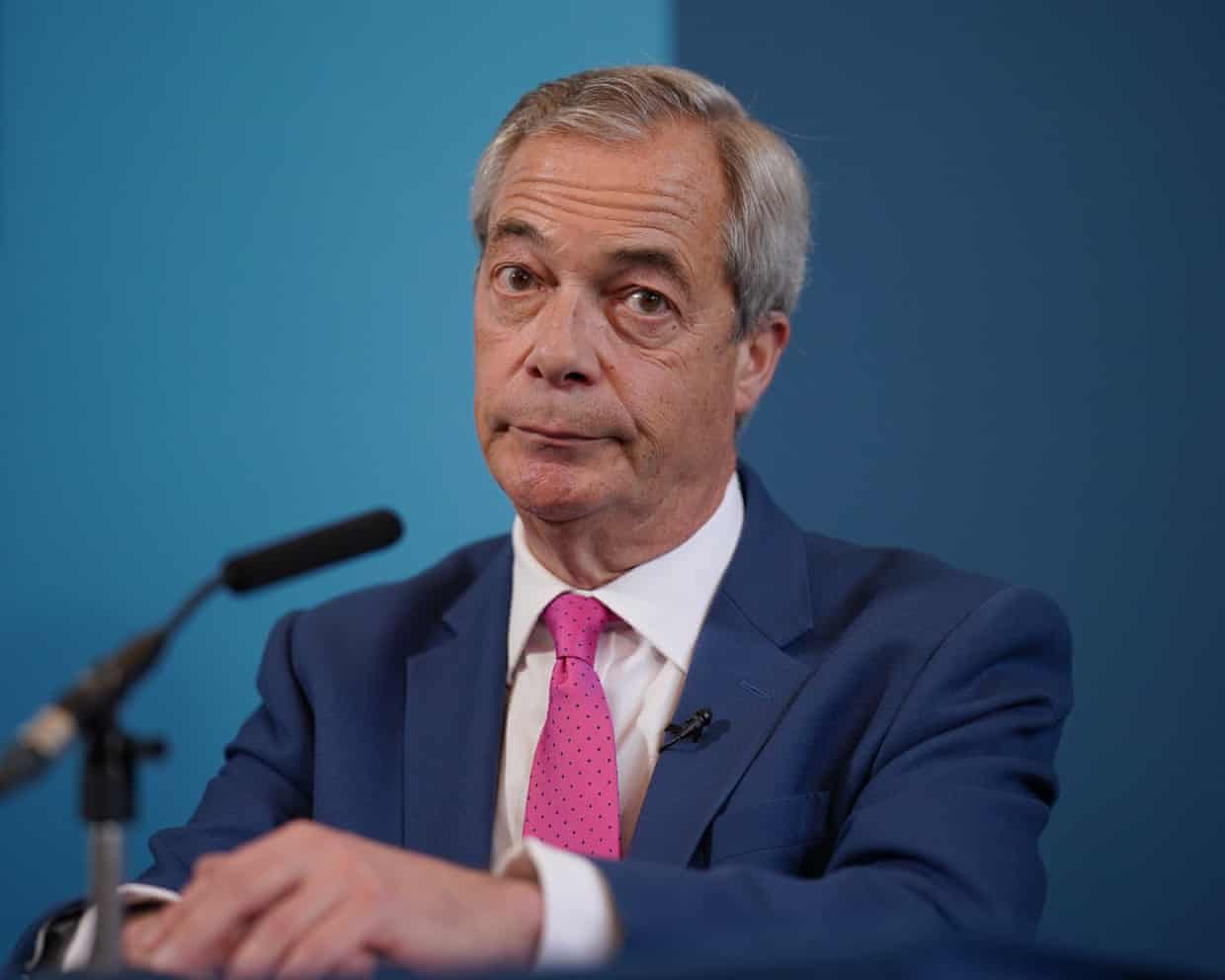
Labour has queried Nigel Farage’s claim that a return trip to the Maldives on a private jet linked to a billionaire donor cost as little as £25,000 as the Reform leader attempted to reach the Chagos Islands.Farage initially recorded his two-day trip to the Maldives as costing £12,500 funded by Thailand-based Reform megadonor Christopher Harborne, before upgrading this to £25,000 in the latest register of interests.The Guardian reported that ownership of the private jet was linked to Harborne, who has given the party more than £12m.However, Anna Turley, the chair of the Labour party, wrote to Farage on Thursday arguing that chartering a private jet of a similar size would cost many times more than the sum declared.“According to publicly available flight logs, this was an 11,000-mile round trip, lasting just over 23 hours, using a model of plane that is currently advertised on multiple private jet websites as costing at least $11,500 (£8,500) per hour to charter,” she said

Starmer must call energy summit akin to 2008 crisis response, Labour MP says
Keir Starmer should convene a global energy summit of the same order as Gordon Brown’s response to the 2008 financial crisis and put Britain on a “war footing” to reduce its exposure to fossil fuels, a Labour MP and former government adviser has said.Polly Billington, who was an aide in Brown’s government, warned that economic pain was “hurtling down the tracks” and a bigger response was needed to protect the British people from the consequences of the US-Israeli war on Iran.The MP for East Thanet said the impending energy crisis caused by the war was “as big as the financial crash” and required “a response of equal magnitude”. She said the increase in prices would not be temporary or regional, and that “economic pain, falling living standards and social anger create fertile ground for extremist politics”.While she said the government’s convening of 35 countries to discuss the reopening of the strait of Hormuz was a good step, a bigger global response was needed on energy
Drip-feed of Reform UK controversies puts party’s policy drive in shade
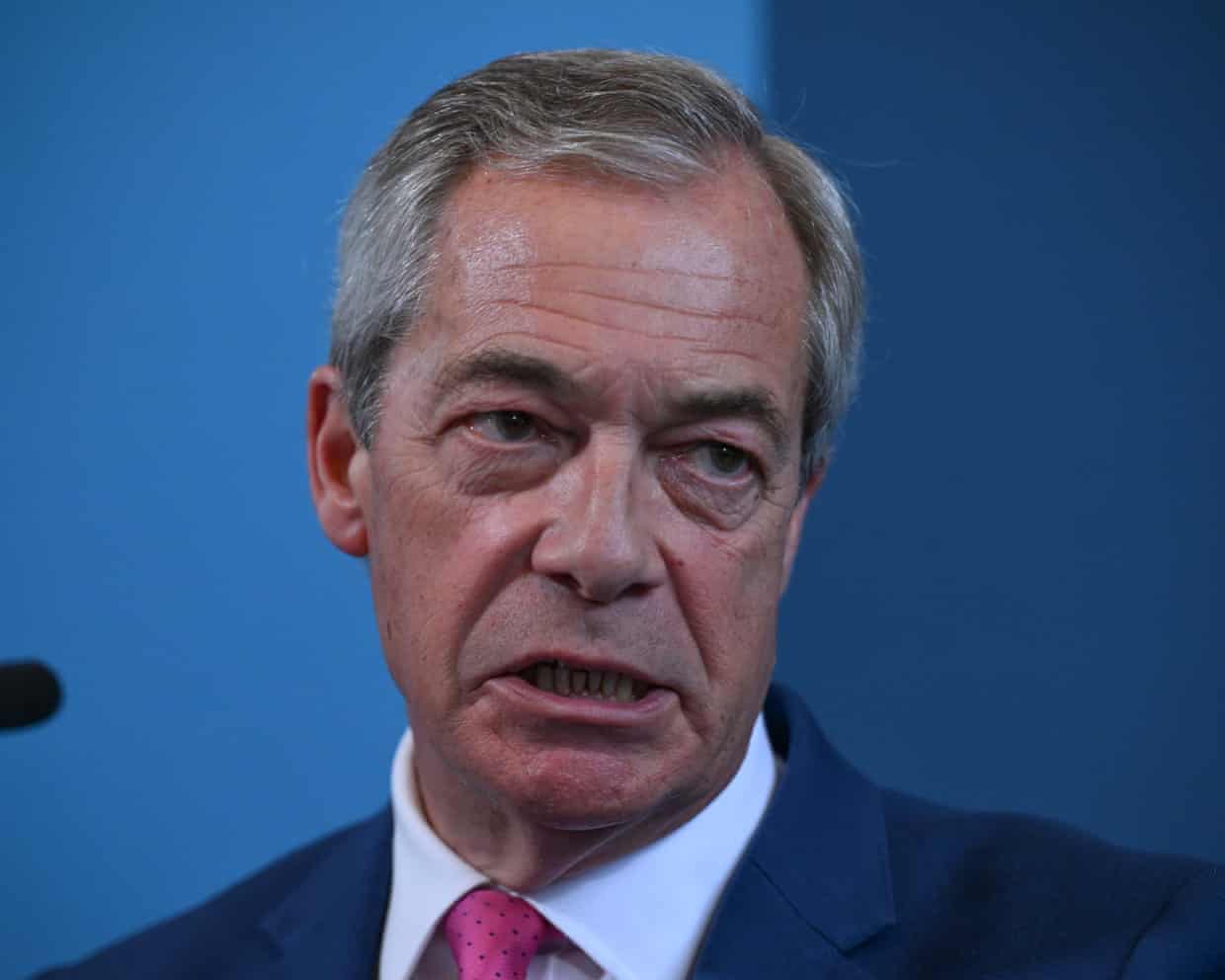
It was a week that started with a candid admission from Nigel Farage. When asked if Reform UK’s vetting process was finally up to scratch, the party leader said: “I accept that at the last general election basically there was no vetting really.” He was speaking after the latest of what a senior colleague had described as a “series of abhorrent incidents”.That latest incident had involved a Welsh Senedd candidate, Corey Edwards, who was forced to step down last Friday after a picture of him appearing to do a Nazi salute surfaced online.Yet while Farage went on to tell reporters at a Heathrow press conference on Tuesday that they would find Reform was “doing pretty well now”, just two days later another frontline party member was in hot water

UK politics Q&A, as it happened: Andrew Sparrow answers your questions on Starmer, Reform and more
Reform UK’s housing spokesperson has been sacked from his role after he described the Grenfell Tower fire as a “tragedy” but said that “everyone dies in the end”.The NHS is bracing for the longest strike yet by resident doctors after last-ditch talks failed, prompting Wes Streeting to accuse the medics of suffering from “delusion”.Nick Candy, the honorary treasurer of Reform UK and a major donor, has sold his mansion in the Chelsea district of London for a reported £275m.Thank you for the questions everone. Happy Easter

Dozens of firms risk losing B Corp status after standards overhaul
Thousands of small UK firms’ energy bills set to more than double due to Iran war
UK’s leading AI research institute told to make ‘significant’ changes
Google to tap into gas plant for AI datacenter in sharp turn from climate goals

Chicago Sky trade Angel Reese to Atlanta Dream in first major move of WNBA offseason
Horse welfare debate helps highlight Grand National’s unrivalled status