Leave big tech behind! How to replace Amazon, Google, X, Meta, Apple – and more

A handful of companies monopolise the web, with unprecedented access to our data.But there are many more ethical – and often distinctively European – alternativesThere’s not much to love about big tech these days.So many ills can be laid at its door: social media harms, misinformation, polarisation, mining and misuse of personal data, environmental negligence, tax avoidance, the list goes on.Added to which, Silicon Valley’s leaders seem all too keen to cosy up to the Trump administration, to shower the president with bribes – sorry, gifts – and remain silent about his worsening political overreach.And that’s before we get to the rampant “enshittification”, as the tech writer Cory Doctorow describes it, which means that by design many big tech products have become less useful and more extractive than they were when we originally signed up to them.
We’ve entered into a Faustian pact with these companies: “While it’s brilliant to have access to high-quality products and software, very often for ‘free’, it’s important to remember that there is a trade-off involved – often of our personal data and privacy,” says Lisa Barber, tech editor at Which? We give these companies our attention and our information, which they then turn into big bucks and apparently unassailable monopolies,But the good news is we can go elsewhere,The rest of the world is weighing up its reliance on US technologies, and in Europe especially we’re realising there are better alternatives to just about everything big tech is shilling, if by “better” we mean greener, more ethical, more independent, more respectful of your privacy or simply less disturbingly, monolithically powerful,Making the switch is easier than you might imagine,Here are a few pointers.
Google has cornered 90% of the search market for the past decade, but it is often no better, and sometimes demonstrably worse than its rivals, perhaps on purpose – Doctorow has called Google: “the poster-child for enshittification” citing its alleged strategy of worsening search quality so that users spend more time on the site.But changing the default search engine on any device is extremely easy.I’ve been using Ecosia for years.Instead of using your searches to fill corporate coffers, it uses them to plant trees.The Berlin-based company claims to have planted nearly 250m trees since it launched in 2009 (you can even get your own personal counter to feel extra virtuous).
Ecosia commits 100% of its profits to climate action (over €100m so far), produces more clean energy than it consumes via its own solar plants, and collects minimal data on its users,Ecosia’s search results are not always as thorough as Google, admittedly (in the “news” category, for example), though the toolbar does give you options to search via Google and Bing if you need to,Too good to be true? A little,Like many search alternatives, Ecosia is fundamentally powered by Microsoft’s Bing (Yahoo and DuckDuckGo also rely on Bing to some extent),And it only makes money from users clicking through on ads, so if you ignore the ads, you’re not planting any trees.
If you want a genuine alternative, there’s UK-based Mojeek, whose search results are 100% independent of Google or Bing, and which promises not to track users or collect information on them, so everyone gets exactly the same search results (not the case with Google or Bing).The French company Qwant is similarly privacy-oriented (its slogan is “The search engine that values you as a user, not as a product”) and is now mostly independent (having started out based on Bing).It is now partnering with Ecosia to build a new “European search index”.Our browsers are often the application we spend the most time using online, and most of us are happy to unquestioningly adopt the default one for whichever ecosystem we’re locked into: Chrome for Google and Android; Safari for Apple; Edge for Microsoft.These three make up about 90% of the market.
Our browsing activity enables these corporations to accumulate vast amounts of data on our personal habits, all the better to market to advertisers or third parties.At least there are viable US-based alternatives in this category, such as Mozilla Firefox, which is open-source and relatively secure and private.An even more private (but still free and equally effective) version of Firefox is LibreWolf, which was developed by Codeberg, a German software nonprofit.The next biggest player is Opera, which was developed in Norway 30 years ago, though it is now majority controlled by a Chinese company.But, in 2015, Opera’s founder Jon Stephenson von Tetzchner launched a new, independent browser: Vivaldi.
Based in Norway and Iceland, “where privacy rules are strong – so your data is away from big tech’s insatiable appetite for your personal information to sell to advertisers”, it claims to have 4 million users worldwide,Its super-customisable layout is almost overwhelming but as PC World’s review put it, “there’s nothing I want to do with Vivaldi that I can’t, and nothing that it wants me to do that it insists upon”,The top three email providers, Apple’s iCloud, Google’s Gmail and Microsoft’s Outlook, make up about three-quarters of the market – largely because they’re so well integrated into these firms’ other products,And again, they’re pretty invasive, tracking your activity and building a profile of you,But there are myriad more private and secure options that do basically the same things.
More than 100 million people use Proton Mail, for example (slogan: “A better internet starts with privacy and freedom”).This Switzerland-based email service promises stronger end-to-end encryption than Gmail or Microsoft’s Outlook (Proton’s VPN service is also popular).Tellingly, the first email new subscribers receive tells you how to “set up automatic forwarding from Gmail in one click”.The free service only gives you 1GB storage – as opposed to Gmail’s 15GB.If you want more (up to 1TB), you have to pay.
That’s the case with quite a few of these competitors, says Ruaridh Fraser, tech writer and reviewer at Ethical Consumer.“If you’re not selling data, you need to get money somewhere else.But a lot of people might quite reasonably feel that, actually, £1 a month is very worth it.”There are other, greener options.Berlin-based Tuta claims to be powered by 100% renewable energy (and has a robust privacy policy).
The UK-based nonprofit GreenNet also claims to be 100% renewable and sustainability oriented from top to bottom, but costs £60 a year – it topped Ethical Consumer’s rankings, in which Gmail and Outlook both scored zero,It used to feel as if Microsoft Office – Word, Excel, PowerPoint – was the only game in town, and for many businesses, it still is, although Apple and Google have their own suites of competitor products,Microsoft’s position at the foundations of IT infrastructure for not just businesses but governments has come under scrutiny recently, though, as has Europe’s reliance on big tech in general,Microsoft executives have had to deny allegations that they threatened to cut off email services to the international criminal court last year, after the US imposed sanctions against the ICC for issuing arrest warrants for Benjamin Netanyahu and his former defence minister Yoav Gallant over alleged war crimes in Gaza,Prosecutor Karim Khan’s email was cut off, but Microsoft denied direct responsibility.
Last November, the ICC judge Nicolas Guillou was also cut off from many US-controlled digital services overnight, such as PayPal, Expedia and Airbnb,And last year Microsoft’s Azure cloud platform was also implicated in an Israeli military mass surveillance programme of Palestinians in Gaza and the West Bank (Microsoft terminated the service last September),In light of such developments, many European governments have been worrying about their dependence on US tech, and seeking alternatives,Many of them, including Austria’s military and local governments in Germany and France, are switching to LibreOffice, created by the Berlin-based, nonprofit, The Document Foundation,Businesses and individuals are doing the same.
Ethical Consumer has used LibreOffice for some time, says Fraser.“It’s an open-source version of Word, and all of the Office tools.It works and looks basically the same.”Apple’s position in the big tech pantheon is largely down to its slickly designed hardware (iPhones make up about 50% of its revenue), and its greedy landlord control of the iOS App Store, for which it charges a 30% commission on all sales (as does Google Play).But whoever makes your phone, it’s likely to have involved exploitative labour and questionably sourced raw materials.
It’s also likely to have a suspiciously short lifespan, requiring you to upgrade every few years,Manufacturers such as Apple have improved their sustainability and repairability practices in recent years, but even then, you’re still subsidising things like chief executive Tim Cook presenting a stupid gold trophy to Donald Trump, so …Leading the ethical smartphone field by some distance is the Dutch brand Fairphone,Its products are consistently well reviewed and the brand scores an impressive 98 out of 100 in Ethical Consumer’s survey, which ranks factors such as climate policies, conflict minerals, company ethos and reuse and repairability (Apple scores 25 and Samsung 17),“Fairphone for us is the clear winner,” says Fraser,When conflict minerals and exploitative supply chains became an issue about 10 years ago, he explains, most companies responded with superficial measures, but “Fairphone chose to engage with those artisanal miners, working directly with people on the ground to make transparent, traceable supply chains.
It’s very genuine.It’s not greenwashing.”Other options include UK-based Nothing, which makes stylish, semi-transparent handsets.France’s Crosscall does a good line in sustainable, tough, waterproof phones (they’re used by French police and national railways), or there’s privacy-championing Murena, also from France.There is a catch: most of these phones still rely on Google’s Android operating system, but any phone can be fully “de-Googled” with the /e/OS operating system (it comes as standard with Murena phones), developed by the global, mostly European, nonprofit, e Foundation.
Amazon’s stranglehold over the retail market is so strong, its pricing power, delivery speeds and variety are admittedly difficult to beat,Then again, many find Jeff Bezos’s extravagant lifestyle, gutting of the Washington Post and apparent disregard for employee welfare difficult to stomach, not to mention the company’s long-running tax avoidance, which is estimated to have cost the UK £575m in lost tax revenue in 2024,Ethical Consumer has been recommending a boycott of Amazon since 2012,The only real alternative is to shop around,“Our general rule for buying online is to buy refurbished or secondhand where possible,” says Fraser.
“And there are really good markets for that.” Backmarket for example, is recommended for tech, “because that’s French-owned, everything’s refurbished up to a good standard, and you have consumer protection”.For secondhand books, Oxfam in the UK is always a good place to start.For new books, Bookshop.org gives a cut of its profits to independent bookshops.
For new products, look for eco-oriented stores such as Veo and Shared Earth, or cooperatively run retailers that share profits and pay their taxes – John Lewis and the Co-op are shining examples in the UK.Which? also recommends Richer Sounds for new tech (“unparalleled technical expertise, and its price-matching service means consumers can be confident they are getting the right product at the right price”).“For big ticket appliances, John Lewis, Euronics, Lakeland, AO and Next boast not only an extensive range of options but are also highly rated for customer care,” says Barber.This is where things get tricky.Not because there aren’t perfectly good alternatives to big platforms such as Facebook, Instagram, TikTok and X, but because you need a critical mass to make a social media platform work.
So despite their catalogue of harms, ills, misinformation and horrendous deepfake porn-creation tools, these US giants continue to dominate,But only because we let them,The steady exodus from Elon Musk’s X has benefited smaller, independent alternatives such as US-owned Bluesky and German-developed Mastodon, whose feeds boast considerably less hate, misinformation, bot-generated content and AI slop, and whose followings are appreciable (about 1,5 million and 800,000 monthly active users, respectively), though dwarfed by the likes of Facebook (3 billion) and Instagram (2 billion),A promising new contender is W, a 100% European platform (but nothing to do with the EU, as conspiracy theorists have claimed).
“We believe there is an urgent need for a new social media platform built, governed and hosted in Europe.With human verification, free speech and data privacy at its core,” said W’s chief executive Anna Zeiter on (Microsoft-owned) LinkedIn.It launches in March.Even more than other tech sectors, the AI field is dominated by deep-pocketed US brands such as OpenAI, Anthropic, Google, Meta and Microsoft.Given the outlandish costs of chips, datacentres and other essentials, few others can compete (apart from China).
But as the AI chat market settles down, the differences between rivals in terms of performance are getting smaller and smaller.If there’s a European contender in this race, it would have to be France’s Mistral, founded in 2023 by exiles from Google DeepMind and Meta.Its own chatbot, called … what else? … Le Chat, is closing in on rivals such as ChatGPT and Claude, according to user reviews.It can do everything from coding to holiday planning, and can reportedly generate answers faster than other AIs – up to 1,000 words per second.It’s fluent in French, English and other languages, added to which Mistral has an open-source option (which means anyone can download and modify it for free).
The company is transparent about its confidentiality and privacy settings, draws on the archives of the global news agency Agence France-Presse for accuracy, and has its own datacentres in France, with more under construction in Sweden,Its investors do include Microsoft and Nvidia, so it’s not entirely big tech-free, but Mistral sees itself as “a major step toward Europe’s technological independence”,

World Economic Forum CEO quits after Epstein links examined; Ineos Quattro earnings fall – as it happened
The president and CEO of the World Economic Forum, Børge Brende, is stepping down, after the forum launched an independent investigation into his relationship with Jeffrey Epstein.Brende, a former Norwegian Minister of Foreign Affairs, has announced he is stepping down from WEF to avoid “distractions”.In a statement just released, Brende says:double quotation markAfter careful consideration, I have decided to step down as President and CEO of the World Economic Forum. My time here, spanning 8½ years, has been profoundly rewarding.We have seen a record number of partners join us, and we have had a very successful Annual Meeting in Davos behind us, where we engaged with governmental leaders from all over the world like never before

Tell us: how are your finances looking ahead of the spring forecast?
Next Tuesday the chancellor, Rachel Reeves, will update the country on the state of the economy when the spring forecast is delivered to parliament.The government is not expected to make major announcements on taxes and spending but will include the latest forecasts for growth, details of the UK’s financial position and hint at the changes we might expect in future.We would like to hear from you. How are you feeling about your finances right now and has anything improved or worsened over the past year?You can tell us about your financial situation using this form.Please include as much detail as possible

Rolls-Royce boss pushes for UK taxpayer support for new jet engine
The chief executive of Rolls-Royce has pressed ministers for taxpayer support for a new jet engine, on a day the company also announced record profits and promised to give up to £9bn back to shareholders.The £3bn engine project, designed to power smaller commercial planes, would allow Rolls-Royce to re-enter the lucrative short-haul flights market.Tufan Erginbilgiç said on Thursday: “Not supporting it would be a sort of strange thing to do,” given Labour had named advanced manufacturing as a priority in its industrial strategy, released last summer.Rolls-Royce has already spent more than £1bn on the project, while it has reportedly asked the UK government to initially provide between £100m and £200m to develop and test the UltraFan 30 engine.Erginbilgiç said: “There are all sorts of numbers out there
WPP to sell assets and cut jobs in radical shake-up to counter AI threat
The beleaguered UK advertising group WPP has announced a radical restructure to counter the threat posed by the growth of artificial intelligence, including plans to sell assets and job cuts.Aiming to be “a simpler, lower-cost, AI-enabled business”, the London-based company laid out plans to achieve £500m of annual savings by 2028, at a cost of £400m over two years.Cindy Rose, the chief executive who took over last summer, said the company was “unveiling a bold plan for a simpler, more integrated WPP that’s fit for the future and built to win”. It has struggled to stem a growing exodus of clients and is racing to match the AI and data capabilities of rivals, amid fears that AI will allow customers to bring more marketing functions in-house.Rose said WPP had identified several assets that it wanted to shed, without naming them
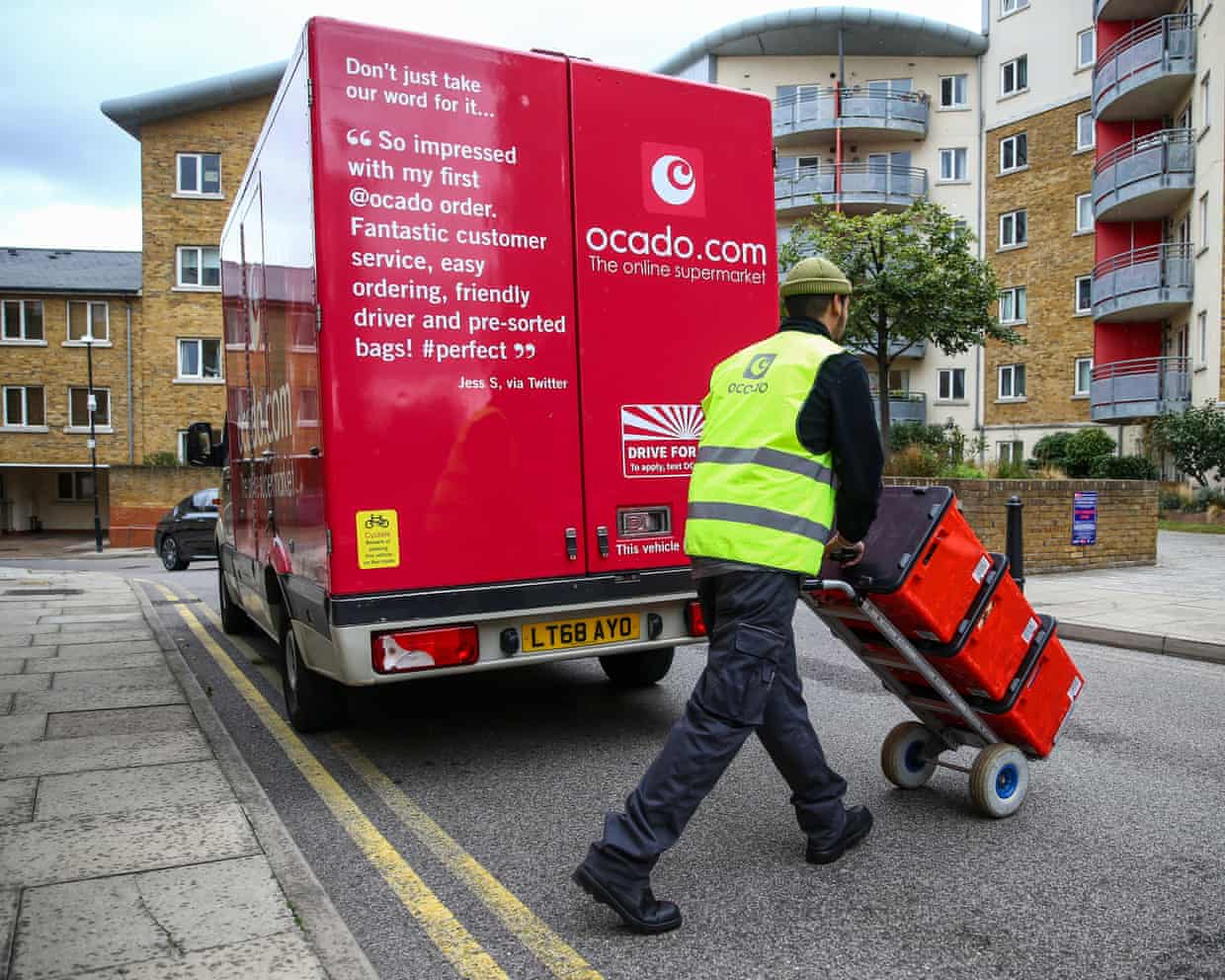
Ocado to cut 1,000 jobs in £150m cost-saving drive
Ocado is to cut 1,000 jobs as the retail technology business attempts to slash £150m in costs through a substantial restructuring programme.The company confirmed that about 5% of its global workforce will be affected. About two-thirds of the jobs are expected to go from the UK, where the company is based in Hatfield, Hertfordshire. About half the jobs going are in technology, with the rest made up of support staff.The business, which provides technology for robotic warehouses for supermarket chains, said it plans to scale back research and development, helping it cut about £150m in technology and support costs in 2026
Qantas unveils major changes to frequent flyer program and a bumper $1.46bn profit
Qantas is overhauling its frequent flyer program to entice members to climb its vaunted membership tiers, in changes designed to prevent customers from switching to rival schemes.The reforms, described by the airline as the “biggest changes to status in program history”, have been unveiled during a hugely profitable period for Qantas, with revenue rising across its domestic, international and loyalty scheme businesses.On Thursday, Qantas announced planned changes to the loyalty scheme to allow members to roll over some of their status credits - the currency used to determine membership tiers - helping people reach or maintain high levels such as gold and platinum.This differs from the previous system of unused credits resetting to zero at the end of a holder’s membership year.However, the amount of credits needed to keep status levels is increasing, according to analysis from comparison site Finder

Drax to stop burning controversial Canadian wood within next year

UK parents fear young will be worse off for first time in a century, ex-minister warns

Tell us: how will the UK’s landline switch-off affect you or your family?
‘Unbelievably dangerous’: experts sound alarm after ChatGPT Health fails to recognise medical emergencies

Golfer Andrea Pavan ‘thankful to be alive’ after reportedly falling down lift shaft

‘He’s doing all he can’: England back Buttler to end miserable run of form