‘Every accident at high speed is a shock’: F1 rules guru on response to Bearman crash
As talks begin over fixing the controversial regulations, the FIA’s Nikolas Tombazis says changes to ‘specific aspects’ are needed, not a total overhaulFormula One has endured a somewhat turbulent opening this season under the sport’s new regulations.Amid the sound and fury of some driver dissatisfaction with the new formula and safety concerns brought sharply into focus by a huge accident at the Japanese Grand Prix, three races in there is now an opportunity to propose changes, with the man who has been at the heart of the process since it began quietly confident that F1 can adapt successfully.Nikolas Tombazis is the single-seater director for F1’s governing body, the FIA, and has been with the organisation since 2018.He was there when the very first discussions of the 2026 regulations took place in January 2021 and has been central to their evolution since.In his calm and articulate fashion, Tombazis says the noise around the new regulations is overstated.
“It’s not like we’re discussing a complete rewrite,” he says of the rules.“We believe the patient is not in intensive care; the patient needs to just eat a couple of apples per day, not to have an open-heart surgery.“There are topics from both the drivability and the safety point of view that we need to address.I don’t like to be going around saying: ‘Everything is fine, we don’t need to do anything,’ because clearly things do need to be done.Equally, I don’t like to say on the other extreme: ‘It’s all a mess.
’ We have fans happy with the show, we’ve got an accident that was caused by specific aspects we need to solve and we’ve got some drivers who feel that some things can be improved.”That the new rules would not suit everyone was a given but that they would provoke quite such a reaction less so.Drivers from the teams whose cars are leading, such as George Russell at Mercedes and Lewis Hamilton at Ferrari, have unsurprisingly declared themselves generally accepting of the formula, whose increased use of electrical energy requires the management of its deployment and recharging over a lap.Others, however, have been damning.Lando Norris is among many expressing distaste, the world champion dismissing the way drivers are at the mercy of how the electrical energy is managed, while Max Verstappen has repeatedly stated he is so disenchanted he is considering leaving the sport.
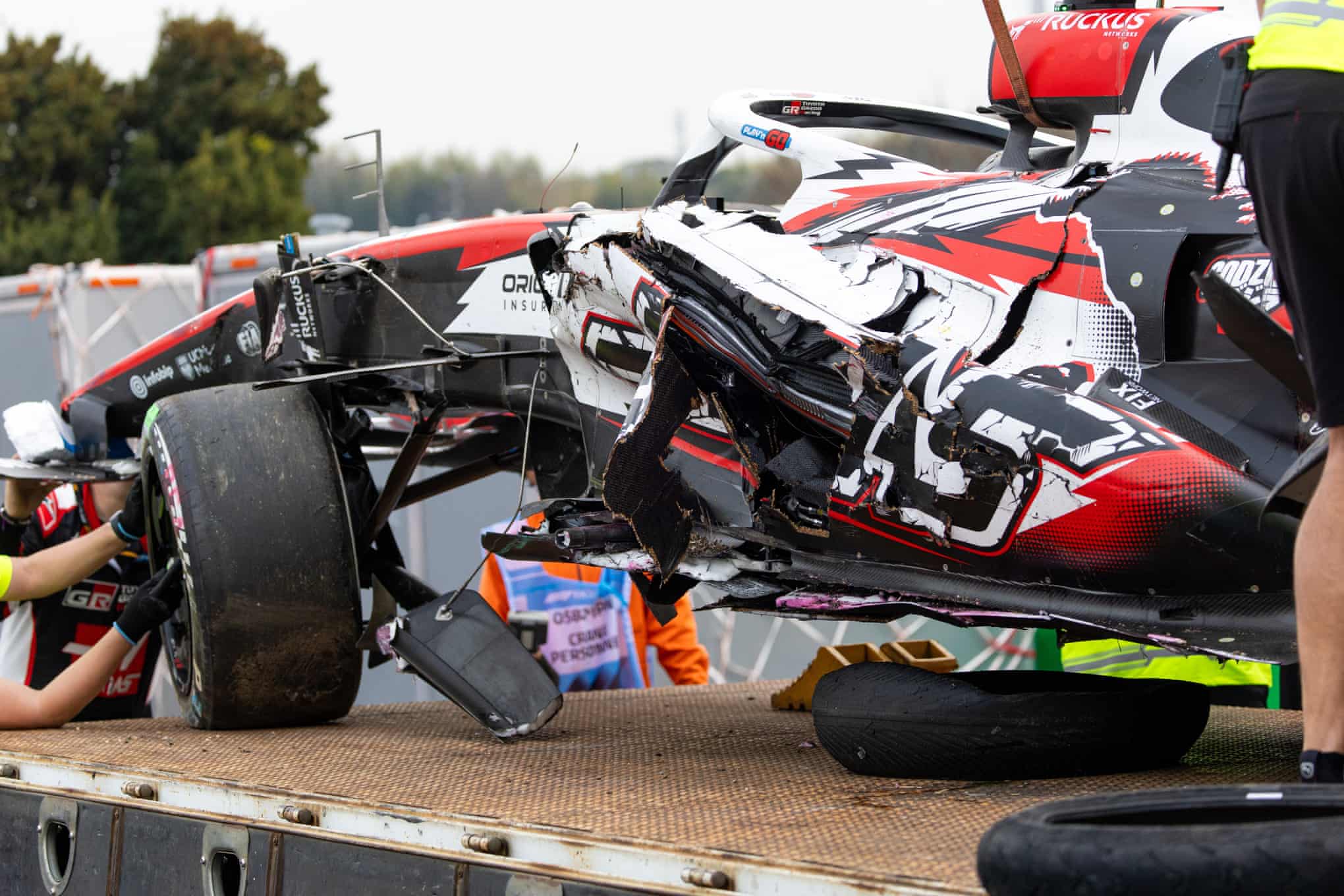
Which Tombazis acknowledges comes with the territory,“I don’t know if there’s ever much of a case when you are the headmaster or the referee when you get a pat on the back all the time,” he says,“They usually get criticised, and we are big enough to know that,”Pleasing everyone would have been a sisyphean task but Oliver Bearman’s 190mph crash at Suzuka, brought about because of the drastic difference in closing speeds between cars, caused huge concern,It has not been taken lightly, insists Tombazis, but he was wary of acting too soon.
“Every accident at high speed is always a little bit of a shock,” he says,“To say it was expected would be wrong but the closing speeds had been identified as a risk,There have been talks about it but there was not easily the ability to act on it before we had a bit of time to analyse a few of the parameters,“When we’ve introduced changes in a much more hurried way, the risk is that we make things worse or we cause all sorts of other issues, so that’s why we need to have a bit of time to analyse,Clearly safety is the number one priority.
”The 57-year-old engineer and car designer from Athens has worked in F1 since 1992, including stints with Ferrari, McLaren and Benetton before joining the FIA.He is passionate about the sport but also brings the analytical and considered attitude the governing body requires, as the sport prepares to address these issues.The discussions are taking place this month between the FIA, the teams, power- unit manufacturers and the commercial rights holder, FOM.A preliminary meeting is being held between parties on Thursday, largely to assess the technical and sporting considerations from the opening three rounds and potential changes, with another to come the following Thursday and the intention to have a discussion with the drivers as well.These will be followed by a further meeting on 20 April for the senior representatives, including team principals and their CEOs, the power-unit manufacturers and F1’s CEO, Stefano Domenicali.
At that meeting, changes to the regulations will be decided, subject to ratification by the world motorsport council.It is hoped this will be in time for the next round of the championship, in Miami on 3 May.The FIA has been open in acknowledging that the new regulations would be something of an evolution and that it was monitoring them closely, with a review always planned.Tombazis notes that with as many as 200 engineers at each team all furiously looking to put performance on the car, there would be a steep learning curve for everyone.“You can learn theoretically how to play the violin but until you play the violin you don’t necessarily understand what it involves,” he observes.
This is true, but rarely have new regulations provoked this level of disquiet.Part of the problem facing F1 is the complexity of how these hybrid engines work, how that affects drivers’ experience and how fans see it.The last of these, F1 insists, has been a positive.It is a juggling act, then.There will be no changes to the construction of the engines but rather to the parameters of energy recovery and deployment, which can be adjusted but which is also a finely judged line to manage, particularly as it also may affect overall speed.
“These rules are what we collectively refer to as energy management rules that won’t require changes to hardware but may require some settings to change and some software,” Tombazis says,“Changes that are fundamentally possible to introduce very soon and go to the core of addressing closing speeds or driver satisfaction,”He also did not, however, rule out further developments to give engine manufacturers a chance to make other developments,“We may decide that we want to have a phase one and a phase two and maybe give phase two a bit more time for some tweaks to be done by the manufacturers,”These are testing times, then, but the governing body is at very least squarely addressing them and open in the requirement to do so.
The task before Miami is to marry the commitment to safety to the changes required,The result will not please everyone but there is optimism this will at least make for a successful adjustment – at least until the more thorny debate over what to do for 2027 begins,“Everyone is extremely passionate about this sport – drivers, fans – and when things are not perfect, they will be quite passionate about it,We’re not expecting people to sugarcoat their comments,” says Tombazis,“But I’m now hoping for broad consensus, that teams will be also supportive and we won’t be in a position where we have to argue too much.
”

Tell us: do you use AI chatbots to make decisions for you?
AI chatbots like ChatGPT, Gemini and Claude are now a part of everyday life.More and more people are using them to help make decisions in their lives, like sending text messages, deciding what to cook, or navigating relationships.We want to hear about your experiences of using chatbots. Are you addicted to them? And what type of decisions are you using them for?You can tell us your experiences of using chatbots using this form.Please include as much detail as possible
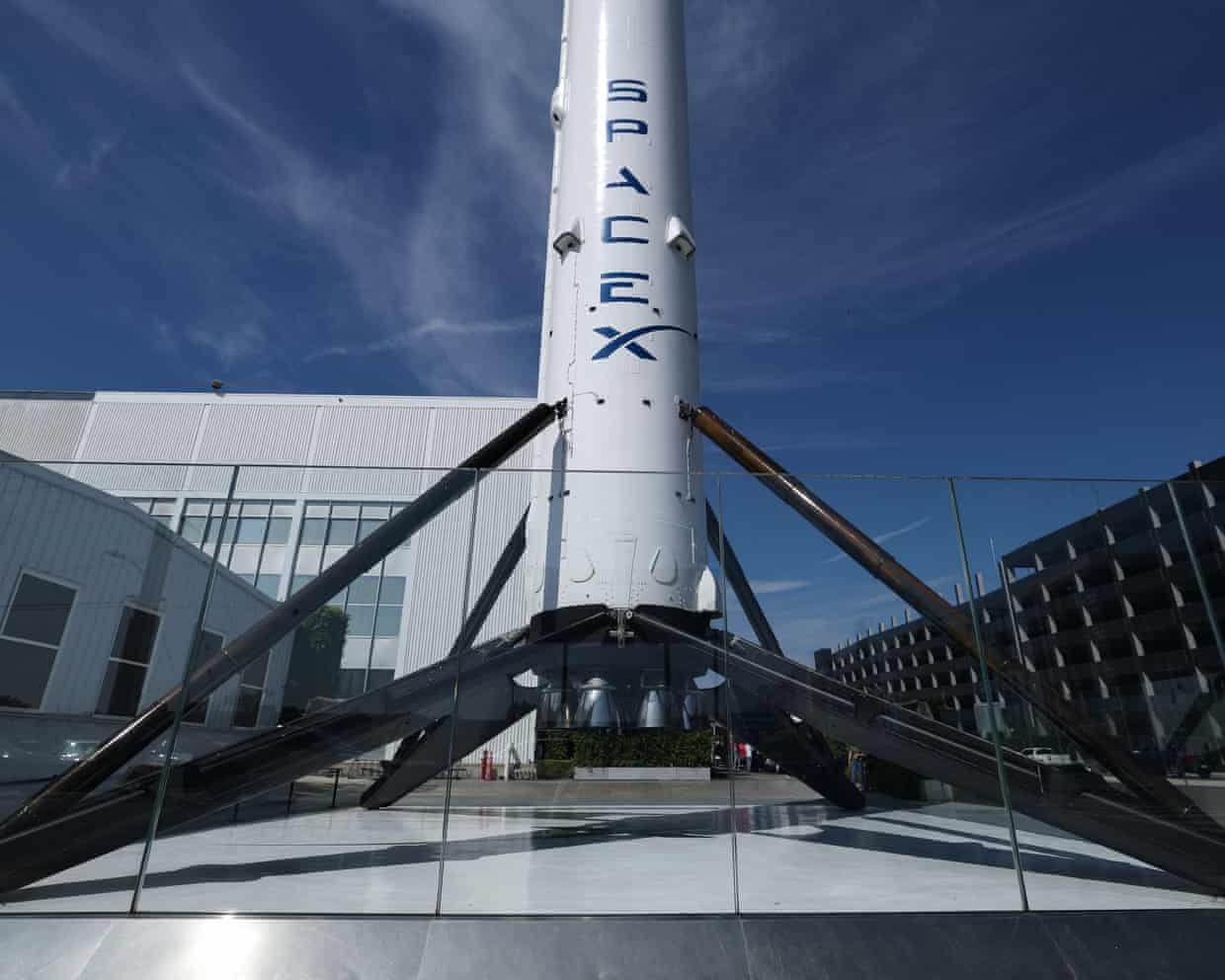
An AI company with an arsenal of spacecraft: what exactly is SpaceX?
Hello, and welcome to TechScape. I’m your host, Blake Montgomery, US tech editor at the Guardian, writing to you as I listen to George Handel’s Messiah for Easter.SpaceX filed confidentially for an initial public offering on the US stock market last week at a reportedly astronomical valuation. My colleague Nick Robins-Early reports:Elon Musk’s company, which has become a dominant power in both space travel and satellite communications, could seek a valuation upwards of $1.75tn

Porn, dog poo and social media snaps: the ‘taskers’ scraping the internet for AI firm part-owned by Meta
Tens of thousands of people have been paid by a company part-owned by Meta to train AI by combing Instagram accounts, harvesting copyrighted work and transcribing pornographic soundtracks, the Guardian can reveal.Scale AI, 49%-controlled by Mark Zuckerberg’s social media empire, has recruited experts across fields such as medicine, physics and economics – putatively to refine top-level artificial intelligence systems through a platform called Outlier. “Become the expert that AI learns from,” it says on its site, advertising flexible work for people with strong credentials.However, workers for the platform said they have become involved in scraping an array of other people’s personal data – in what they described as a morally uncomfortable exercise that diverged significantly from refining high-level systems.Outlier is managed by Scale AI, which has contracts with the Pentagon and US defense companies

‘There’s a lot of desperation’: skilled older workers turn to AI training to stay afloat
When Patrick Ciriello lost his job and couldn’t find work for nearly a year, his family’s foundation crumbled.“You hear about people who hit rock bottom,” Ciriello told the Guardian. “Well, I was there.”For most of his career, the 60-year-old with a master’s degree in information management designed software systems for banks, universities and pharmaceutical companies. But a series of economic shocks – the dotcom crash, the 2008 financial crisis and the Covid pandemic – cost him jobs, sometimes forcing him to dip into his savings and retirement funds

Tech companies are cutting jobs and betting on AI. The payoff is far from guaranteed
AI experts say we’re living in an experiment that may fundamentally change the model of workSign up for the Breaking News US email to get newsletter alerts in your inboxHundreds of thousands of tech workers are facing a harsh reality. Their well-paying jobs are no longer safe. Now that artificial intelligence (AI) is here, their futures don’t look as bright as they did a decade ago.As US tech companies have ramped up investments in AI, they have slashed a staggering number of jobs. Microsoft cut 15,000 workers last year
An AI bot invited me to its party in Manchester. It was a pretty good night
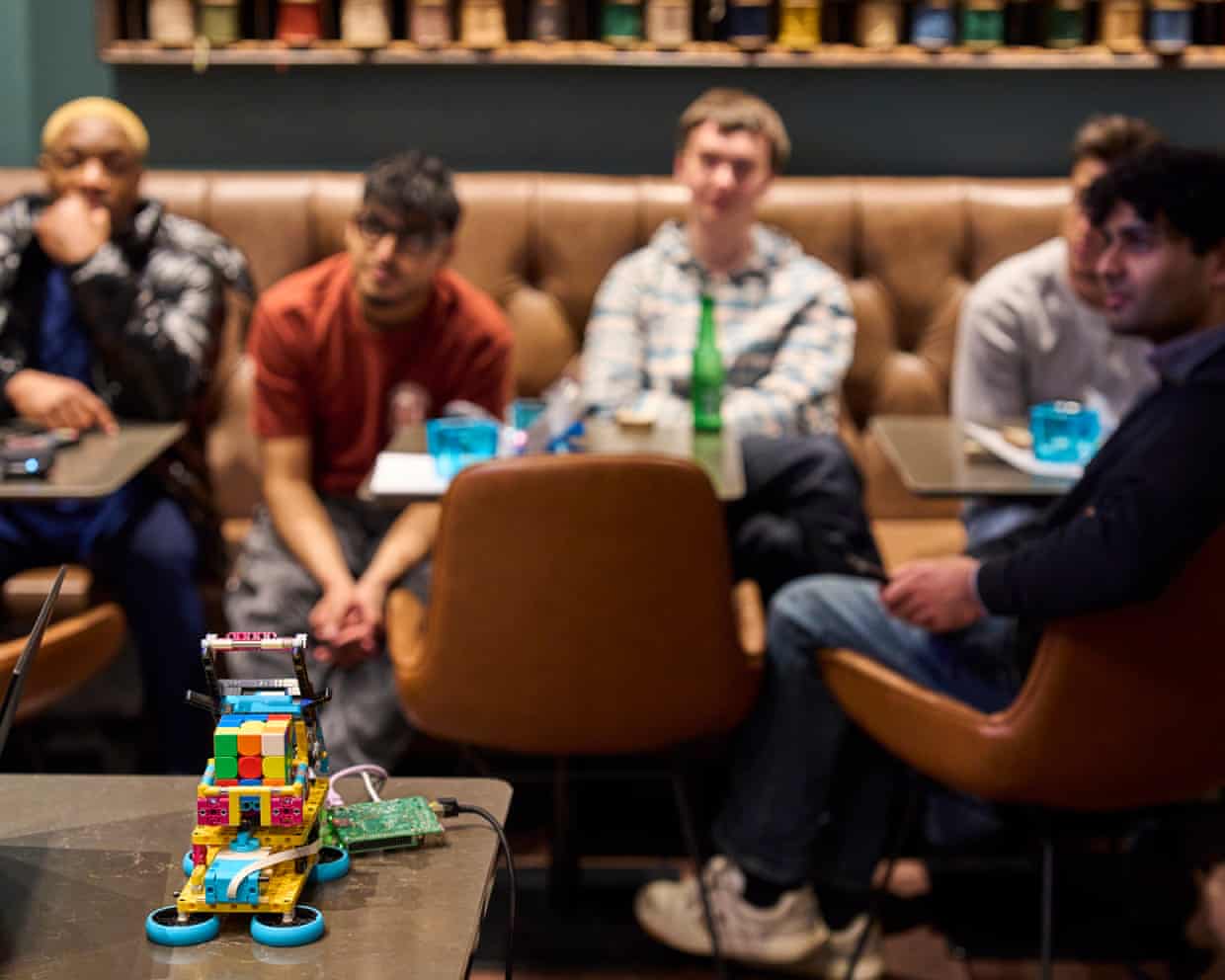
Two weeks ago, an AI bot invited me to a party it was organising in Manchester. It then promptly lied to dozens of potential sponsors that I’d agreed to cover the event, and misled me into believing there would be food.Despite all this, it was a pretty good night.In early February, a class of new, powerful AI assistants went viral. The assistants, called OpenClaw, represented a step change in the rapidly improving capabilities of AI – in large part because, unlike other AI agents, they could be untethered from guardrails and set loose upon the world
Zack Polanski calls for UK to withdraw trade agreement with Israel after strikes on Lebanon

‘They will not get my vote this year’: Birmingham focus group shows shift from Labour support
British crypto billionaire Ben Delo says he has given £4m to Reform UK

UK politics: Starmer warns ‘lot of work to do’ to make ceasefire permanent at start of talks in Gulf - as it happened

Keir Starmer is no Neville Chamberlain | Brief letters

Tell us: have you received local election leaflets through your door?