ICO promises legal action over ‘traumatic’ UK care-record access
The UK’s information commissioner has raised alarm over the “lengthy, traumatic and often demoralising process” people face when trying to access their care records, writing to local authority leaders to say his office will take action over legal breaches,The data protection regulator said people who grew up in the care system were waiting up to 16 years for access to their records, and in some cases found their files had been destroyed, lost or were provided only with extensive redaction,The commissioner, John Edwards, said requests were “too often met with cold bureaucracy, long delays and pages of unexplained redactions, which can have devastating consequences”,“For people in care, these files are an important part of understanding their personhood and their development,It’s restoring to them the insights into how they have become who they are,” he said.
“But there’s a lack of compassion,Local authorities are stretched and the humanity can disappear,But this is a product of really bad record-keeping systems that have not been upgraded over generations,”On Tuesday, Edwards wrote to all UK local authority leaders calling for change in how councils respond to requests for records, and warning that his office would take action when they fail to comply with guidance,The Information Commissioner’s Office (ICO) has recently served Bristol city council with an enforcement notice for delays involving child social care data, and it fined the Scottish charity Birthlink £18,000 after it destroyed 4,800 personal records, including handwritten letters and photographs.
An ICO survey found that more than two-thirds of people struggled with poor communication from their local authority when requesting their care files, and 69% said the process took too long, with some still waiting up to 16 years later.John-George Nicholson, 48, grew up in the care system, and first applied for his care records almost 25 years ago.He received a bundle of 126 pages that became one of his most important possessions – one of the few things he packed when he went travelling.He recently found out that hundreds of pages had been omitted, and he now has a set of almost 800 pages that he never knew existed.“I don’t understand how it’s possible to get such different files.
How are the records kept? Why is it that suddenly, later on, there were more records? That’s a really big chunk of my life,” he said.“They are tough and often traumatic to read, but they are also a kind of treasure chest.“When you’re trying to make sense of what it’s like to grow up without your parents and in other people’s houses, you want people to take care over how they document that.”He has also struggled with the extensive redaction in the files, which included the name of his brother who he grew up with, and who recently died unexpectedly.“There’s something about him being redacted in that way that is really difficult to see.
It just seems farcical to me.When you’ve grown up in the care system, you’re often last in the queue of what matters to people.The first thing in the queue is they want to protect themselves,” he said.Edwards said access to records was important for individuals but also in holding services to account, pointing to last year’s landmark report in New Zealand that found 200,000 children were abused in state care.He is spearheading a Better Records Together campaign, with new standards on how to handle requests and a UK-wide pilot monitoring the performance of 19 organisations.
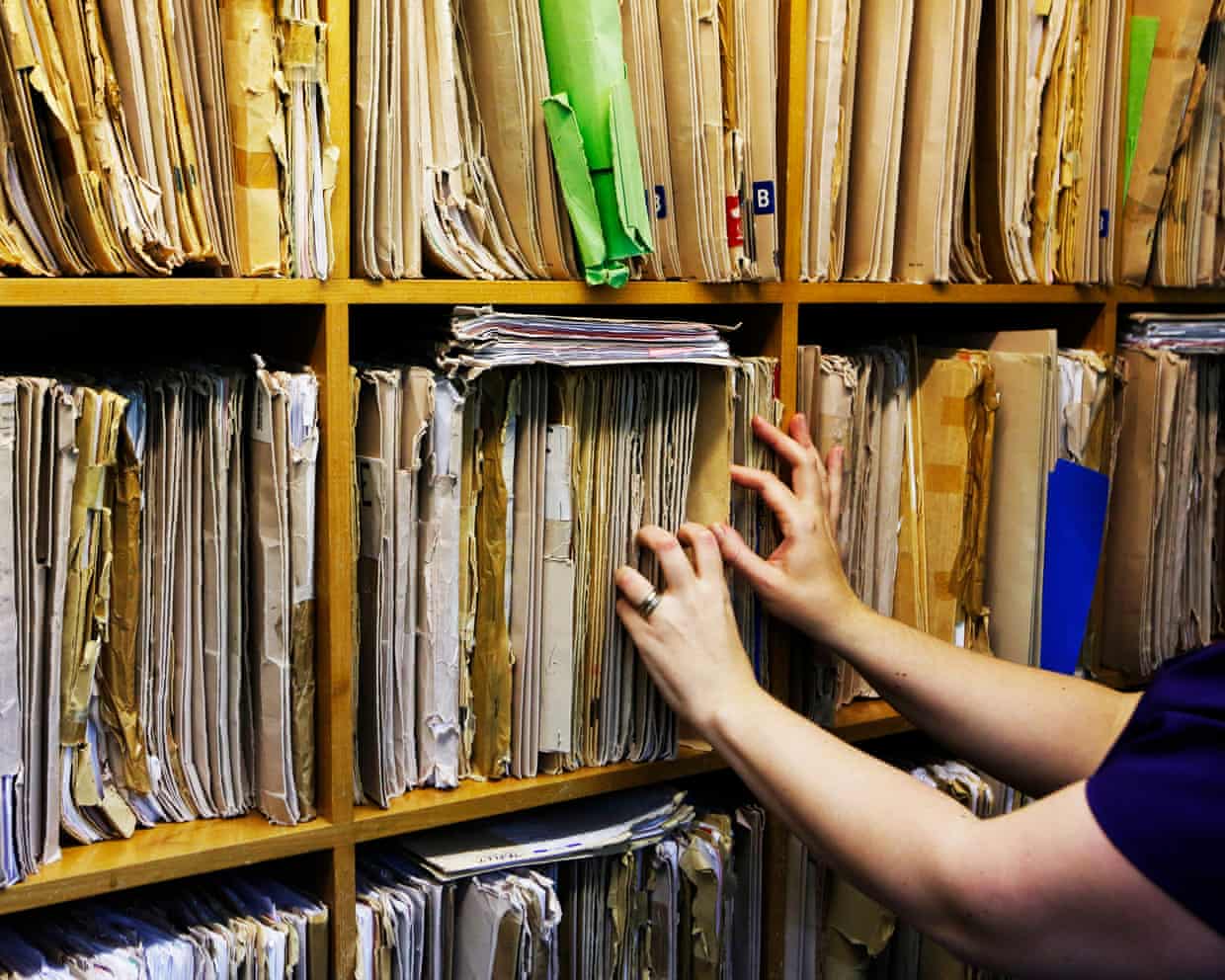
Jackie McCartney, a care-experienced campaigner and ambassador for the Rees Foundation, said: “I can remember the social worker arriving with my care records – she carried one old battered brown box.That was all I was worth.That box was my life story of residential care, with 16 years of my life inside.“She told me not to worry – ‘there’s not a lot in there’.I can still feel the pain and disappointment.
My records were not even in date order, with whole years of my life missing,The whole process must have more compassion and care,”Responding to the research by the ICO, Amanda Hopgood, the chair of the Local Government Association’s Children, Young People and Families Committee, said: “Councils want to ensure people have access to their care records without delay and to be able to move more quickly on releasing records,“However, many councils lack the resource to do so, as a result of historic funding pressures,There is also the additional challenge of older records being generally paper-based, so this can require more work and take longer.
”

The Guide #220: The best things we watched, read and listened to this year – that weren’t from 2025
We’ve just inched into December, which of course means Christmas list season. Already, five days in, plenty of publications have shared their cultural best-ofs for 2025 – you can read the Guardian’s best books and songs of the year right now, with our countdowns in TV, film and music coming very soon.Meanwhile, many of you will have been bombarded on social media by screengrabs of your colleagues/friends/enemies’ Spotify Wrapped playlists (though Mood Machine author Liz Pelly has written pretty convincingly about why you shouldn’t share yours). This year’s Wrapped includes a “listening age” feature, which uses the release dates of the music you streamed to determine how horribly out-of-date your tastes are – revealing to some users that they are, in fact, centenarians.But there is, of course, no shame in taking a break from the deluge of new releases to catch some forgotten or not-forgotten classics

Stephen Colbert on Pete Hegseth’s Venezuela scandal: ‘Frantically pointing the finger’
Late-night hosts talked Donald Trump’s renaming of the Institute of Peace, Pete Hegseth’s ongoing Venezuela scandal and a new batch of photos from Epstein Island.Stephen Colbert opened Thursday’s Late Show with a note about the president’s meeting with leaders from the auto industry, where announced that he would do away with the guidances enacted by Joe Biden to make more electric cars. “This is a Green New Stand,” said Trump in the Oval Office. “And people were paying too much for a car that didn’t work as well … All of the nonsense is going to be taken out of the cars.”“All you need in a car is the basics, folks,” said Colbert in his Trump voice

Barbican revamp to give ‘bewildering’ arts centre a new lease of life
Project will make the famously confusing London landmark easier to navigate and more accessible“Everything leaks,” says Philippa Simpson, the director of buildings and renewal at the Barbican, who is standing outside the venue’s lakeside area and inspecting the tired-looking tiles beneath her feet.Water seeps through the cracks into the building below and serves as a reminder of the job facing Simpson and the team who are overhauling the 43-year-old landmark.The first phase of the project will cost £231m, and Simpson – who did a similar, if less daunting, job for the Young V&A in east London – hopes it will be finished in time for the 50th anniversary in 2032. The overall bill is estimated to be £451m.A mammoth task awaits her

A minimalist statement or just Pantonedeaf? ‘Cloud dancer’ shade of white named Pantone’s 2026 colour of the year
Hi, Emma! I’m so pumped to find out what colour 2026 is going to be. Fill me in!Brace yourself, Nick. Every year since 1999 Pantone chooses a colour for the year, a representation of the zeitgeist – from how we’re feeling to what we’re wearing, how we’re styling our homes and even our eyebrows. Last year’s was the darker shade of beige “mocha mousse”, the year before that was the soft, warm “peach fuzz”.This year’s pick is even more baffling

Jimmy Kimmel on Pete Hegseth, ‘our secretary of war crimes’
Late-night hosts tore into Pete Hegseth’s Venezuelan boat blame game, Donald Trump’s cabinet meeting naps and the annual Spotify Wrapped lists.Jimmy Kimmel opened his Wednesday-evening monologue with an acknowledgement of a yearly tradition: the annual Spotify Wrapped list, documenting users’ listening habits for the year.“This Spotify, they really have it figured out,” he said. “They spy on you all year. It’s what they do

Norman conquest coin hoard to go on show in Bath before permanent display
The coins were buried in a valley in the English West Country almost 1,000 years ago at a time of huge political and social turmoil.A millennium on, plans have been announced to bring the Chew Valley Hoard, 2,584 silver coins hidden shortly after the Norman conquest, back to the south-west of England.The feelgood story of how the coins, worth more than £4m, were found by a band of metal detectorists will be told but visitors will also be encouraged to reflect on how the world continues to be gripped by worries about conflict, the actions of the powerful and money.Sam Astill, the chief executive of South West Heritage Trust, which acquired the hoard for the nation last year, said the idea was not just about showing off the coins and telling their history.He said: “There will also be a conversation about turning points, turning points in history or in people’s lives

Moonpig’s use of AI to design and personalise cards drives up sales

Home movers in Great Britain could get just £30 of energy use without account

Western carmakers ‘in fight for lives’ against Chinese rivals, says Ford boss

‘Bring it on!’: growing support in England for four-day week in schools

UK fraud prevention ‘still lacking’ after Covid-related scams and errors cost £11bn

Britons face higher chocolate prices but average cost of Christmas dinner falls