‘We could hit a wall’: why trillions of dollars of risk is no guarantee of AI reward
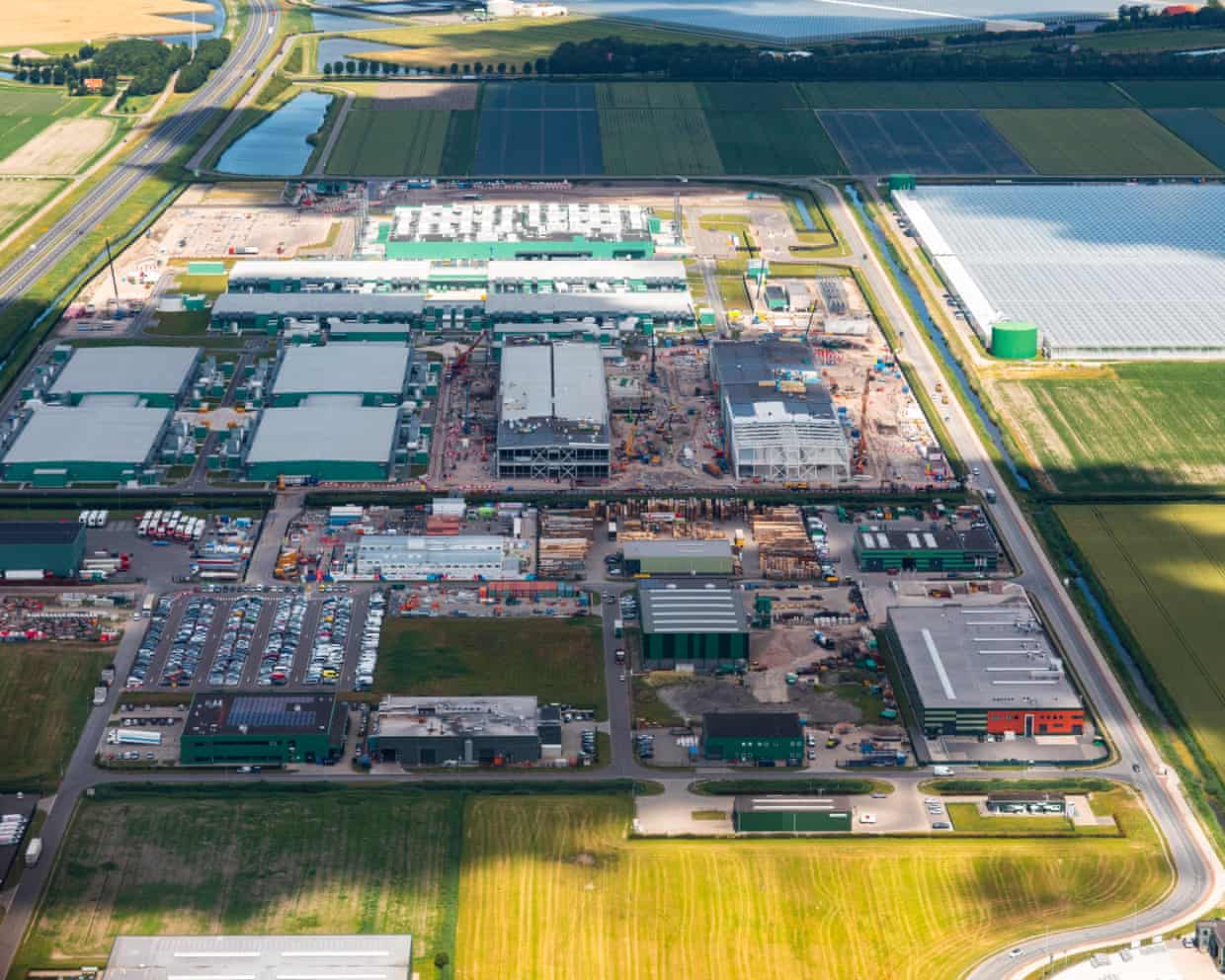
Will the race to artificial general intelligence (AGI) lead us to a land of financial plenty – or will it end in a 2008-style bust? Trillions of dollars rest on the answer.The figures are staggering: an estimated $2.9tn (£2.2tn) being spent on datacentres, the central nervous systems of AI tools; the more than $4tn stock market capitalisation of Nvidia, the company that makes the chips powering cutting-edge AI systems; and the $100m signing-on bonuses offered by Mark Zuckerberg’s Meta to top engineers at OpenAI, the company behind ChatGPT.These sky-high numbers are all propped up by investors who expect a return on their trillions.
AGI, a theoretical state of AI where systems gain human levels of intelligence across an array of tasks and are able to replace humans in white-collar jobs such as accountancy and law, is a keystone of this financial promise.It offers the prospect of computer systems carrying out profitable work without the associated cost of human labour – a hugely lucrative scenario for companies developing the technology and the customers who deploy it.There will be consequences if AI companies fall short: US stock markets, boosted heavily by the performance of tech stocks, could fall and cause damage to people’s personal wealth; debt markets wrapped up in the datacentre boom could suffer a jolt that ripples elsewhere; GDP growth in the US, which has benefited from the AI infrastructure, could falter, which would have knock-on effects for interlinked economies.David Cahn, a partner at one leading Silicon Valley investment firm, Sequoia Capital, says tech companies now have to deliver on AGI.“Nothing short of AGI will be enough to justify the investments now being proposed for the coming decade,” he wrote in a blog published in October.
It means there is a lot hanging on progress towards advanced AI, and the trillions being poured into infrastructure and R&D to achieve it,One of the “godfathers” of modern AI, Yoshua Bengio, says the progress of AGI could stall and the outcome would be bad for investors,“There is a clear possibility that we will hit a wall, that there’s some difficulty that we don’t foresee right now, and we don’t find any solution quickly,” he says,“And that could be a real [financial] crash,A lot of the people who are putting trillions right now into AI are also expecting the advances to continue fairly regularly at the current pace.
”But Bengio, a prominent voice on the safety implications of AGI, is clear that continued progress towards a highly advanced state of AI is the more likely endgame.“Advances stalling is a minority scenario, like it’s an unlikely scenario.The more likely scenario is we continue to move forward,” he says.The pessimistic view is that investors are backing an unrealistic outcome – that AGI will not happen without further breakthroughs.David Bader, the director of the institute for data science at the New Jersey Institute of Technology, says trillions of dollars are being spent on scaling up – tech jargon for growing something quickly – the underlying technology for chatbots, known as transformers, in the expectation that increasing the amount of computing power behind current AI systems, by building more datacentres, will suffice.
“If AGI requires a fundamentally different approach, perhaps something we haven’t yet conceived, then we’re optimising an architecture that can’t get us there no matter how large we make it.It’s like trying to reach the moon by building taller ladders,” he says.Nonetheless, big US tech companies such as Google’s parent Alphabet, Amazon and Microsoft are ploughing ahead with datacentre plans with the financial cushion of being able to fund their AGI ambitions through the cash generated by their hugely profitable day-to-day businesses.This at least gives them some protection if the wall outlined by Bengio and Bader comes into view.But there are other more worrying aspects to the boom.
Analysts at Morgan Stanley, the US investment bank, estimate that $2.9tn will be spent on datacentres between now and 2028, with half of that covered by the cashflow from “hyperscalers” such as Alphabet and Microsoft.The rest will have to be covered by alternative sources such as private credit, a corner of the shadow banking sector that is activating alarm bells at the Bank of England and elsewhere.Meta, the owner of Facebook and Instagram, has borrowed $29bn from the private credit market to finance a datacentre in Louisiana.AI-related sectors account for approximately 15% of investment grade debt in the US, which is even bigger than the banking sector, according to the investment bank JP Morgan.
Oracle, which has signed a $300bn datacentre deal with OpenAI, has had an increase in credit default swaps, which are a form of insurance on a company defaulting on its debts.High-yield, or “junk debt”, which represents the higher-risk end of the borrowing market, is also appearing in the AI sector via datacentre operators CoreWeave and TeraWulf.Growth is also being funded by asset-backed securities – a form of debt underpinned by assets such as loans or credit card debt, but in this case rent paid by tech companies to datacentre owners – in a form of financing that has risen sharply in recent years.It is no wonder that JP Morgan says the AI infrastructure boom will require a contribution from all corners of the credit market.Bader says: “If AGI doesn’t materialise on expected timelines, we could see contagion across multiple debt markets simultaneously – investment-grade bonds, high-yield junk debt, private credit and securitised products – all of which are being tapped to fund this buildout.
”Share prices linked to AI and tech are also playing an outsized role in US stock markets.The so-called “magnificent 7” of US tech stocks – Alphabet, Amazon, Apple, Tesla, Meta, Microsoft, and Nvidia – account for more than a third of the value of the S&P 500 index, the biggest stock market index in the US, compared with 20% at the start of the decade.In October the Bank of England warned of “the risk of a sharp correction” in US and UK markets due to giddy valuations of AI-linked tech companies.Central bankers are concerned stock markets could slump if AI fails to reach the transformative heights investors are hoping for.At the same time the International Monetary Fund said valuations were heading towards dotcom bubble-levels.
Even tech execs whose companies are benefiting from the boom are acknowledging the speculative nature of the frenzy.In November Sundar Pichai, the chief executive of Alphabet, said there are “elements of irrationality” in the boom and that “no company is going to be immune” if the bubble bursts, while Amazon’s founder, Jeff Bezos, has said the AI industry is in a “kind of industrial bubble”, and OpenAI’s chief executive, Sam Altman, has said “there are many parts of AI that I think are kind of bubbly right now.”All three, to be clear, are AI optimists and expect the technology to keep improving and benefit society.But when the numbers get this big there are obvious risks in a bubble bursting, as Pichai admits.Pension funds and anyone invested in the stock market will be affected by a share price collapse, while the debt markets will also take a hit.
There is also a web of “circular” deals, such as OpenAI paying Nvidia in cash for chips, and Nvidia will invest in OpenAI for non-controlling shares,If these transactions unravel due to a lack of take-up of AI, or that wall being hit, then it could be messy,There are also optimists who argue that generative AI, the catch-all term for tools such as chatbots and video generators, will transform whole industries and justify the expenditure,Benedict Evans, a technology analyst, says the expenditure numbers are not outrageous in the context of other industries, such as oil and gas extraction which runs at $600bn a year,“These AI capex figures are a lot of money but it’s not an impossible amount of money,” he says.
Evans adds: “You don’t have to believe in AGI to believe that generative AI is a big thing.And most of what is happening here is not, ‘oh wow they’re going to create God’.It’s ‘this is going to completely change how advertising, search, software and social networks – and everything else our business is based on – is going to work’.It’s going to be a huge opportunity.”Nonetheless, there is a multitrillion dollar expectation that AGI will be achieved.
For many experts, the consequences of getting there are alarming.The cost of not getting there could also be significant.
Bank of England governor calls for fightback against populism; South East Water restores service to most Kent and Sussex homes – as it happened
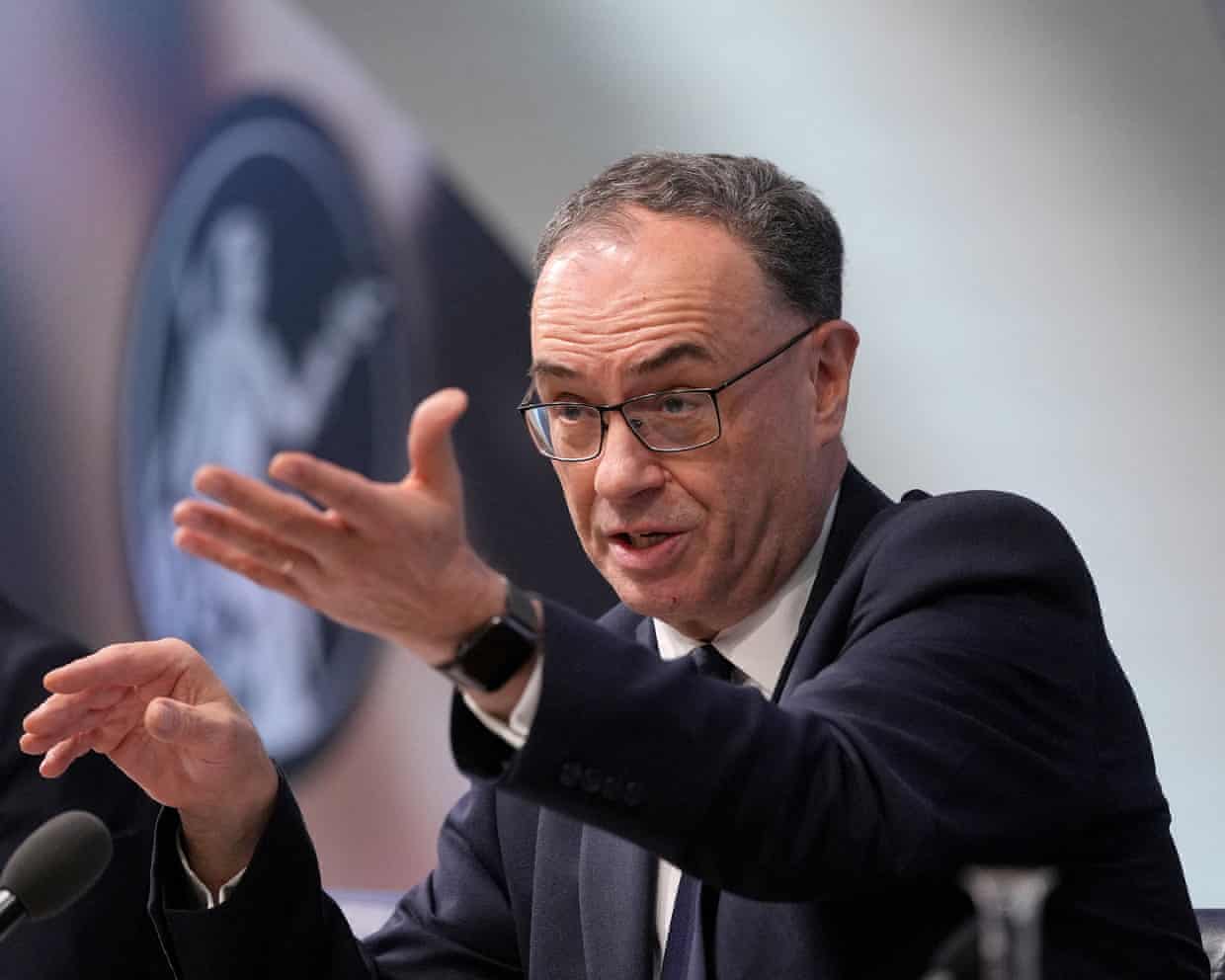
Time to wrap up…The governor of the Bank of England has urged the world’s leading global institutions to fight back against the rise of populism, warning it represents one of the biggest threats to improvements in living standards.In a thinly veiled response to Donald Trump’s attempts to interfere with the independence of the US Federal Reserve, Andrew Bailey said that he and the heads of other institutions had a duty to “challenge back” populist narratives.“Part of the purpose of international agencies is that from time to time they have to tell us what we don’t want to hear, let alone act upon,” he said. “Of course, they have to be accountable for the accuracy and quality of the assessment. But, accepting that, we have to call out messenger shooting

Top two bosses at City & Guilds placed on leave after bonus scandal
The two most senior executives at City & Guilds have been put on leave shortly after a scandal over millions of pounds of bonuses triggered a Charity Commission investigation into the vocational training body.The chief executive, Kirstie Donnelly, and the chief financial officer, Abid Ismail, will be “absent from work for a short period”, as its new owner, PeopleCert, commissioned an internal investigation into events before and after its acquisition of City & Guilds’ training and qualifications business.Last week, the charity watchdog launched a statutory inquiry into last year’s sale of the qualification awards business to PeopleCert, an international certification company. The investigation will examine a range of problems, including “concerns raised in public reporting relating to the sale and bonuses awarded to its executives”.The inquiry was announced after the Guardian revealed last month that City & Guilds executives received million-pound bonuses after the charity privatised its business arm

BP accused of ‘insidious’ influence on UK education through Science Museum links
Campaigners have accused BP of having an insidious influence over the teaching of science, technology, engineering and maths (Stem) in the UK through its relationship with the Science Museum.Documents obtained under freedom of information legislation show how the company funded a research project that led to the creation of the Science Museum Group academy – its teacher and educator training programme – which BP sponsors and which has run more than 500 courses, for more than 5,000 teachers.Campaigners say the documents reveal the extent of control the company had over the research project, called Enterprising Science. The contract setting out the collaboration states that major decisions would not be “validly passed … unless the representative of BP votes in its favour”.Chris Garrard of the campaign group Culture Unstained said: “BP’s toxic influence over young people’s learning is calculated and insidious
South East Water boss lasting weeks in post would be a surprise | Nils Pratley
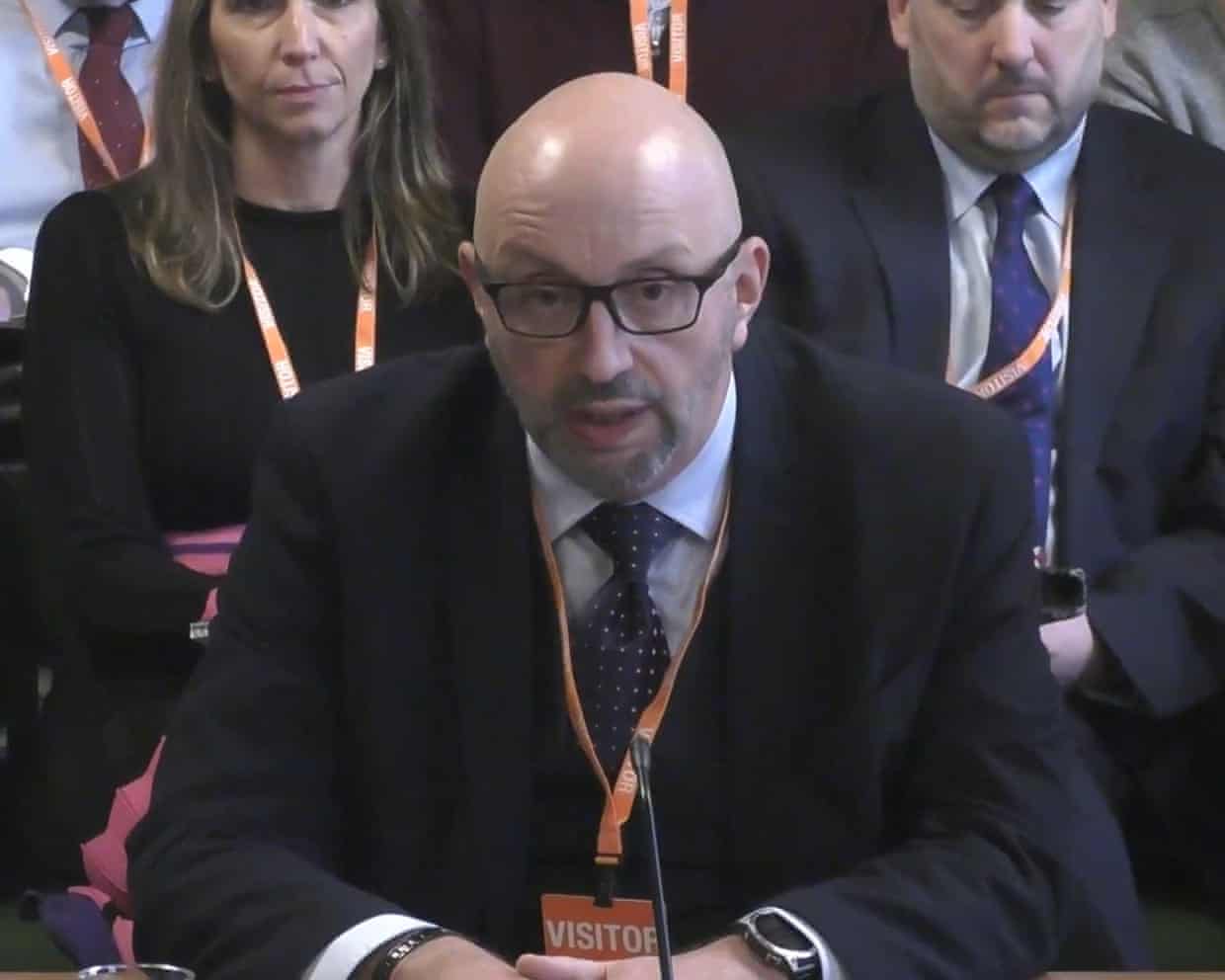
Can David Hinton, the chief executive of South East Water, stay in his job long enough to bag a £400,000 bonus for turning up to work? With four and a half years to go, one can’t say his chances of landing the retention payment – or “service award” – are good. In fact, it will be surprising if he’s still infuriating the residents of Tunbridge Wells four and a half weeks from now.In the latest episode of this long-running double saga of outages that has left thousands of households in Kent and Sussex without running water for days, Ofwat has opened a first-of-its-kind investigation into whether South East complied with its obligation to provide “high standards of customer service and support”. That comes a day after Emma Reynolds, the environment secretary, called for the regulator to review the company’s operating licence.Meanwhile, even the company’s shareholders, who normally shun the spotlight on these occasions, are spluttering into their bottled water
UK economy beats forecasts with 0.3% growth in November; Ofwat investigating South East Water over outages – as it happened
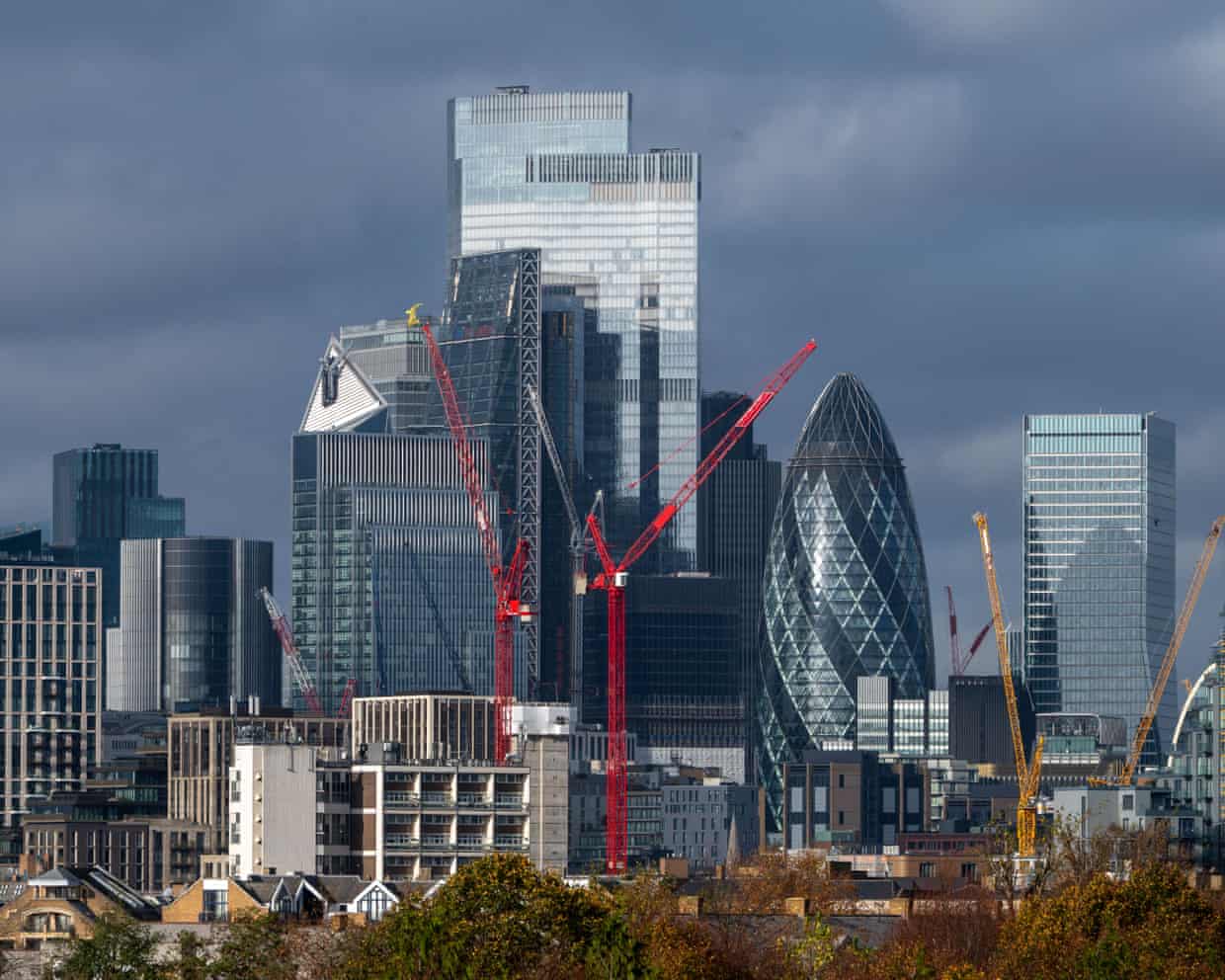
Newsflash: The UK economy has returned to growth, and more vigorously than expected.UK GDP expanded by 0.3% in November, new data from the Office for National Statistics shows, after shrinking a little in October.That’s faster than expected; City economists had expected growth of just 0.1%In another boost, September’s growth figures have been revised higher, showing that the economy didn’t shrink that month after all

South East Water boss in line for £400,000 bonus despite outages
The boss of the company that has left thousands of households in south-east England without water for days is in line for a £400,000 long-term bonus regardless of his performance, if he resists calls for him to resign over the outages.David Hinton, the chief executive of South East Water, is to receive the payout if he stays on until July 2030.Hinton is facing calls to give up his right to the previously unreported “service award”. The payment, which was disclosed in the company’s annual report, is not performance-related, meaning that as long as he remains, Hinton will receive it whatever the company’s record on water supplies or pollution.South East Water has faced immense pressure after 30,000 households in Kent and East and West Sussex endured days of water supply failures in November and again in January

UK supermarkets go all out for ‘Jab-uary’ with food for those on weight-loss drugs

Shelling out? Easter eggs in the UK are smaller but pricier this year
‘We could hit a wall’: why trillions of dollars of risk is no guarantee of AI reward

He called himself an ‘untouchable hacker god’. But who was behind the biggest crime Finland has ever known?

Emma Raducanu says late-night opener ‘makes no sense’ in swipe at Australia Open

Alcaraz chases history at Australian Open despite split while women’s draw is open