The Breakdown | ‘There is no ceiling for these players’: Jamaica targeting 2031 Rugby World Cup
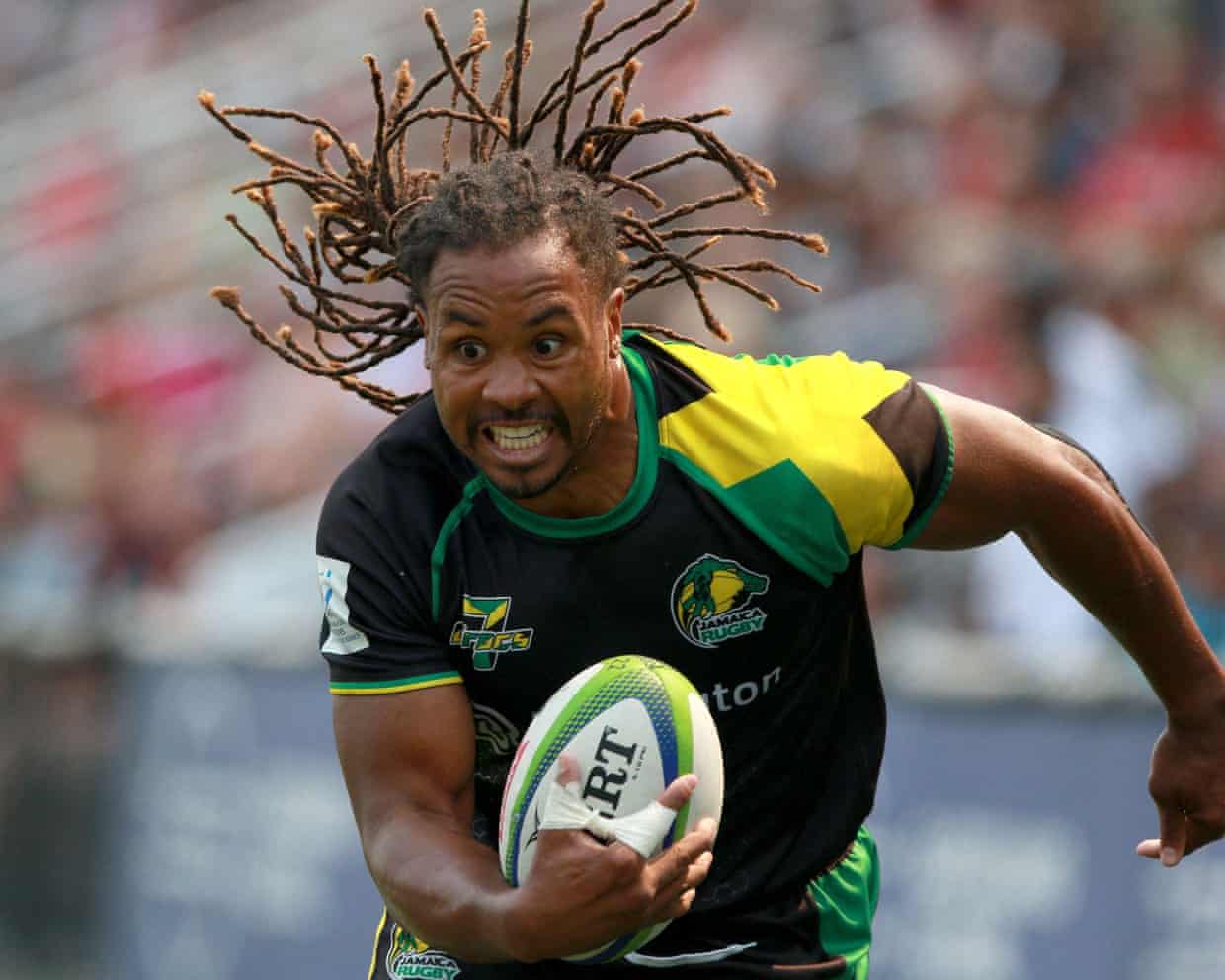
Nigerian influence within English rugby union is strong and getting stronger,But could Jamaican rugby, in time, become just as significant?There is no shortage of talent,Jamaica UK Rugby, a club under the umbrella of the Jamaican Rugby Football Union, has 500 members and counting,There are youth sides and international pathways for sevens and 15s and volunteers, on both sides of the Atlantic, working to help their rugby grow,Phil Davis, a London-based youth coach, approached the Jamaican union in 2021 to see if there was a pathway to the 15s game for a promising young prop called Ben Hatfield.
There was not, so Davis took it on.“Ben had been in a difficult domestic situation,” Davis says.“I wanted to create something to enthuse him so he had a target.I thought if he had the opportunity to represent the country of his parents, that might be the thing that keeps him in rugby.”The 2003 Rugby World Cup winner Jason Robinson, who is of Jamaican heritage, has said players from more deprived areas have traditionally been failed by the sport’s authorities.
Here is an example of people at grassroots level, working as volunteers, trying to change that reality.“I wanted to create a sustainable pathway so we could work with the same lads and develop them,” Davis says.“But at the same time attracting new players and spreading our reach.I did sessions in Manchester, Sheffield, Nottingham, Birmingham, Bristol and London.I wanted to give kids from different parts of the country opportunities.
”Davis has since moved on and is now working to create a pathway for young players of Nigerian heritage.Jamaica Rugby UK’s president, Hughton Campbell, says he played a key role.“We met Phil and said we wanted to do something in the UK for 15s,” Campbell says.“Where Phil took it to the next level was having one group of people who were going to represent Jamaica.”The 61-year-old Campbell has been involved for more than a decade, combining a telecommunications job with overseeing a complex playing and coaching programme.
A breakthrough came in 2018, when a sevens side consisting of UK and Jamaica–based players finished third at the Youth Olympics qualifiers in Las Vegas.“We needed to have something in the UK, a crossover: people going from the UK to Jamaica and vice versa,” Campbell says.Covid-19 intervened and longer-lasting restrictions in Jamaica necessitated taking UK-based players to tournaments after the pandemic.“I’ve been to Jamaica this year and met with the prime minister [Andrew Holness],” Campbell says.“He agreed to find a pitch for us.
There isn’t an official rugby pitch in Jamaica.”Davis, meanwhile, highlights the work in the Caribbean.“Curtis Wilmot and Tahj-Jay Lynch have done the development and coaching there,” he says.“Tahj-Jay is a phenomenal person.He drives around the island working with young people.
He is as much a father figure to the boys on the island as he is a coach.”What are the long-term goals? “We’ve put a focus on the 2031 Rugby World Cup,” Campbell says.“Prior to that, in 2028, we could have a side at the Under-20 World Cup.This year we set up an under-16s group, and their coach, Nash Cohen, has put together a strong cohort … and with our females in sevens, we believe we’ve got a really strong group who could possibly take us to the Olympics.”For any team the opportunity to train together is important.
But often these sides come together in the week of a tournament.“It’s a massive challenge,” Campbell says.“We sent some of our players to California to a high-performance camp for three months.They came back totally transformed.We saw a massive difference and that’s our challenge.
If we had more opportunity to be together, we’d be out there competing quite strongly.”None of this comes cheap – especially travel and accommodation costs associated with the 15s game.The programme lacks a headline sponsor, but given the growing talent pool, it looks an attractive opportunity.“It’s just a lot of people digging into their pockets,” Campbell says of current funding.“If I had a magic wand it would be: could World Rugby create a kind of partnership for a high-performance camp in Jamaica? That’s probably more effective than anything else.
”How does Campbell manage a complex programme alongside his day job? “It’s quite difficult,” he says,“I’m self-employed and that allows me time to work at my pace and do what I’ve got to do,I’ve got good people around me in management and governance,”For Campbell and Davis, fundamentally, it is about creating opportunities for young people,“I played rugby all my life,” Campbell says.
“It has done a lot for me and that is the root behind this.Both my parents are Jamaican.For me it’s the power of the dual heritage, and I think a lot of people overlook that.“Before the internet I knew I could take my boots on holiday and play wherever I went.You get that allyship, friendship in other countries, and it stays with you for life.
I see young people and think: ‘You need to have that opportunity now because you don’t even know it exists,’ Other people having that opportunity is golden,“I look at these players and go: ‘You think there’s a ceiling on this, but there isn’t,’ The conversation might be: ‘You’re wearing the wrong socks, you didn’t go to private school, you’re not going to play for England’ … but that’s not necessarily true,It’s just your opportunity hasn’t come.
”Davis is “unbelievably proud” that Hatfield, a powerful prop, is now playing club rugby in Australia.“He’s gone to live there for a year.I felt like it was mission accomplished, because he was quite a challenging young bloke … I get a warm feeling inside when you give opportunities to lads who wouldn’t normally have them.”This is an extract taken from our weekly rugby union email, the Breakdown.To sign up, just visit this page and follow the instructions.

‘This will be a stressful job’: Sam Altman offers $555k salary to fill most daunting role in AI
The maker of ChatGPT has advertised a $555,000-a-year vacancy with a daunting job description that would cause Superman to take a sharp intake of breath.In what may be close to the impossible job, the “head of preparedness” at OpenAI will be directly responsible for defending against risks from ever more powerful AIs to human mental health, cybersecurity and biological weapons.That is before the successful candidate has to start worrying about the possibility that AIs may soon begin training themselves amid fears from some experts they could “turn against us”.“This will be a stressful job, and you’ll jump into the deep end pretty much immediately,” said Sam Altman, the chief executive of the San Francisco-based organisation, as he launched the hunt to fill “a critical role” to “help the world”.The successful candidate will be responsible for evaluating and mitigating emerging threats and “tracking and preparing for frontier capabilities that create new risks of severe harm”

‘Why should we pay these criminals?’: the hidden world of ransomware negotiations
They call it “stopping the bleeding”: the vital window to prevent an entire database from being ransacked by criminals or a production line grinding to a halt.When a call comes into the cybersecurity firm S-RM, headquartered on Whitechapel High Street in east London, a hacked business or institution may have just minutes to protect themselves.S-RM, which helped a high-profile retail client recover from a Scattered Spider cyber-attack has become a quiet, often word-of-mouth, success.Many of the company’s senior workers are multilingual and have a minimal online footprint, which reveals scant but impressive CVs suggestive of corporate or government intelligence-based careers.S-RM now claims the UK’s largest cyber-incident response team
Louis Gerstner, man credited with turning around IBM, dies aged 83
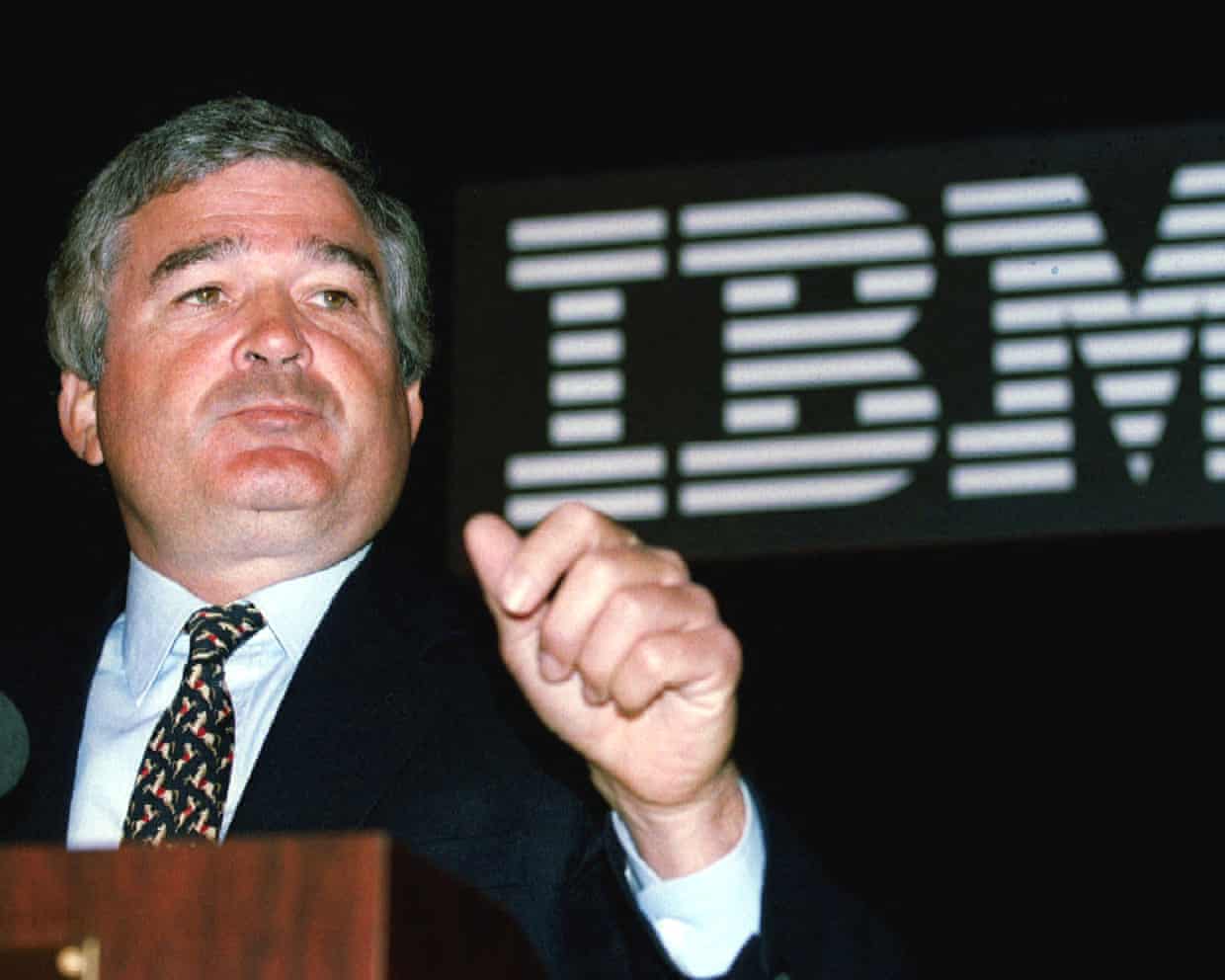
Louis Gerstner, the businessman credited with turning around IBM, has died aged 83, the company announced on Sunday.Gerstner was chair and CEO of IBM from 1993 to 2002, a time when the company was struggling for relevance in the face of competition from rivals such as Microsoft and Sun Microsystems.After becoming the first outsider to run the company, Gerstner abandoned a plan to split IBM, which was known as Big Blue, into a number of autonomous “Baby Blues” that would have focused on specific product areas such as processors or software.IBM’s current chair and CEO, Arvind Krishna, told staff in an email on Sunday that this decision was key to the company’s survival because “Lou understood that clients didn’t want fragmented technology, they wanted integrated solutions.”“Lou arrived at IBM at a moment when the company’s future was genuinely uncertain,” he wrote
Nvidia insists it isn’t Enron, but its AI deals are testing investor faith
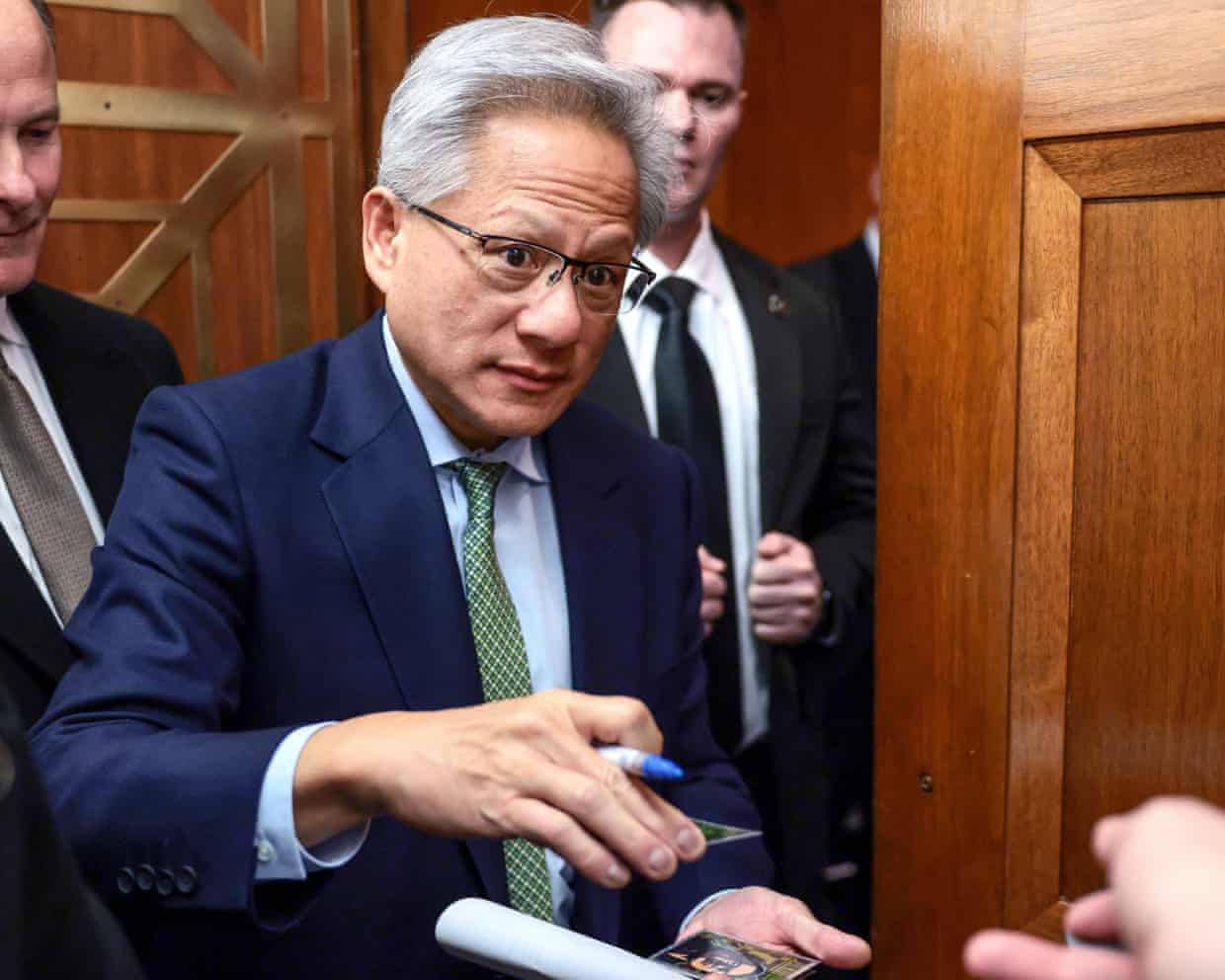
Nvidia is, in crucial ways, nothing like Enron – the Houston energy giant that imploded through multibillion-dollar accounting fraud in 2001. Nor is it similar to companies such as Lucent or Worldcom that folded during the dotcom bubble.But the fact that it needs to reiterate this to its investors is less than ideal.Now worth more than $4tn (£3tn), Nvidia makes the specialised technology that powers the world’s AI surge: silicon chips and software packages that train and host systems such as ChatGPT. Its products fill datacentres from Norway to New Jersey

From shrimp Jesus to erotic tractors: how viral AI slop took over the internet
Flood of unreality is an endpoint of algorithm-driven internet and product of an economy dependent on a few top tech firms In the algorithm-driven economy of 2025, one man’s shrimp Jesus is another man’s side hustle.AI slop – the low-quality, surreal content flooding social media platforms, designed to farm views – is a phenomenon, some would say the phenomenon of the 2024 and 2025 internet. Merriam-Webster’s word of the year this year is “slop”, referring exclusively to the internet variety.It came about shortly after the advent of popular large language models, such as ChatGPT and Dall-E, which democratised content creation and enabled vast swathes of internet denizens to create images and videos that resembled – to varying degrees – the creations of professionals.In 2024, it began to achieve peak cultural moments

More than 20% of videos shown to new YouTube users are ‘AI slop’, study finds
More than 20% of the videos that YouTube’s algorithm shows to new users are “AI slop” – low-quality AI-generated content designed to farm views, research has found.The video-editing company Kapwing surveyed 15,000 of the world’s most popular YouTube channels – the top 100 in every country – and found that 278 of them contain only AI slop.Together, these AI slop channels have amassed more than 63bn views and 221 million subscribers, generating about $117m (£90m) in revenue each year, according to estimates.The researchers also made a new YouTube account and found that 104 of the first 500 videos recommended to its feed were AI slop. One-third of the 500 videos were “brainrot”, a category that includes AI slop and other low-quality content made to monetise attention

The alternative 2025 sports awards: quotes, gaffes and animal cameos

Anthony Joshua’s camp confirm two of his close friends died in Nigeria car crash
Luke Littler forced to battle the boos in tense win at PDC World Championship

Sarina Wiegman an honorary dame as Lionesses and Red Roses get honours

No Drama This End brings back glory days for Nicholls – and it’s Cheltenham next
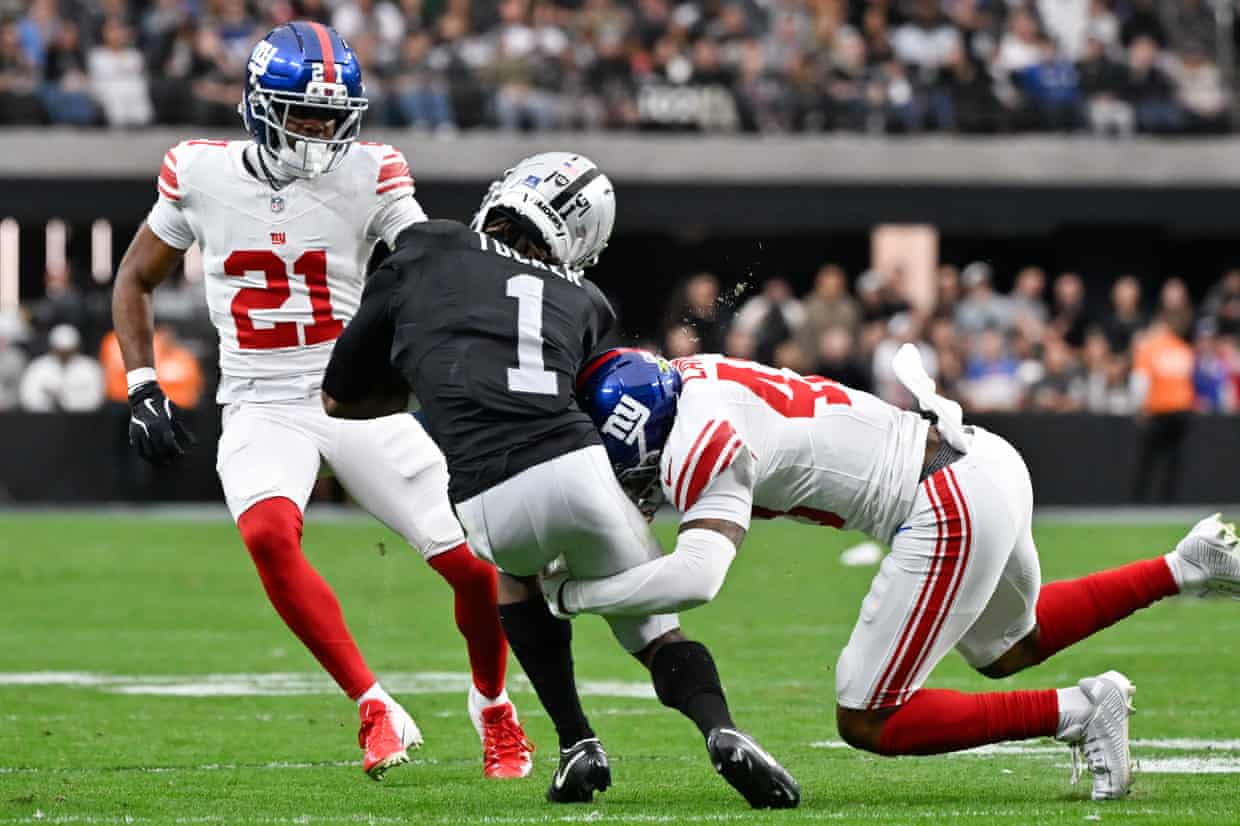
The Las Vegas Raiders and the thin line between tanking and incompetence