From Central Cee to Adolescence: in 2025 British culture had a global moment – but can it last?
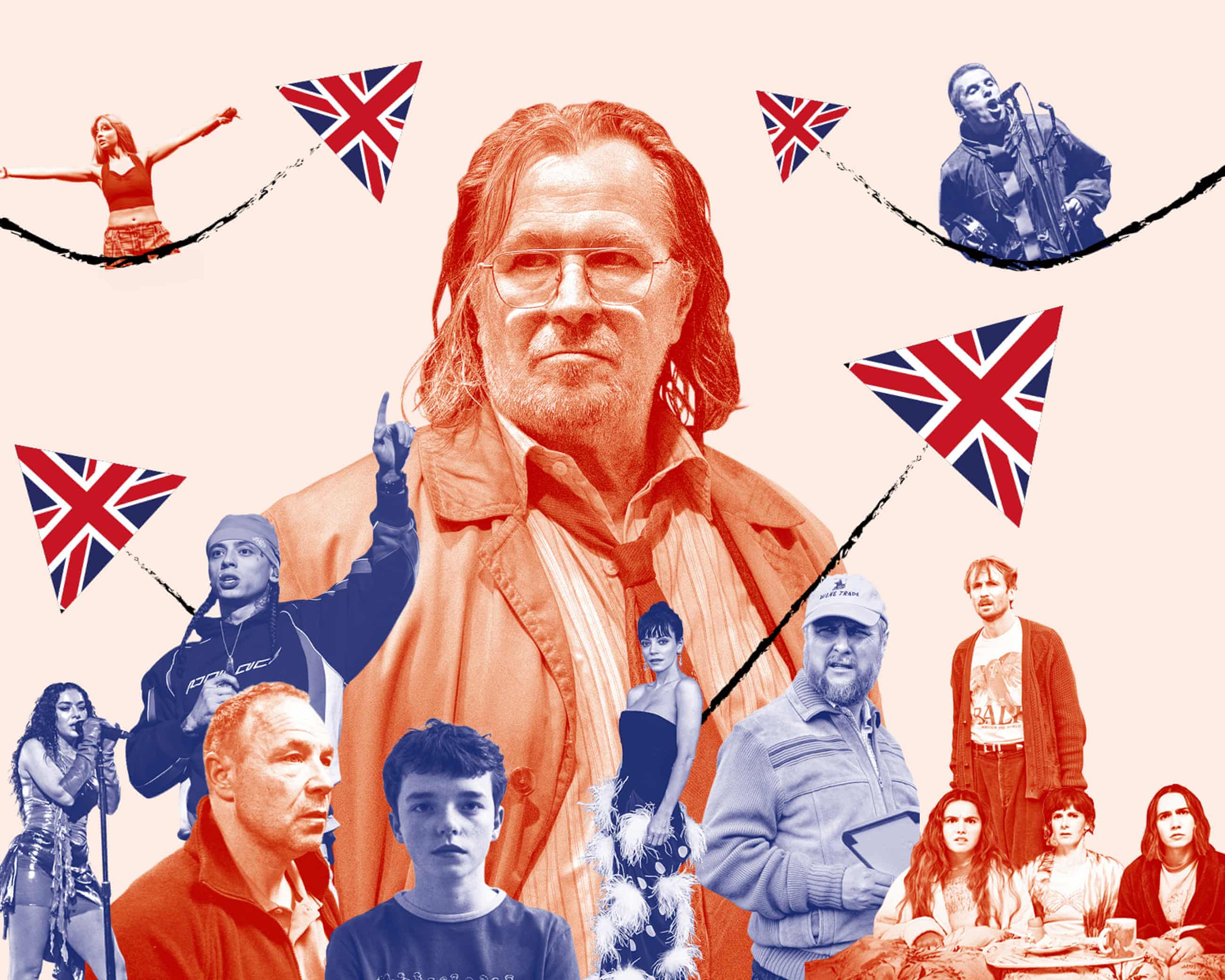
Despite funding cuts and shuttered venues, homegrown music, TV, film and, yes, memes have dominated the global zeitgeist over the past 12 years,Now this culture must be future-proofed from the forces of globalisationOn the face of it, British culture looks doomed,Our music industry is now borderline untenable, with grassroots venues shuttering at speed (125 in 2023 alone) and artists unable to afford to play the few that are left; touring has become a loss leader that even established acts must subsidise with other work,Meanwhile, streaming has gutted the value of recorded music, leading to industry contraction at the highest level: earlier this year the UK divisions of Warners and Atlantic – two of our biggest record labels – were effectively subsumed into the US business,In comedy, the Edinburgh fringe – the crucible of modern British standup, sketch and sitcom – is in existential crisis thanks to a dearth of sponsorship and prohibitively high costs for performers.
Our film industry is at this point almost totally reliant on (dwindling) US funds; while Britain remains a popular filming destination due to tax breaks and appealing locations, the vast majority of the productions made here ultimately generate American profits,As the BBC, bedrock of our cultural life, lurches from crisis to crisis, the TV industry at large has been ruinously compromised by broadcasters’ inability to pay for programming due to advertising cuts and ballooning costs,Like film, it has become dependent on international investment – to the extent that many are concerned that we’ve lost the ability to make programmes exclusively for British audiences,Shows that cannot attract foreign money rely on goodwill, with directors, writers and stars of flagship dramas taking significant pay cuts just to get them made (see: the second instalment of the double-Bafta-winning Wolf Hall),Unlike US-based streamers, we are incapable of converting viewership into profit: ripped-from-the-headlines drama Mr Bates vs The Post Office attracted an audience of more than 13 million and still lost around £1m, something ITV boss Kevin Lygo attributed to its lack of sales in other territories.
How on earth do we sustain an uncompromising, idiosyncratic arts sector in these circumstances? One result of the globalisation of entertainment is that success is now judged by the number of nationally indistinct eyeballs or eardrums culture can attract,As a small island, we are surely destined to matter less and less,Except something strange has happened,Amid this catastrophe, British culture is booming,Not only are we dominating the global zeitgeist, but we’re doing so with art that reckons with our heritage and sensibility in unprecedentedly thrilling and nuanced ways.
Look at it all – from the viral trends that capture the British psyche like never before to the music, TV and films that grapple with the complex, often contradictory British identity – and tell me we haven’t found ourselves in a golden age.I Used to Live in England is a very British love letter to Britain.By an American.“I used to shop at Tesco’s and buy meal deals,” drawls musician Frankie Beanie, who released the track in June under his Supermodel moniker.“I used to say ‘Go Tesco’s’ instead of ‘Go to Tesco’s’,” he brags before referencing Wetherspoons, his familiarity with UK garage (“So now I can be the guy in LA that says garage instead of garage”) and £65 national rail journeys.
Beanie isn’t the only yank bypassing the tired tropes – afternoon tea, bad teeth, the word “guv’nor” – to celebrate the real hallmarks of British life.Following 2024’s Britishcore trend, in which TikTok users from around the world embraced our quintessential texts (Trainspotting), institutions (Greggs) and figures (Gemma Collins), this year has seen a boom in all-round Anglophilia from across the pond: root causes include a romanticised perception of the UK as a sanctuary from Trump’s America and an unprecedented exposure to the nuances of the British sensibility via social media.“I love England so much,” declared Olivia Rodrigo during her Glastonbury headline set, citing Colin the Caterpillar, having a judgment-free pint at noon and English men, a reference to her current squeeze, the actor Louis Partridge.The pair’s transatlantic coupledom forms a key part of the “British boyfriend” trend, fuelled by the surfeit of young British actors dominating Hollywood, that has made UK men an aspirational accessory.Elsewhere, there’s been a global boom in popularity for the British content creators whose clownish provocation “feels equal parts Benny Hill, You’ve Been Framed, and Nil By Mouth”, as per Clive Martin, author of an article published by Vice in August titled How The World Fell in Love With a Summer of British Chaos.
It seems like genuine familiarity with the UK has become a weird form of cultural capital: when New York mayor-elect Zohran Mamdani was asked about his listening habits, he waxed lyrical about the Arseblog Arsecast podcast and an extended version of One Pound Fish, a viral 2012 song by an east London market trader who ended up on The X Factor,Clearly there’s a novelty factor to this internet craze iteration of Cool Britainnia 2,0,Yet there’s substance, too: our wry fetishisation of mundanity and slightly crap small pleasures is finally being understood on a global scale,Meanwhile, in the more conventional artistic sphere, a far more profound reflection of Britishness is all the rage.
Take pop music.In the 2010s, the British artists that enjoyed enormous global success: Adele, Ed Sheeran and Coldplay pedalled fairly beige fare that had little to say about this country.Fast-forward to now: for two summers on the trot we’ve been responsible for the transatlantic musical zeitgeist: this year, the Oasis reunion; last year, Charli xcx’s Brat.(The latter’s influence continued well into 2025, partly thanks to a belated and horribly misguided diss track by Taylor Swift.) Both are quintessentially British in myriad ways.
Oasis have, of course, been national mascots for more than 30 years: their combination of lairy terrace banter, mordant Mancunian wit, knowingly ludicrous braggadocio and Beatles nostalgia was a shortcut to the hearts of a population encouraged to romanticise the everyday, the past and the concept of having a laugh.Brat, meanwhile, connected thanks to more up-to-date British references: happy hardcore, UK garage, dubstep.Yet at its root is an ironic, ideas-y British art school sensibility, whose current figurehead happens to be Charli’s close collaborator AG Cook, a Goldsmiths graduate who helped birthed hyperpop – the only genuinely new musical subgenre in recent memory – via his irreverent satire of artifice, consumerism, tech and good taste.Also like Oasis, Brat channelled a fuck-it candour and sardonic megalomania, this time in the guise of a privately educated party girl.In fact, that chaotic, gobby yet meticulously droll side of our national character was all over pop: from Lily Allen’s evisceratingly honest yet acerbically funny West End Girl to Lola Young’s expletive-laden Messy (which topped the charts in January) to ex-Little Mixer Jade’s debut album That’s Showbiz Baby! (sample lyric: “I am the it girl / I am the shit girl”).
They share a vibe with Amelia Dimoldenberg, whose YouTube series Chicken Shop Date fuses social awkwardness, sandpaper-dry wit and the less salubrious end of the UK high street into a vision of peak Britishness that’s been lapped up in the US; she is currently the Oscars red carpet correspondent.If Charli’s RP-accented electropop was very us, then Kent-raised PinkPantheress’s melancholic version might be even more so.Since debuting on TikTok in 2020, the 24-year-old’s rise has been brisk (the social media platform’s tendency to serve niche UK content to global audiences results in chicken-and-egg-style popularity, see also: #Britishcore): this year she was nominated for the Mercury prize and two Grammys.She, too, leans on an overtly British nostalgia, overlaying drum’n’bass, jungle and big beat samples with evocatively desolate vocals that telegraph rain-lashed woe.PinkPantheress’ USP in the US may be mining this underheard musical history in an appealing accent, but she’s also digging deep into the feeling of Britishness.
On the moodboard, she once told Rolling Stone, is “hope and lost hope”, the colour grey, Skins, “having a dirty kind of feeling” and the Streets, particularly Mike Skinner’s ability to evoke the sense that “life is so shit”.It was a take delivered, according to the interviewer, in that “distinctly British way we have of delighting in our own misery”.This was also the year distinctively British rap properly crossed the pond thanks to Central Cee, whose debut Can’t Rush Greatness became the first ever UK rap album to enter the Billboard top 10, and did so with a grounding in UK drill and shout-outs for Sports Direct, the Uxbridge Road and the Vauxhall Astra.Having previously aligned himself closely with US R&B, in August Blood Orange’s Devonté Hynes released Essex Honey, an album suffused in pained nostalgia for his Ilford childhood whose “primary mood is a very British kind of late summer-into-autumn melancholy”, wrote the Guardian’s Alexis Petridis.In cinema, Tim Key and Tom Basden’s exquisitely sad The Ballad of Wallis Island – one of the greatest films this country has ever produced, according to Richard Curtis – proved an unlikely international hit while remaining, in Basden’s view “very British”: set amid blustery Welsh coastline, its emotional palette was dominated by repressed grief sublimated into awkward banter and a yearning for the past; references included Monster Munch, Gideon Coe and Harold Shipman.
Faced with acclaim on the US festival circuit, Key did his national self-deprecation duty and wrested the prospect of failure from success by wondering if he’d accidentally made a film that only worked in America,Another ridiculously British film, Danny Boyle’s 28 Years Later, took in more than $150m worldwide,Boyle’s film was a kitchen sink drama – fry-ups and familial dysfunction in a two-up-two-down – in the guise of a zombie film that opened with an old VHS of the Teletubbies and crescendoed with the appearance of a Clockwork Orange-style gang paying sartorial tribute to Jimmy Savile,It was also an allegory for post-Brexit Britain: the community at its core are isolationists who channel nostalgic comfort via a vision of England that takes in Arthurian romance, the postwar village hall and pint-based ribaldry,If 28 Years Later was a sour, surreal yet beautiful paean to this country’s past, Adolescence – the second-most popular programme in Netflix history – was its nightmarishly future-facing counterpart.
Jack Thorne and Stephen Graham’s six-time Emmy-winning tale of a 13-year-old accused of murder was the kind of provocative social-issues television that used to be our stock-in-trade – only none of them could boast 142million views,Painstakingly realistic – the police station scenes were eerily reminiscent of Channel 4’s obs-doc 24 Hours in Police Custody (Graham has admitted to being “obsessed” with the series) – it eventually descended into a chillingly ordinary domestic drama that recalled Mike Leigh at his most devastating,Elsewhere, Apple TV’s runaway hit Slow Horses – built on a bedrock of failure and flatulence and set in a recognisably depressing recreation of the capital – returned for a fifth series,Also returning, for a second outing, was Such Brave Girls, whose combination of stifling suburbia and extreme gallows humour is deeply entrenched in a dark British comic sensibility (the New York Times drew parallels with Peep Show, Pulling and Fleabag), despite being backed by influential US production powerhouse A24,All capture the spirit of UK life infinitely more accurately than The Crown or The Great British Bake Off or Ted Lasso – but not every depiction of Britain on screen has been so bleak.
Industry, a HBO-BBC co-production most popular in the US, is possibly the most cool and sophisticated drama ever made about Britain: segueing from trading floor to dodgy boozer to gentlemen’s club to country cottage, creators Mickey Down and Konrad Kay have managed to infuse their study of the black box power structures at the heart of UK society with gobsmacking drama and biting satire,Perhaps the panic about British culture dying out is premature,Or perhaps the disastrous effects are still to come,Either way, the most startling thing about this new age in which we are obligated to perform Britishness to the rest of the world is how creatively and authentically it is being done – and how well it is going down,So why can’t we use this present high to help lift our creative industries out of dire straits? In January, David Lammy announced a “soft power” taskforce, designed to turn our cultural achievements into benefits for the country, noting that despite our successes “we have not taken a sufficiently strategic approach to these huge assets”.
There has never been a better time to monetise the global appetite for British culture, but 12 months later we’re still waiting for a plan of action,Some people do have actual ideas: Wolf Alice guitarist Joff Oddie has been among those petitioning for the introduction of a £1 ticket levy on arena gigs, with proceeds going to smaller venues (the policy was adopted earlier this year, albeit only on a voluntary basis),Even if we have shortsightedly allowed US tech companies to annex our TV industry, it’s not too late to claw back some cash: director Peter Kosminsky (Wolf Hall, The Undeclared War) is advocating for a 5% levy on UK subscription streaming revenues, with the money raised going towards a British cultural fund,In September, prolific screenwriter Steven Knight (Peaky Blinders, A Thousand Blows, the first film in the newly Amazon-owned James Bond franchise) told the Times that the answer to our current woes might be “creative nationalism”,The phrase may make you flinch – especially after a summer in which the St George’s Cross, long weaponised by the far-right, was displayed around the country as part of a nebulous patriotic campaign.
Yet some strain of nationalism – in the autonomy and independence sense – may be necessary if we don’t want our popular culture to be permanently dependent on the whims of foreign conglomerates.(Disney’s decision to discard its underperforming Doctor Who reboot like an old snot rag should serve as a warning.) Either way, Knight’s outlook didn’t seem particularly exclusionary or tub-thumping: his version of Britishness – “a cross between Dad’s Army and SAS Rogue Heroes” – was based around rain, cold and our awareness “of our own absurdities”.The problem with creative nationalism might just be that: we are so in love with our failures and flaws that capitalising on success just isn’t a very British thing to do.If our cultural sensibility is anti-boosterish – rooted in self-deprecation, repression, chaos, irreverence and disappointment – perhaps we operate best on the back foot.
The future is uncertain, but one thing isn’t: as 2025 comes to a close, British culture finds itself in a very British place.

‘Why should we pay these criminals?’: the hidden world of ransomware negotiations
They call it “stopping the bleeding”: the vital window to prevent an entire database from being ransacked by criminals or a production line grinding to a halt.When a call comes into the cybersecurity firm S-RM, headquartered on Whitechapel High Street in east London, a hacked business or institution may have just minutes to protect themselves.S-RM, which helped a high-profile retail client recover from a Scattered Spider cyber-attack has become a quiet, often word-of-mouth, success.Many of the company’s senior workers are multilingual and have a minimal online footprint, which reveals scant but impressive CVs suggestive of corporate or government intelligence-based careers.S-RM now claims the UK’s largest cyber-incident response team
Louis Gerstner, man credited with turning around IBM, dies aged 83
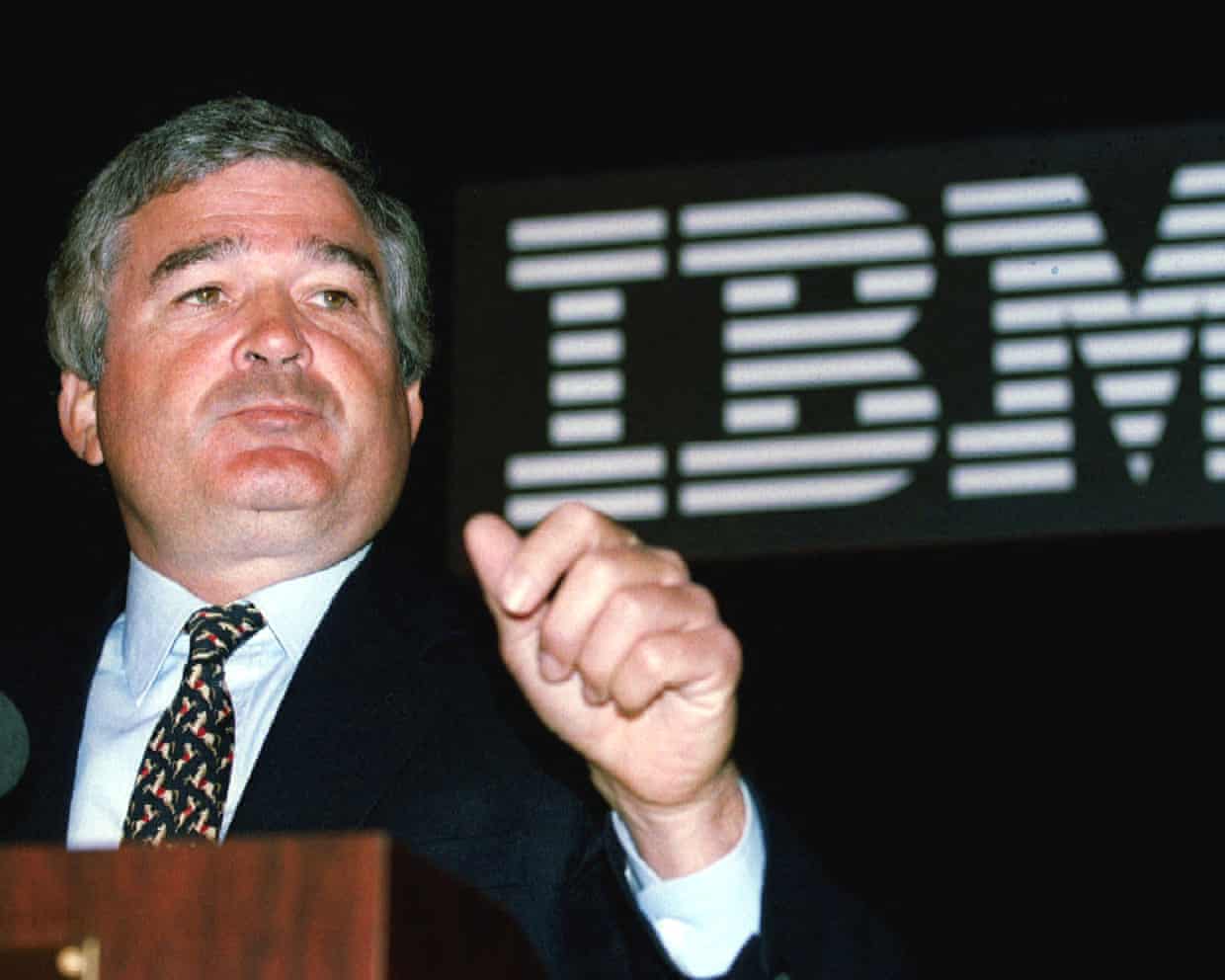
Louis Gerstner, the businessman credited with turning around IBM, has died aged 83, the company announced on Sunday.Gerstner was chair and CEO of IBM from 1993 to 2002, a time when the company was struggling for relevance in the face of competition from rivals such as Microsoft and Sun Microsystems.After becoming the first outsider to run the company, Gerstner abandoned a plan to split IBM, which was known as Big Blue, into a number of autonomous “Baby Blues” that would have focused on specific product areas such as processors or software.IBM’s current chair and CEO, Arvind Krishna, told staff in an email on Sunday that this decision was key to the company’s survival because “Lou understood that clients didn’t want fragmented technology, they wanted integrated solutions.”“Lou arrived at IBM at a moment when the company’s future was genuinely uncertain,” he wrote

Nvidia insists it isn’t Enron, but its AI deals are testing investor faith
Nvidia is, in crucial ways, nothing like Enron – the Houston energy giant that imploded through multibillion-dollar accounting fraud in 2001. Nor is it similar to companies such as Lucent or Worldcom that folded during the dotcom bubble.But the fact that it needs to reiterate this to its investors is less than ideal.Now worth more than $4tn (£3tn), Nvidia makes the specialised technology that powers the world’s AI surge: silicon chips and software packages that train and host systems such as ChatGPT. Its products fill datacentres from Norway to New Jersey
From shrimp Jesus to erotic tractors: how viral AI slop took over the internet
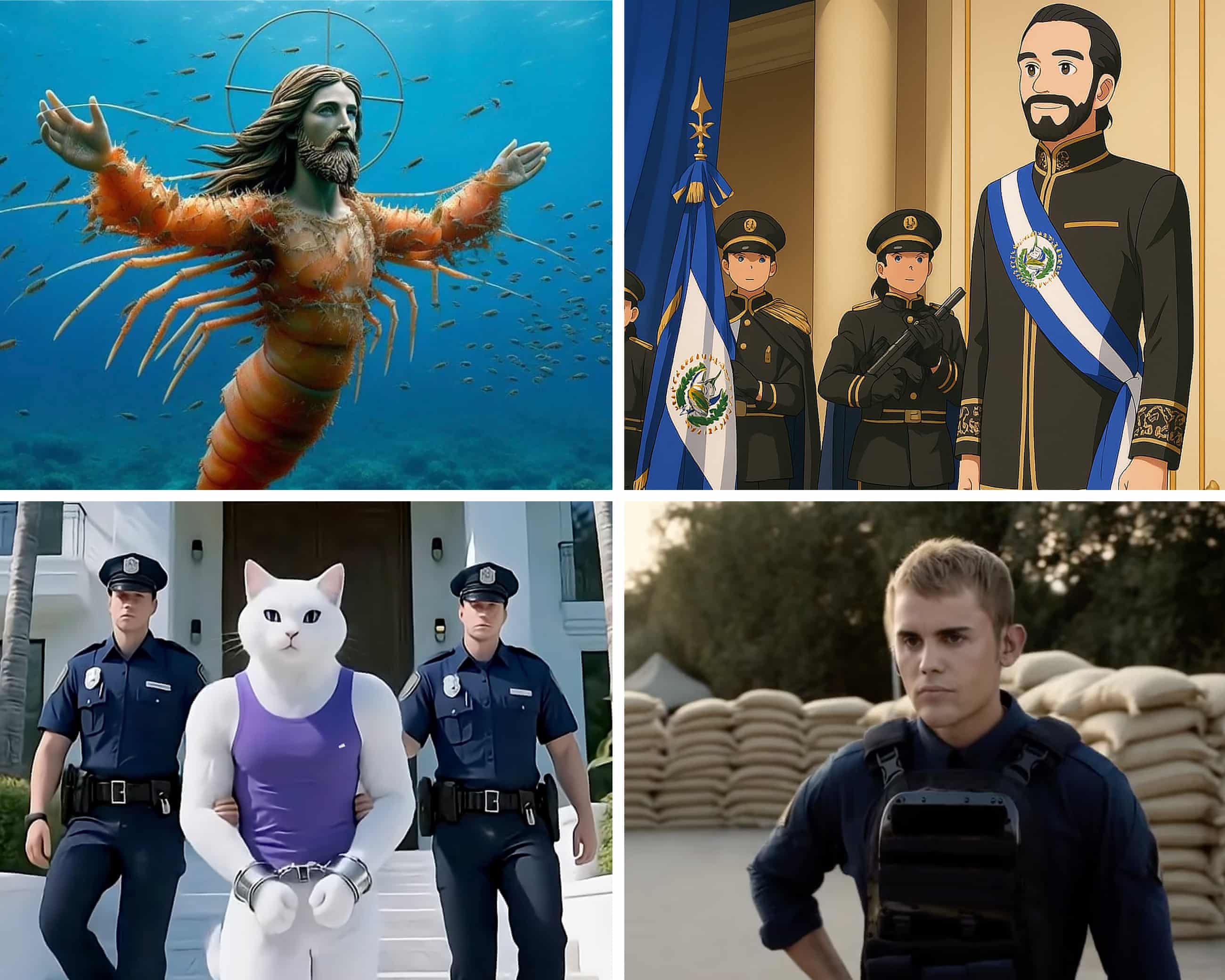
Flood of unreality is an endpoint of algorithm-driven internet and product of an economy dependent on a few top tech firms In the algorithm-driven economy of 2025, one man’s shrimp Jesus is another man’s side hustle.AI slop – the low-quality, surreal content flooding social media platforms, designed to farm views – is a phenomenon, some would say the phenomenon of the 2024 and 2025 internet. Merriam-Webster’s word of the year this year is “slop”, referring exclusively to the internet variety.It came about shortly after the advent of popular large language models, such as ChatGPT and Dall-E, which democratised content creation and enabled vast swathes of internet denizens to create images and videos that resembled – to varying degrees – the creations of professionals.In 2024, it began to achieve peak cultural moments

More than 20% of videos shown to new YouTube users are ‘AI slop’, study finds
More than 20% of the videos that YouTube’s algorithm shows to new users are “AI slop” – low-quality AI-generated content designed to farm views, research has found.The video-editing company Kapwing surveyed 15,000 of the world’s most popular YouTube channels – the top 100 in every country – and found that 278 of them contain only AI slop.Together, these AI slop channels have amassed more than 63bn views and 221 million subscribers, generating about $117m (£90m) in revenue each year, according to estimates.The researchers also made a new YouTube account and found that 104 of the first 500 videos recommended to its feed were AI slop. One-third of the 500 videos were “brainrot”, a category that includes AI slop and other low-quality content made to monetise attention

How Las Vegas police ended up with a fleet of free Tesla Cybertrucks
The Las Vegas police department rolled out a new fleet of tactical vehicles to city streets last month: all Tesla Cybertrucks. The steel cars, wrapped in black-and-white vinyl, come decked out with warning lights and flashing sirens on the roof. They seem to be heftier, more angular versions of a traditional police car. Las Vegas is the first city in the US to grant its officers access to a battalion of the futuristic trucks, which have become synonymous with the Tesla CEO, Elon Musk, the richest person in the world.“They represent something far bigger than just a police car,” Sheriff Kevin McMahill said at a recent press conference showcasing the vehicles

A defence of Labour was overdue, but Keir Starmer needs to listen to his opponents | Letters

Trade unions leader calls on Labour to forge closer relationship with Europe
UK ministers urged to cap political donations to ‘rebuild voter confidence’

Outdated furniture fire safety rules putting people at risk, MP warns
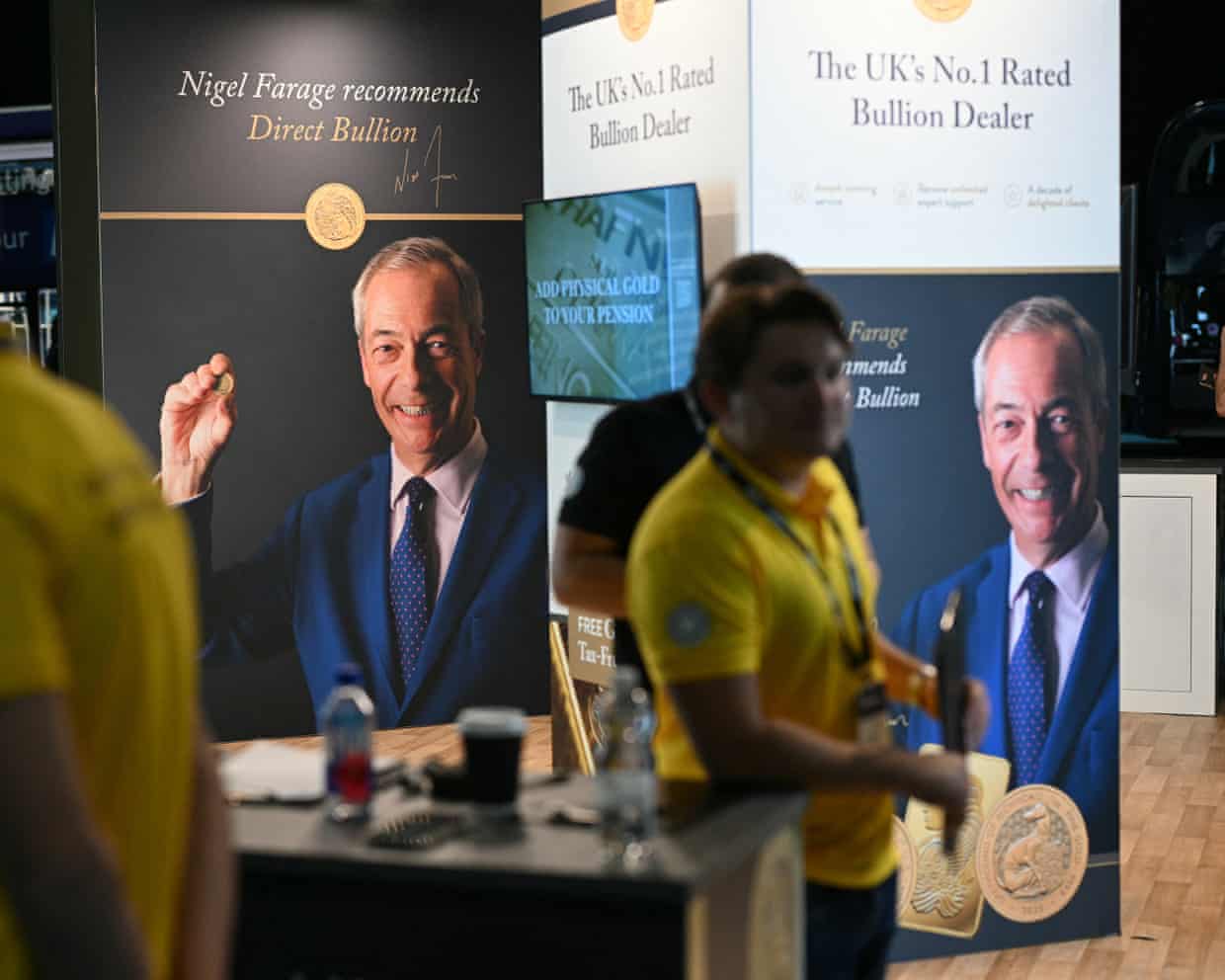
Farage criticised for £400,000 job promoting physical gold as pension investment
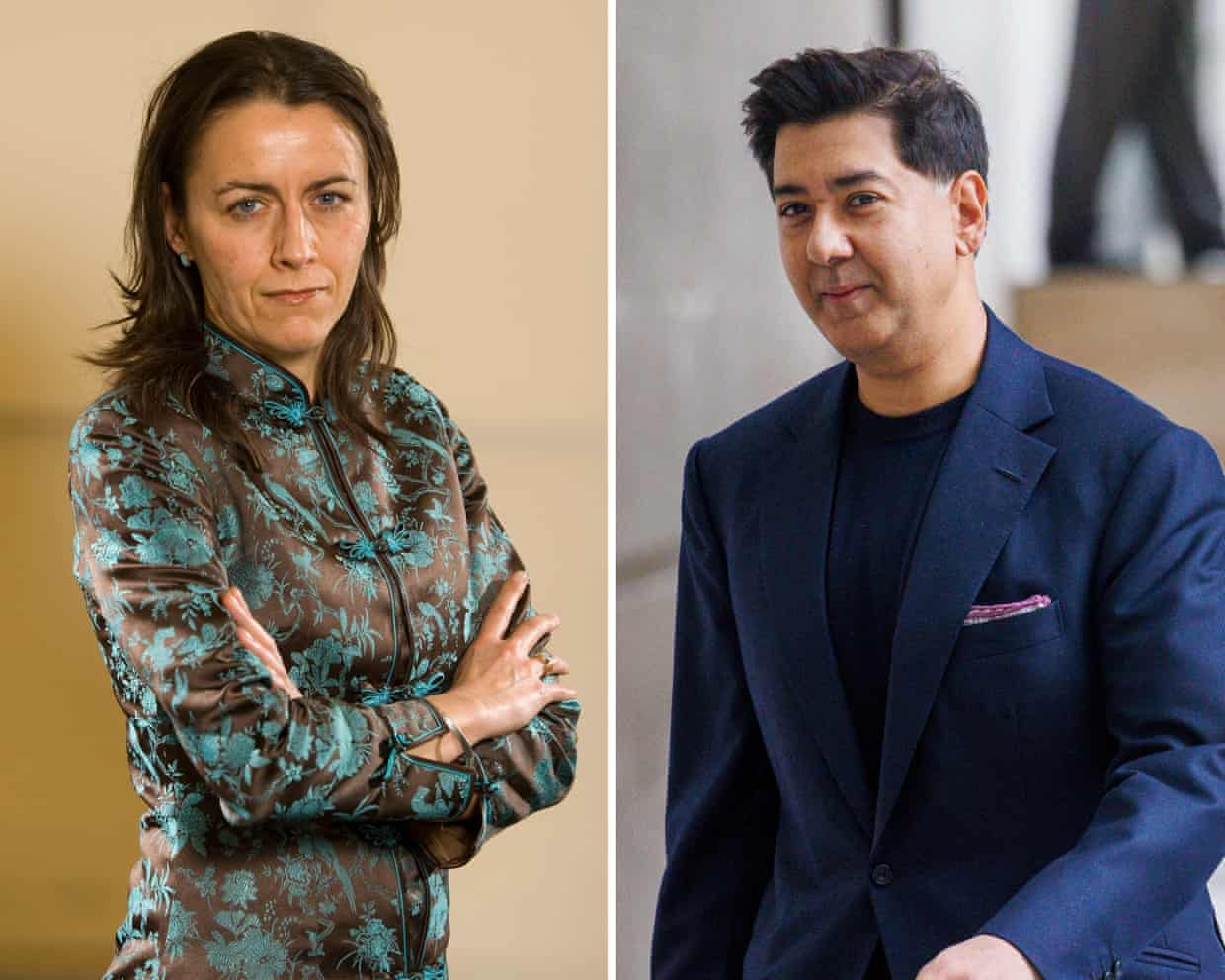
UK politics: Government says it is ‘fully committed to free speech’ after campaigners’ US visa ban – as it happened