December cut to UK interest rates ‘nailed on’ after economy shrinks unexpectedly by 0.1% in October – as it happened
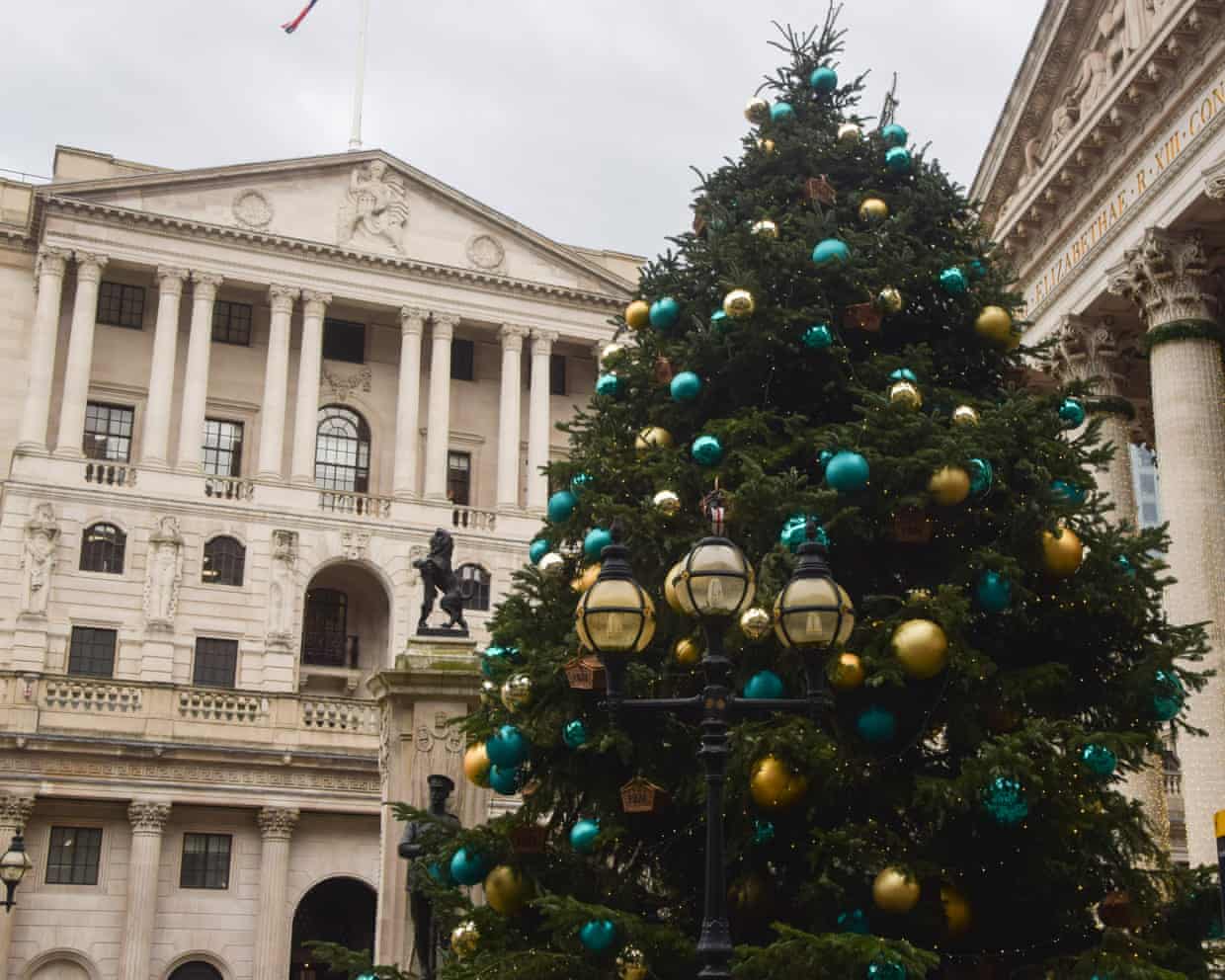
Economists are convinced that the Bank of England will respond to the UK’s weak economic performance by cutting interest rates next week.The Bank’s monetary policy committee will make its final decision of the year on Thursday 18th December, and a rate cut to 3.75% appears highly likely now that the economy shrunk by 0.1% in October.Ruth Gregory, deputy chief UK economist at Capital Economics, says:The surprise 0.
1% m/m contraction in the economy in October was especially disappointing given the increase in manufacturing output, which rebounded after September’s cyber-attack induced hit, and is a further reason to expect the Bank of England to cut interest rates next Thursday,Suren Thiru, economics director at the ICAEW, says a pre-Christmas interest rate cut is “nailed on”:“These figures confirm an off-colour October for the economy, with pre-Budget worries paralysing activity across key sectors, despite a boost to manufacturing from Jaguar Land Rover’s return to production,“This dismal outturn may have been followed by a similarly turbulent November with the damage to business and consumer confidence from the frenzied speculation ahead of the Budget likely to have frozen wider economic activity,“The aftereffects from the Budget may mean that the UK’s economic prospects are poorer over the near term, with the growing tax burden and a weakening jobs market likely to keep growth notably lower than the OBR expects,“With these downbeat figures likely to further fuel fears among rate-setters over the health of the UK economy, a December policy loosening looks nailed on, particularly given the likely deflationary impact of the Budget.
”TUC general secretary Paul Nowak urges the Bank of England to help families and businesses with a rate cut:“Bringing our economy back on track after 14 years of Tory chaos was never going to be straightforward.A volatile international context is not making this job any easier.“After years of falling living standards, consumer spending is still very weak.“The Government acted to boost household incomes at the Budget – it raised minimum wage, benefitting millions across the country, cut child poverty and funded energy payments to support living standards.“The Bank of England should now recognise the impact that the living standards crisis has had on families’ and businesses’ finances and spending - and must deliver further cuts in interest rates next week”According to my LSEG screen, an interest rate cut is an 89% chance.
Last month, the Bank split 5-4 when they voted to leave rates on hold, so it only needs one voter (likely governor Andrew Bailey) to switch sides…,Time to wrap up…Economists are broadly expecting a cut to UK interest rates next week, after Britain’s economy shrank unexpectedly in October,The economy contracted, for the second month running, as consumers held back on spending before Rachel Reeves’s budget, and car manufacturing struggled to recover from the cyber-attack on Jaguar Land Rover,Figures from the Office for National Statistics (ONS) showed gross domestic product fell by 0,1%, after a 0.
1% drop in output in September.City economists had predicted a 0.1% rise in October.After a fourth consecutive month without growth, economists said the latest snapshot would probably cement a Bank of England interest rate cut next week amid fading inflationary pressures, fears over the sluggish outlook, and rising unemployment.The money markets indicate there is a 90% chance that the Bank will cut rates by a quarter of a percentage point to 3.
75% when it announces its latest decision on 18 December.The service sector, and construction, both shrank in October, while production returned to growth.A Treasury spokesperson said the government was “determined to defy the forecasts on growth”…..while shadow chancellor Sir Mel Stride blamed the government’s ‘mismanagement’ of the economy.
The ONS also reported that the UK’s trade deficit widened in October, due to a drop in exports.If the Bank of England cuts interest rates next week, from 4% to 3.75%, it would bring borrowing costs down to their lowest level since January 2023.Interest rates started 2023 at 3.5%, before being hiked to 4% in February 2023 as the Bank battled inflation.
They reached 5.25% that August, and stayed there for a year until the cutting cycle began in August 2024.The EY ITEM Club also expects the Bank of England to cut Bank Rate to 3.75% at its meeting next week.However, they reckon it will be “another close call”, with a slim 5-4 majority expected in favour of a rate cut.
[Economists believe governor Andrew Bailey is the ‘swing voter’ who could decide the vote, with four of the Bank’s nine policymakers like to vote for a cut again, after being thwarted in November],Next Wednesday’s inflation data could prove the final hurdle and may still sway the decision in either direction, EY ITEM Club say,Matt Swannell, chief economic advisor to the EY ITEM Club, explains:“November’s decision to keep Bank Rate unchanged was a finely balanced vote of 5-4 in favour, reflecting two different opinions amongst Committee members,These divisions will likely remain at the December meeting, but this time, the EY ITEM Club expects a finely balanced vote in favour of another cut, with inflation likely having fallen back in the last few months,”Billionaire John Caudwell has claimed the “business unfriendly” nature of the Government’s first Budget, last year, was having an impact on growthCaudwell, who switched allegiance from the Conservatives to back Labour before last year’s election, told BBC Radio 4’s World At One:“It was wealthy people unfriendly, it’s driven a lot of wealthy people out of the UK.
“Now on top of that, we got the Employment Rights Bill coming in, which of course, we knew about in the manifesto, but I guess there was always a hope that it may not transpire, and that is going to make Britain less competitive.”Caudwell, who founded the Phones 4u chain, doesn’t seem to have given up on Labour yet, saying:“I still support Labour because they’re in power, they’re going to stay in power, and we desperately need them to succeed, but they really need to change the tune of what they’re doing.”The UK’s FTSE 100 share index has slipped back from this morning’s four-week high, and is now slightly in the red.UK-focused companies are among the largest fallers, including hotel group Whitbread (-2%), supermarkets Tesco (-1.4%) and Sainsbury’s (-1.
1%) and retailer Next (-1.2%).The pound has slipped very slightly lower in the currency markets today, as traders digest the surprise fall in UK GDP in October.Sterling has lost a tenth of a cent against the US dollar to $1.3376, but remains flat against the euro.
David Morrison, senior market analyst at Trade Nation, says:UK GDP went negative again last month.This was yet another disappointing economic number for the UK, and one which now puts investors on recession watch.Sterling fell sharply on the news, before recovering around half of its losses.The poor data strengthens the probability of a rate cut from the Bank of England next week, even as high inflation remains a concern.Back in the financial markets, shares in Swiss bank UBS have hit a 17-year high, as investors grow confident that Swiss lawmakers will reach a compromise on proposals to impose tougher capital rules on the bank.
UBS’s shares are up 3,4% today at CHF34,63, the highest since early 2008,The Financial Times explains why:The stock has been sensitive for months to debate over the Swiss government’s June 2025 banking reform package, which could require UBS to hold up to $26bn in extra capital,The bank has been particularly opposed to the proposal to force it to back its foreign subsidiaries with an extra $23bn in capital.
Investor sentiment has been boosted by local press reports of a compromise being proposed by multiple political parties.The multi-party proposal suggests broader political momentum behind a more moderate overhaul of the capital regime.If the Bank of England is indeed about to cut interest rates several times, it could be a good time to be buying UK government debt.Robert Timper, chief fixed income strategist at BCA Research, believes UK gilts will be the best-performing bond market in 2026, with the Bank of England most likely to surprise dovishly compared to other central banks, predicting:“UK gilts will go from second to the best-performing bond market, backed by a dovish BoE and reduced fiscal concerns.”Morgan Stanley economist Bruna Skarica predicts UK interest rates will be cut next week, and again at the Bank of England’s next meeting in early February.
Here’s why:GDP surprised to the downside in October, coming in below our-sub consensus forecast,Auto production bounced back, but auto sales reversed their September surge,White-collar services sectors have lost steam into year-end,Construction activity is weak, suggesting rather clearly that rates are still very restrictive,The UK economy seems to need some support.
The BoE is running out of reasons not to provide it.We expect cuts in December and February.The UK economy faces stagflation risks, warns Kathleen Brooks, research director at XTB, following October’s economic contraction and the drop in UK exports.Brooks says the disappointing UK GDP reading for October was “the dominant theme for markets this morning”.Growth declined by 0.
1%, instead of rising by 0.1%, as economists had forecast.This means that the UK economy has not grown since June, and there could be worse to come.The ONS, who compiled the data, said that services showed no growth, while construction fell by 0.3% and production also slipped by 0.
5%.Meanwhile, the total trade deficit widened by £4bn to £6.7bn in the three months to October.Trade in services was in a surplus and has been mostly stable and in a mild uptrend this year, while the trade in goods has seen a widening of the deficit in recent months.It is important to read the GDP data (see 7.
01am onwards) alongside the trade data (see 10.56am).Together, they suggest that the UK economy buys more while it produces less.If the Labour government wants to boost growth it needs to break this pattern.Without a doubt, exceptionally high energy prices compared to our peers is hurting how much we can produce and manufacture in the UK.
Without significantly changing how the UK charges for energy, the UK economy is doomed to a subdued economic performance for the long term,The UK economy is now facing “the spectre of stagflation, the worst of all worlds”, she concludes,Due to this, next week’s CPI data will be crucial for the outlook for UK rates and could cause significant volatility in the pound and the Gilt market,The announcement that Google Deep Mind will build its materials science lab in the UK (see yesterday’s blog) is undoubtedly good news, but it is not enough to deflect from the damage that the current economic policy direction is taking us in,

Trump demands Fed listen to him as he lines up new leader: ‘I’m a smart voice’
Donald Trump declared he “should be listened to” by the Federal Reserve, as he weighs candidates to lead the central bank amid an extraordinary campaign by the White House to exert greater control over its decisions.The US president said on Friday that former Fed governor Kevin Warsh is currently top of his list to chair the central bank.Jerome Powell, the current Fed chairperson, is scheduled to finish an eight-year stint in the role next May. He has repeatedly defied Trump’s demands for drastic cuts to interest rates, prompting the president to launch a string of public attacks.Trump is also considering his adviser Kevin Hassett, who leads the National Economic Council, as a potential chair of the Fed

‘Every Leon should be magical’: food chain’s co-founder on what went wrong – and how to fix it
John Vincent on bouncing back after cutting branches, refreshing the menu, and staff learning from martial arts John Vincent is going back to the future. Four years after selling Leon, the fast food chain named after his father and founded in 2004 with two friends, he has bought it back with hopes of reviving its fortunes.“In a crisis you need a pilot in full control,” the martial arts fan says, speaking to the Guardian from Leon’s headquarters near London Bridge.He is getting his metaphorical trainers on to “outrun the lion” as he ploughs his efforts and his own money into reviving the troubled chain.The former management consultant bought back Leon for a rumoured £30m-£50m – significantly less than the £100m he sold it for – from the supermarket chain Asda in October, 21 years after the first restaurant opened in Camden

Crypto mogul Do Kwon sentenced to 15 years in prison for fraud
Do Kwon, the entrepreneur behind two cryptocurrencies that lost $40bn (£29.8bn) three years ago and caused the sector to crash, has been sentenced to 15 years in prison for fraud.The South Korean, 34, had pleaded guilty to two counts of US charges of conspiracy to defraud and wire fraud.Kwon, who co-founded Singapore-based Terraform Labs and developed the TerraUSD and Luna currencies, was sentenced at a hearing in New York.The US district judge Paul Engelmayer called his crimes “a fraud of epic generational scale”

Elon Musk teams with El Salvador to bring Grok chatbot to public schools
Elon Musk is partnering with the government of El Salvador to bring his artificial intelligence company’s chatbot, Grok, to more than 1 million students across the country, according to a Thursday announcement by xAI. Over the next two years, the plan is to “deploy” the chatbot to more than 5,000 public schools in an “AI-powered education program”.xAI’s Grok is more known for referring to itself as “MechaHitler” and espousing far-right conspiracy theories than it is for public education. Over the past year, the chatbot has spewed various antisemitic content, decried “white genocide” and claimed Donald Trump won the 2020 election.Nayib Bukele, El Salvador’s president, is now entrusting the chatbot to create curricula in classrooms across the country

Lindsey Vonn second at St Moritz a day after historic World Cup win
At 41, Lindsey Vonn is no longer defying expectations so much as resetting them. One day after becoming the oldest woman to win a World Cup race, the American came within a quarter-second of doing it again, finishing second in Saturday’s downhill at St Moritz behind Germany’s Emma Aicher.Less than 24 hours after rewriting the World Cup age record, Vonn briefly looked on course for another victory as she surged ahead of Italy’s Sofia Goggia on the sunlit Corviglia course. But Aicher, skiing immediately after her, attacked the increasingly rutted track and edged Vonn by 0.24 seconds to deny her a rare opening-weekend double
England caught up in Ashes media fallout over security guard’s row with TV crew
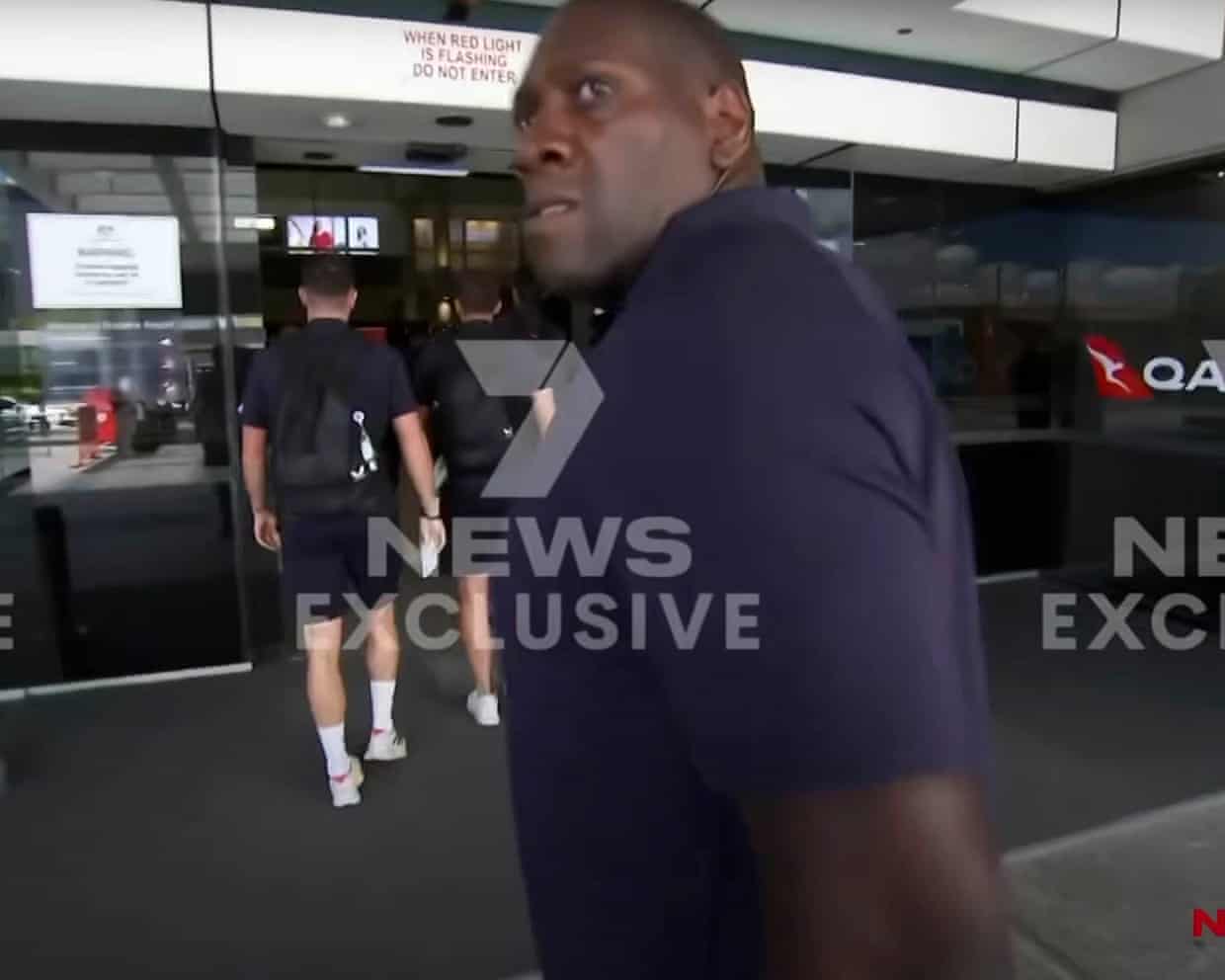
England’s embattled tour of Australia suffered a public relations setback on Saturday as the result of a testy altercation between a member of security staff and a local camera operator at Brisbane airport.In footage released by Channel Seven, England’s minder Colin Rhooms is heard repeatedly telling the camera operator Nick Carrigan to “get out of my face, mate” and eventually pushing him back as he attempted to film players in transit.The team were en route to Adelaide for the third Ashes Test that starts on Wednesday, with Channel Seven, the host broadcaster, later defending its crew’s conduct and suggesting the matter could be taken further.“While conducting routine filming in a public space, the camera operator was physically confronted despite acting respectfully and professionally,’’ a spokesperson told Code Sports. “The safety and wellbeing of our staff is paramount

Disney wants you to AI-generate yourself into your favorite Marvel movie
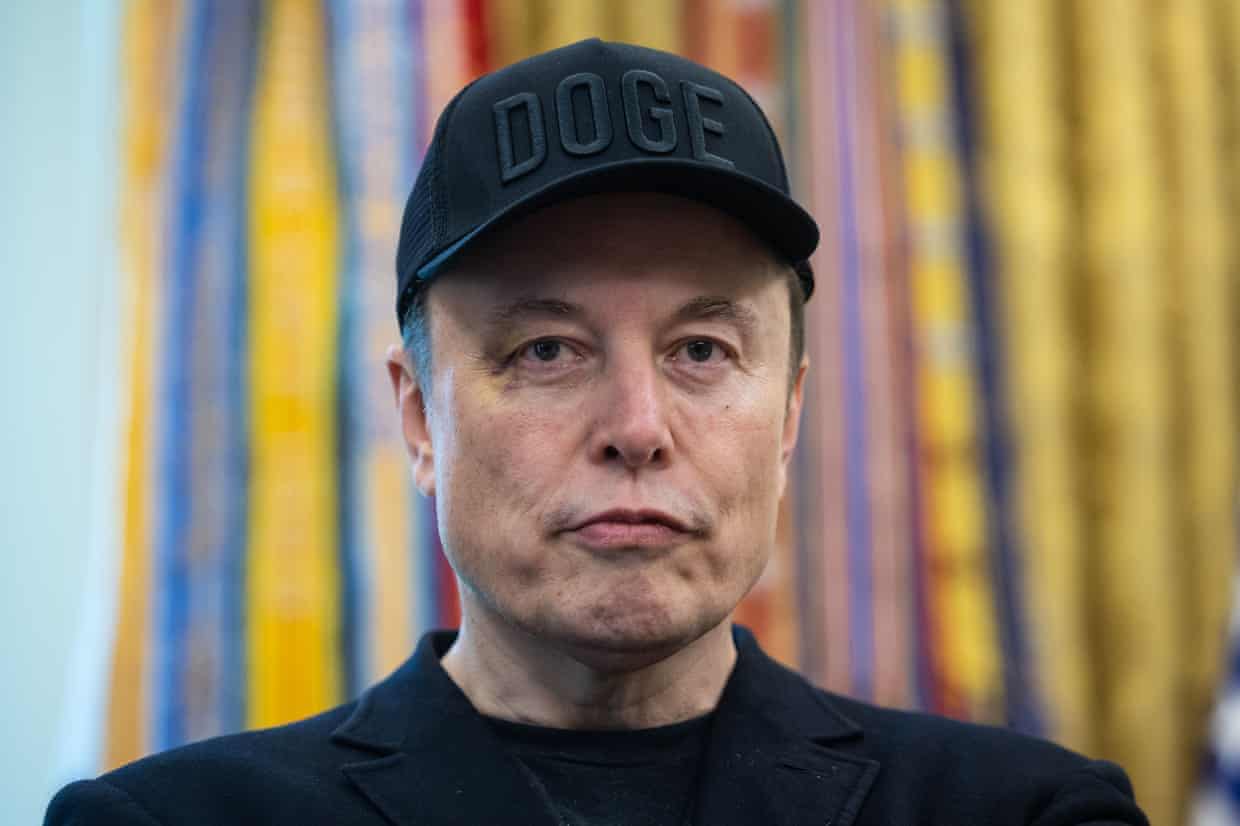
Musk calls Doge only ‘somewhat successful’ and says he would not do it again

ICE is using smartwatches to track pregnant women, even during labor: ‘She was so afraid they would take her baby’

From ‘glacier aesthetic’ to ‘poetcore’: Pinterest predicts the visual trends of 2026 based on its search data
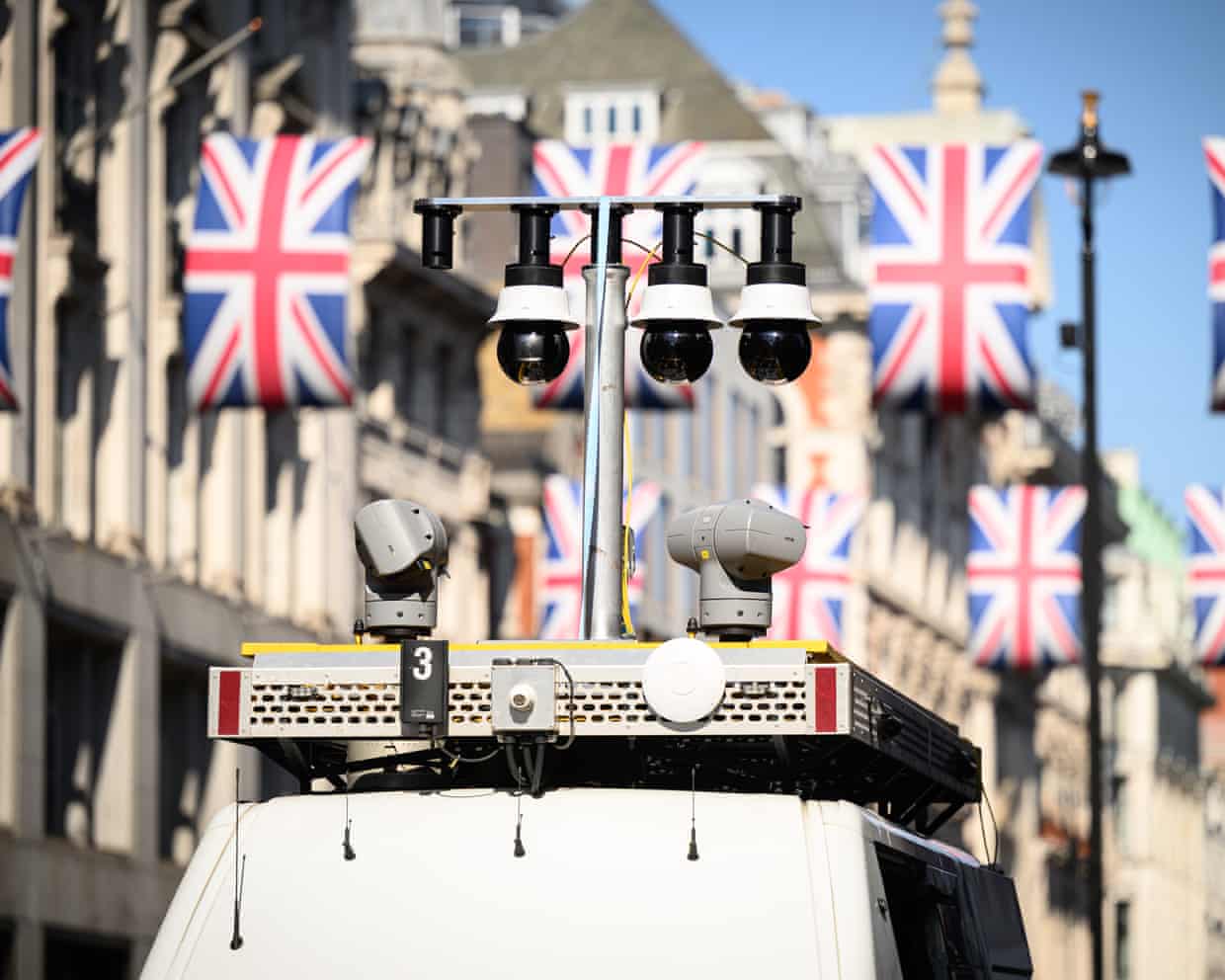
UK police forces lobbied to use biased facial recognition technology

Trump clears way for Nvidia to sell powerful AI chips to China