EU opens investigation into Google’s use of online content for AI models

The EU has opened an investigation to assess whether Google is breaching European competition rules in its use of online content from publishers and YouTube creators for artificial intelligence.The European Commission said on Tuesday it would examine whether the US tech company, which runs the Gemini AI model and is owned by Alphabet, was putting rival AI owners at a “disadvantage”.The commission said: “The investigation will notably examine whether Google is distorting competition by imposing unfair terms and conditions on publishers and content creators, or by granting itself privileged access to such content, thereby placing developers of rival AI models at a disadvantage.”It said it was concerned that Google may have used content from web publishers to generate AI-powered services on its search results pages without appropriate compensation to publishers and without offering them the possibility to refuse such use of their content.The commission said it was also concerned as to whether Google had used content uploaded to YouTube to train its own generative AI models without offering creators compensation or the possibility to refuse.
“Content creators uploading videos on YouTube have an obligation to grant Google permission to use their data for different purposes, including for training generative AI models,” the commission said.Google bars third-party companies from using YouTube videos for AI model training, unless creators or rights holders turn on a setting that allows companies to use their content for the training.However, YouTube also tells creators that it uses videos uploaded to the platform to “improve the product experience for creators and viewers across YouTube and Google, including through machine learning and AI applications”.CNBC reported in June that Google was using YouTube videos to train its Gemini and Veo3 models.Google said it used a subset of videos for training purposes.
In September, YouTube said: “We use content uploaded to YouTube to improve the product experience for creators and viewers across YouTube and Google, including through machine learning and AI applications.”The EU’s competition chief, Teresa Ribera, said: “AI is bringing remarkable innovation and many benefits for people and businesses across Europe, but this progress cannot come at the expense of the principles at the heart of our societies.”A spokesperson for Google said: “This complaint risks stifling innovation in a market that is more competitive than ever.Europeans deserve to benefit from the latest technologies and we will continue to work closely with the news and creative industries as they transition to the AI era.”The EU’s investigation is the latest in a series of challenges to US big tech companies in recent years.
In September, EU regulators issued a fine of almost €3bn (£2.6bn) against Google, claiming that it favoured its own digital advertising services over rivals.Donald Trump said the fine was “discriminatory”.Sign up to Business TodayGet set for the working day – we'll point you to all the business news and analysis you need every morningafter newsletter promotionElon Musk’s social media company X, formerly known as Twitter, was fined €120m by EU tech regulators last week for breaching online content rules.The breaches included what the EU said was a “deceptive” blue tick verification badge given to users and the lack of transparency of the platform’s advertising.
The fine also attracted criticism from US officials, including the secretary of state, Marco Rubio, who wrote on X that the fine was “an attack on all American tech platforms and the American people by foreign governments”.The European Commission opened an investigation earlier this year into Meta over its introduction of AI features on WhatsApp, its messaging platform.Last year it fined Meta €798m for abusive practices benefiting Facebook Marketplace.In 2024, Apple lost a fight against an order by EU competition regulators to pay €13bn in back taxes to Ireland.Last month the head of Google’s parent company said people should not “blindly trust” everything AI tools told them.
Sundar Pichai, the chief executive of Alphabet, said AI models were “prone to errors” and urged people to use them alongside other tools.He also predicted that no company would be immune if the AI bubble burst.Reuters contributed to this report

Bank of England expects budget will cut inflation by up to half a percentage point
The Bank of England expects Rachel Reeves’s budget will reduce the UK’s headline inflation rate by as much as half a percentage point next year.In a boost for the chancellor after last month’s high-stakes tax and spending statement, Clare Lombardelli, a deputy governor at the central bank, said its early analysis showed the policies would lower the annual inflation rate by 0.4 to 0.5 percentage points for a year from mid-2026.Reeves made cutting inflation a central ambition of her budget alongside a sweeping £26bn package of tax increases to cover a shortfall in the public finances and fund scrapping the two-child benefit policy
Ofgem approves early investment in three UK electricity ‘superhighways’
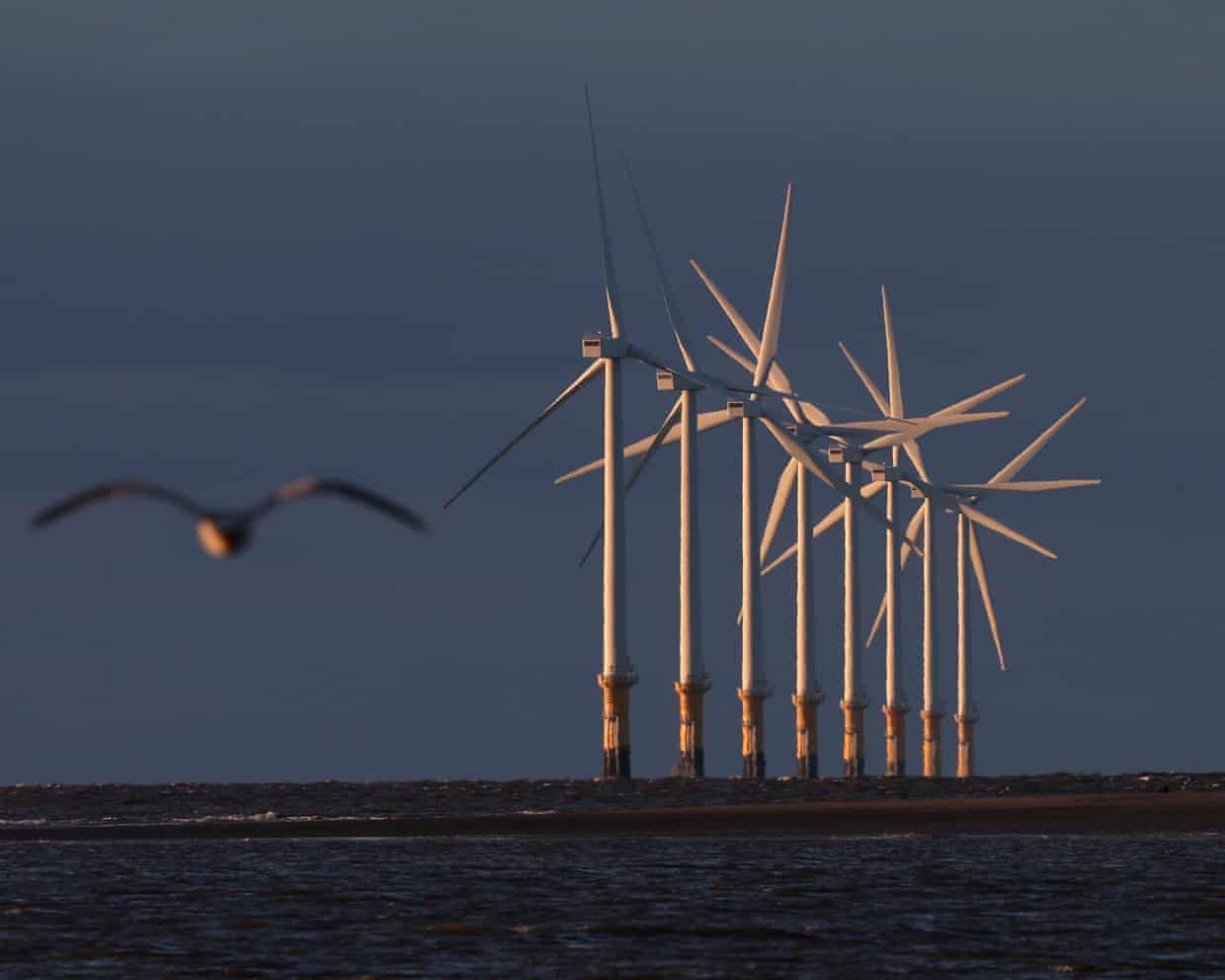
Three major UK electricity “superhighways” could move ahead sooner than expected to help limit the amount that households pay for windfarms to turn off during periods of high power generation.Current grid bottlenecks mean there is not enough capacity to transport the abundance of electricity generated in periods of strong winds to areas where energy demand is highest.The new high-voltage cable projects linking windfarms in Scotland and off the North Sea coast to densely populated areas in the south of the country could start operations by the early 2030s rather than towards the end of the decade, according to the sector regulator.This should help to cut the rising cost of paying windfarms to turn off when they generate more electricity than the grid can transport. Without better interconnection these payments, which consumers cover via their energy bills, are expected to reach more than £12bn a year by the end of the decade

Trump clears way for Nvidia to sell powerful AI chips to China
Donald Trump has cleared the way for Nvidia to begin selling its powerful AI computer chips to China, marking a win for the chip maker and its CEO, Jensen Huang, who has spent months lobbying the White House to open up sales in the country.Before Monday’s announcement, the US had prohibited sales of Nvidia’s most advanced chips to China over national security concerns.Trump posted to Truth Social on Monday: “I have informed President Xi, of China, that the United States will allow NVIDIA to ship its H200 products to approved customers in China, and other Countries, under conditions that allow for continued strong National Security. President Xi responded positively!”Trump said the Department of Commerce was finalising the details and that he was planning to make the same offer to other chip companies, including Advanced Micro Devices (AMD) and Intel. Nvidia’s H200 chips are the company’s second most powerful, and far more advanced than the H20, which was originally designed as a lower-powered model for the Chinese market that would not breach restrictions, but which the US banned anyway in April

AI researchers are to blame for serving up slop | Letter
I’m not surprised to read that the field of artificial intelligence research is being overwhelmed by the very slop that it has pioneered (Artificial intelligence research has a slop problem, academics say: ‘It’s a mess’, 6 December). But this is a bit like bears getting indignant about all the shit in the woods.It serves AI researchers right for the irresponsible innovations that they’ve unleashed on the world, without ever bothering to ask the rest of us whether we wanted it.But what about the rest of us? The problem is not restricted to AI research – their slop generators have flooded other disciplines that bear no blame for this revolution. As a peer reviewer for top ethics journals, I’ve had to point out that submissions are AI-generated slop

Questions over Champ playoffs with only two clubs applying for promotion
Behind-the-scenes arguments about the proposed transformation of the top tier of English club rugby into a franchise-based league are intensifying with just two Champ clubs now eligible for promotion this season. Only Ealing Trailfinders and Doncaster Knights have formally applied to be promoted to the Prem with Worcester Warriors having declined to do so.A Rugby Football Union spokesperson confirmed on Tuesday that Worcester have taken the decision because the club is still “getting back on its feet” after its financial collapse in September 2022 with debts of over £25m. But with Ealing unable to satisfy the Prem minimum standards for the last two seasons and Doncaster currently off the pace in 10th place, it raises fresh questions about the raison d’être of the scheduled new end-of-season Champ playoffs, unveiled amid much fanfare earlier this year.Originally it had been intended that the playoff winner should qualify for a merit-based, two-leg showdown with the Prem’s bottom side but other scenarios have since emerged

England’s Ashes approach is scrambling the brains of the next cricketing generation | Mark Ramprakash
The cracks are starting to show with this England team and with the narrative we’ve been fed for three years after another defeat. Their identity of always taking the aggressive option, of relentlessly putting pressure on their opponents, isn’t holding up to scrutiny. So far in this series they haven’t had the strength needed to achieve it, and they haven’t had the skills either.I was confident that they could win the Ashes this time, mainly because I thought there was quality in the squad and that they had adapted their game to add intelligence and adaptability to their armoury. It’s becoming clear that neither of those beliefs were completely true

Christmas dinner in a restaurant or kitchen carnage at home?

Christmas mixers: Thomasina Miers’ recipes for fire cider and spiced cocktail syrup

Jamie Oliver to relaunch Italian restaurant chain in UK six years after collapse

Helen Goh’s recipe for edible Christmas baubles | The sweet spot

A gentle trade in edible gifts binds communities together

Chocolate tart and zabaglione: Angela Hartnett’s easy make-ahead Christmas desserts – recipes