Robin Smith obituary
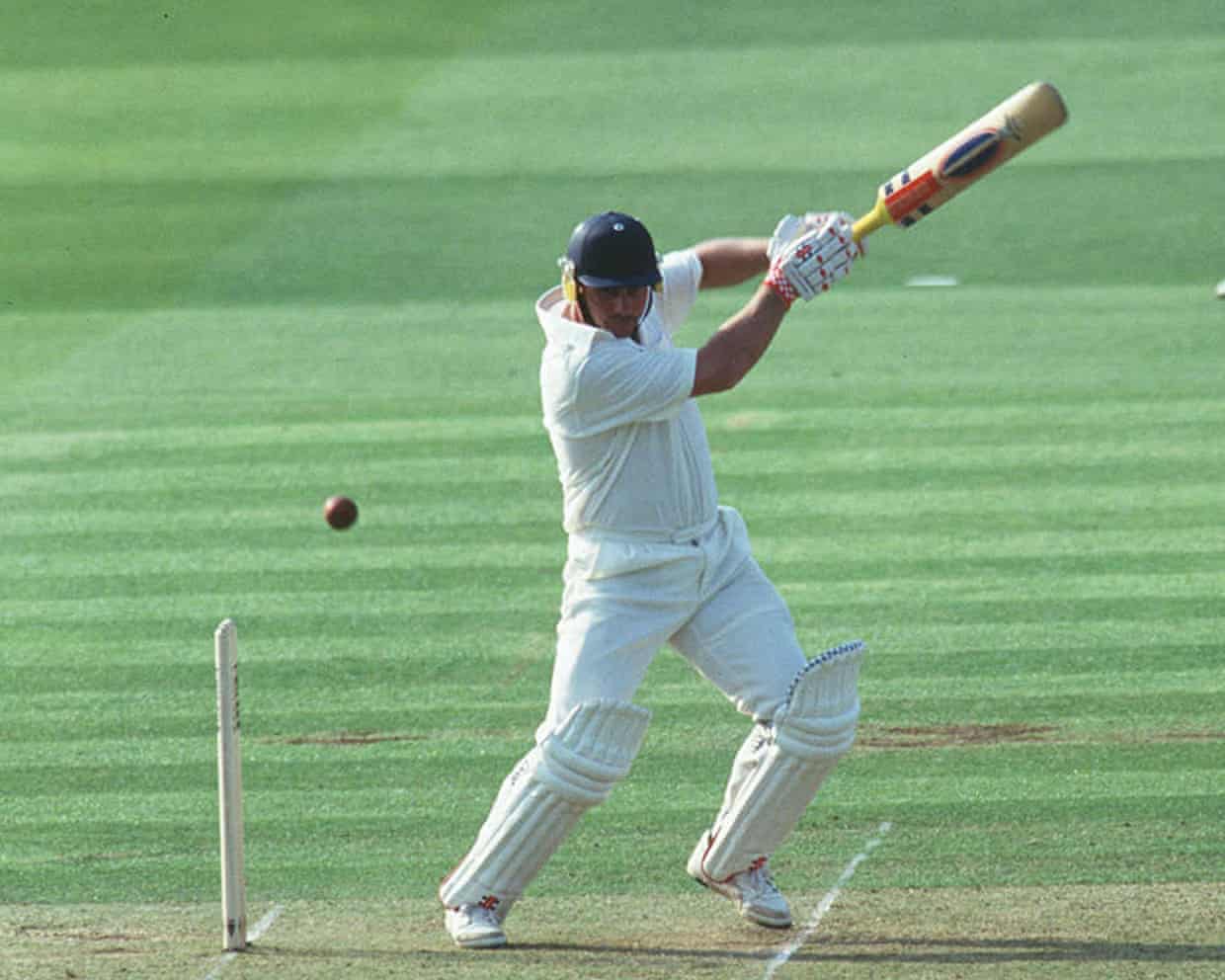
In the eras before the Twenty20 format nobody hit a cricket ball harder than Robin Smith.Muscled like a prizefighter but with quick feet inherited from his ballet dancer mother, he produced strokes, the square cut especially, with a force that left dents in boundary boards and opponents’ ambitions.His wicket was highly sought after, for teams knew they were in for a hand-wringing experience, in all senses, should he spend any time at the crease.But Smith, who has died aged 62 after a long period of ill-health, was a mass of contradictions.On the face of it he was a courageous, attacking batter famed for thrilling encounters with fast bowlers, yet behind the bravado was a highly insecure person who constantly questioned his worth.
Having kept this well hidden during his playing days, he later suffered from alcoholism and depression.Smith’s bravery against the quicks could not be faked.How much was guts, though, and how much thrill-seeking necessity was questionable, for he was a self-confessed adrenaline junkie.His courage led many close to him to wonder whether he was wired differently from most, craving as he did the masochistic experience of facing express pace with its twin demands for lightning reflexes and a high pain threshold – qualities encapsulated perfectly in the unbeaten 148 he made against West Indies at Lord’s in 1991, a Test innings many consider his finest for England despite the game sputtering to a draw.Curtly Ambrose and Malcolm Marshall, two of cricket’s greatest fast bowlers, were rampant during that innings, and in tricky conditions.
While others wilted, Smith rose to the challenge, his eyes sparkling with glee as he and the bowlers traded body blows and boundaries.He later admitted the experience left him “tingling”, a feeling that had intensified to agony four years later at Old Trafford, when a similar onslaught from much the same bowling attack left him with a badly smashed cheekbone.Batting mostly in the middle order, Smith played 62 Tests and 71 one-day internationals for England during an international career that ran from 1988 to 1996.In that time he scored 4,236 Test runs with nine hundreds, with an average of 43.67, and 2,419 one-day runs at an average of just under 40.
In 1993, at Edgbaston, 167 of those one-day runs came against Australia in one of the most brutal innings ever seen, one that saw him personally congratulated by the prime minister, John Major.Yet, in a pattern that was to dog many of his personal highs for England, he failed to finish on the winning side.Nicknamed the Judge after an early hairstyle resembling a judge’s wig, his Test batting average, in an era when England lost twice as many matches as they won, was impressive.Many felt he was passed over too quickly by selectors when he has dropped following a fractious tour of South Africa in 1995-96.Critics, though, pointed to the fact that his game never evolved, his vulnerability to spin a constant throughout his career.
Unfailingly loyal to team and friends, he took any form of rejection hard – to the point where he often saw it as betrayal.In his ghosted autobiography, The Judge (2020), he admitted to being two people at the same time: the Judge was a tough, arrogant competitor set on humiliating bowlers and who thrived on conflict, while Robin Smith was a gentle, emotional character.Each suppressed the other to certain degrees.Smith managed to fall out with important figures, including the England coach Keith Fletcher, who did not take kindly to Smith asking him to employ the services of a sports psychologist.During an era when the difference between a psychologist and a psychiatrist was perhaps not as clear in cricket circles as it was on the couches of California, Fletcher’s take was that “if you need a psychiatrist you shouldn’t be playing for England”.
On one occasion his unwavering loyalty cost him game time after he stood up for Marshall, a teammate at Hampshire who hailed from Barbados.The pair had been sitting at the bar in the team’s hotel in Leicester when three men began to level racist abuse at Marshall.Smith asked them to stop, but when they persisted he knocked down the ring leader with a single punch.The blow broke his hand, leading to a six-week absence from cricket, though he escaped any formal punishment.Smith played before central contracts protected leading players from burnout, a situation that persuaded many England stars to shift their priorities from county to country, but not him.
He played for Hampshire from 1982 to 2003, with five seasons as captain from 1998, and scored 18,984 first-class runs for the county at an average of 42.02, with 49 hundreds.His desire for a challenge meant he often saved his best for big games or dire situations.Mark Nicholas, the county’s captain for the first half of Smith’s career, reckoned him to be Hampshire’s greatest ever player.Born in Durban, South Africa, Robin was the second son of John Smith, a leather merchant, and Joy (nee Shearer), a ballerina and dance teacher.
He attended Northlands boys high school, which he left just before his 17th birthday.The family lived in the Durban suburb of La Lucia, where a cricket net was installed for Robin and his elder brother, Chris, to hone their game.Most days the boys would be roused by their father at 5am when the bowling machine, along with David the gardener, would be cranked into action for the next two hours.A hearty breakfast cooked by the family’s African maid, Florence, would follow, then school.It was undeniably a life of white privilege, even in apartheid South Africa.
Both he and Chris played first-class cricket for Natal in the Currie Cup, Robin as a teenager.When Chris joined Hampshire in 1980, Robin followed soon after.Initially the pair joined as overseas players before becoming English-qualified due to their parents being British born.Chris was picked for England first, playing eight Tests and four one-day internationals in 1983-84.There was no cricketing rivalry between the two of them, though they did bicker about who had the best Porsche.
For those who knew both of them, Chris had the steel and Robin the talent, something they also knew.In a team game such as cricket there is another hurdle to be negotiated even after you have made it; a second life in civvy street away from the team that enveloped you and treated you as family.For Robin that big shift occurred in 2003 when, a month shy of his 40th birthday, Hampshire told him they would not renew his contract.A realist would have seen it coming but Smith had never been one of them, and it hit hard.He had already set up several businesses during his playing days; Judge Tours, a travel company; Chase Sports, a bat manufacturer; Masuri helmets; and now with the help of outside investors he added another, a wine bar bearing his name in Romsey.
Profit and loss did not stir the adrenaline like cricket, and he lost control of each.A man who had always partied as hard as he played, he turned to drink.Eventually a failed property deal, which left him with serious debts, spurred him to emigrate to Australia.His 1988 marriage to Kath James also came under strain, not least from his affairs.The move to Perth in 2007 with their two children, Harrison and Margaux, did not fix their problems, and divorce followed in 2010.
By then his parents, along with Chris and his family, had already settled in Perth.They all tried to help, Chris by giving him a job at his embroidery factory.But a year later Smith contemplated taking his own his life.He was talked out of his “black hole”, as he described his depression, by his son and by Karin Lwin, a neighbour.Her empathy slowly persuaded him that he was a “good man with a bad problem”.
A return to coaching proved to be better rehab than the clinic he had attended, while his ghosted autobiography proved cathartic.But his problems persisted.He is survived by Karin, his two children and his brother, Chris.Robin Arnold Smith, cricketer and businessman, born 13 September 1963; died 2 December 2025

Production of French-German fighter jet threatened by rivalries, chief executive says
The leaders of France and Germany have a “strong willingness” to build a new fighter jet together despite bitter internal rivalries, according to the chief executive of engine manufacturer Safran.A row over who should lead between French aerospace company Dassault and the German unit of Airbus has threatened to break apart the countries’ efforts to make a next-generation fighter jet.France’s Safran, one of the world’s biggest engine-makers, is due to co-produce turbines for the aircraft. Its chief executive, Olivier Andriès, told reporters in London on Tuesday that relations were “very strained” between the lead partners on the Future Combat Air System (known as Scaf in France)However, he added that the offices of the French president, Emmanuel Macron, and the German chancellor, Friedrich Merz, wanted a solution. “Obviously the relationship between Airbus and Dassault is extremely difficult,” Andriès said
Tunbridge Wells water cut likely to last after treatment problem reoccurs
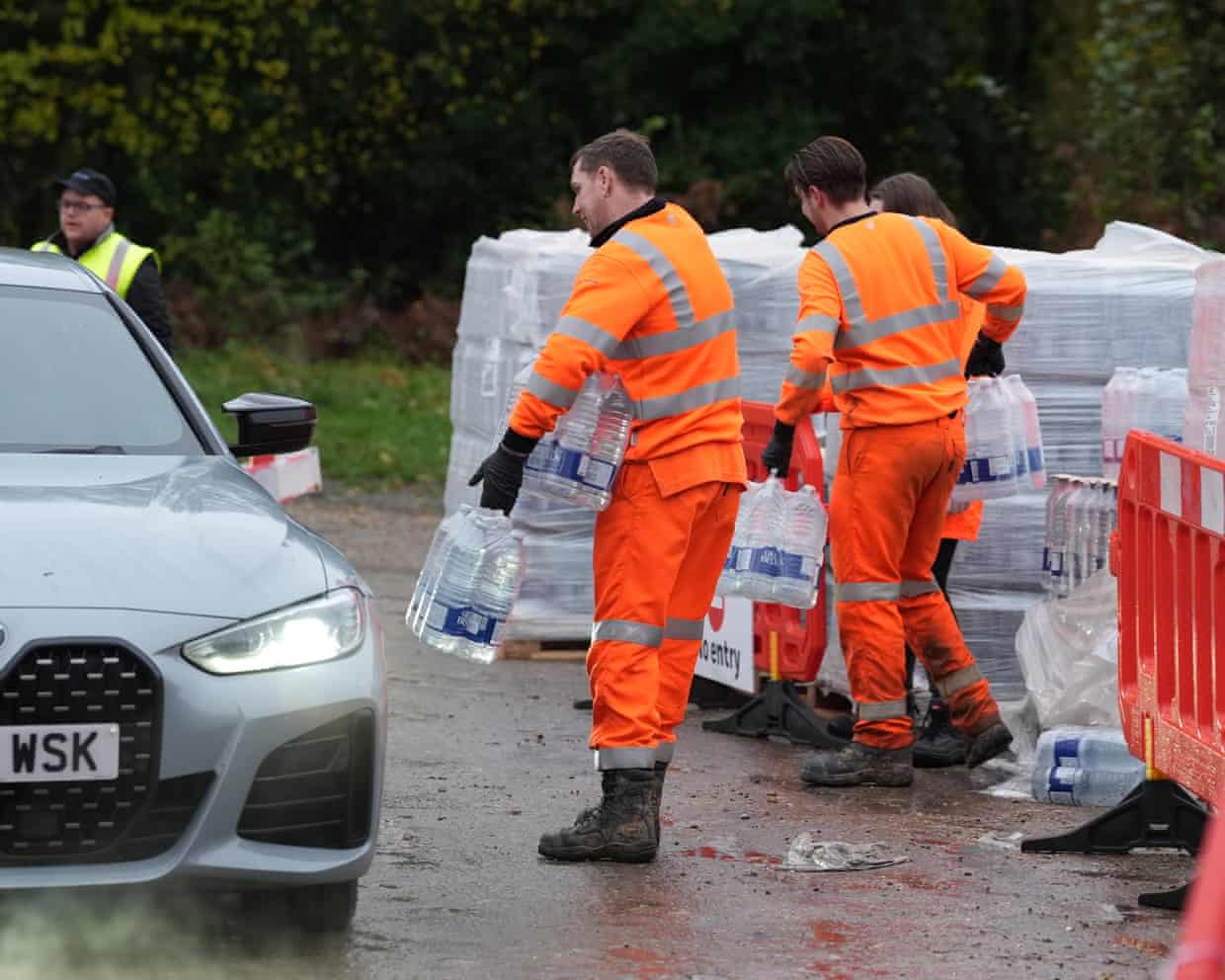
Water shortages in Tunbridge Wells that have forced schools and businesses to close look likely to continue for at least another day after the local water company said the problem with its plant had reoccurred.The Drinking Water Inspectorate (DWI) has said it will investigate.Thousands of homes in the Kent town have been without water since the weekend after South East Water accidentally added the wrong chemicals to the tap water supply.Schools across the area have been shut, and residents have been filling buckets with rainwater to flush toilets. Cats, dogs and guinea pigs have been given bottled mineral water to drink as the people of Tunbridge Wells wait for their water to be switched back on

Sam Altman issues ‘code red’ at OpenAI as ChatGPT contends with rivals
Sam Altman has declared a “code red” at OpenAI to improve ChatGPT as the chatbot faces intense competition from rivals.According to a report by tech news site the Information, the chief executive of the San Francisco-based startup told staff in an internal memo: “We are at a critical time for ChatGPT.”OpenAI has been rattled by the success of Google’s latest AI model, Gemini 3, and is devoting more internal resources to improving ChatGPT.Last month, Altman told employees that the launch of Gemini 3, which has outperformed rivals on various benchmarks, could create “temporary economic headwinds” for the company. He added: “I expect the vibes out there to be rough for a bit

The fight to see clearly through big tech’s echo chambers
Hello, and welcome to TechScape. I’m your host, Blake Montgomery. Today, I’m mulling over whether to upgrade my iPhone 11 Pro. In tech news, there’s a narrative battle afoot in Silicon Valley, tips on avoiding the yearly smartphone upgrade cycle and new devices altogether, and artificial intelligence’s use in government, for better and for worse.The encroachment of technology can feel inevitable

Serena Williams quietly re-enters drug-testing pool in step toward possible 2026 return
Serena Williams has taken the procedural move required of any player contemplating a competitive comeback, after the 23-time grand slam singles champion re-entered the International Tennis Integrity Agency’s (ITIA) registered testing pool for the first time since 2022.Williams, 44, has not played an official match since her run to the third round of the US Open more than three years ago. Although she described her departure at the time as “evolving away” from the sport rather than a hard retirement, she filed the paperwork with the ITIA that September that exempted her from the sport’s stringent whereabouts requirements. To return to competition, however, players must make themselves available for out-of-competition testing for six months before they are allowed to enter an event.Williams’s name appeared on the agency’s updated testing-pool list dated 6 October

Men’s Rugby World Cup 2027: how the draw will work and the new format explained
A potential path to victory at the 2027 men’s Rugby World Cup will become clearer in Sydney on Wednesday when the draw for the tournament is madeKicking off on 1 October 2027, the men’s event will feature 24 teams instead of 20, and will be the first to include a round of 16. Each tournament since 2003 has included 20 competing nations, and the previous format moved straight from the pool stage to the quarter-finals. There will be a total of 52 matches in 2027, up from 48.Instead of four pools of five there are six pools of four. The eventual winners will still be obliged to play seven matches to claim the trophy, but will play one pool match fewer, before the last-16 game for a place in the last eight

My cultural awakening: Thelma & Louise made me realise I was stuck in an unhappy marriage

The Guide #219: Don’t panic! Revisiting the millennium’s wildest cultural predictions
From Christy to Neil Young: your complete entertainment guide to the week ahead

Susan Loppert obituary
Oh yes he is! Kiefer Sutherland dives into the world of panto

O come out ye faithful: a joyful roundup of UK culture this Christmas