Production of French-German fighter jet threatened by rivalries, chief executive says

The leaders of France and Germany have a “strong willingness” to build a new fighter jet together despite bitter internal rivalries, according to the chief executive of engine manufacturer Safran.A row over who should lead between French aerospace company Dassault and the German unit of Airbus has threatened to break apart the countries’ efforts to make a next-generation fighter jet.France’s Safran, one of the world’s biggest engine-makers, is due to co-produce turbines for the aircraft.Its chief executive, Olivier Andriès, told reporters in London on Tuesday that relations were “very strained” between the lead partners on the Future Combat Air System (known as Scaf in France)However, he added that the offices of the French president, Emmanuel Macron, and the German chancellor, Friedrich Merz, wanted a solution.“Obviously the relationship between Airbus and Dassault is extremely difficult,” Andriès said.
“Have we reached a breaking point or not on the question? I can’t answer.“I know that on the political side there is still very strong willingness on the French president’s side as well as on the German chancellor’s side to strike a deal and to solve it.”The Scaf would be a so-called sixth-generation fighter jet, combining stealth abilities with advanced electronics and weaponry – as well as potentially flying alongside drones.It would be produced at the same time as the rival Global Combat Air Programme, or Tempest, which will be co-produced by Britain’s BAE Systems, Italy’s Leonardo and Japan’s Mitsubishi Heavy Industries, and the US’s F-47 fighter, to be built by Boeing.However, many analysts and industry leaders – including Airbus’s chief executive – have openly mused about whether separate European projects should duplicate efforts to build the planes.
Andriès said that cooperation in other parts of Scaf was nevertheless “very smooth”.Safran and Germany’s MTU Engines carried out detailed work to allocate responsibilities at the outset, he added.The chief executive’s comments came during a visit to lobby UK government ministers and express willingness to invest in Britain.Although headquartered in France, Safran employs 5,500 people in the UK in various acquired businesses making landing gear, flight control machinery, seats and other parts for civilian and military aircraft.Andriès said that the company’s electric motors in Pitstone, Buckinghamshire, would play an increasing role in trying to develop crucial magnets that are not reliant on rare earth metals.
Aerospace, defence and automotive manufacturers are scrambling to find alternatives to rare earths, after China, the dominant supplier, imposed export controls in retaliation to the US trade war,“Supply chains have been weaponised,” Andriès said,“‘How can we reduce our dependency on rare earths?’ is going to be one thema in the UK,”Sign up to This is EuropeThe most pressing stories and debates for Europeans – from identity to economics to the environmentafter newsletter promotionThe company is also investing heavily in engine development in preparation for the next generation of civil passenger jets,Airbus and Boeing are both considering when to start formal development of a new single aisle plane.
Safran is the co-owner, with America’s General Electric, of CFM International, which is developing a disruptive “open fan” jet engine, unlike American rival Pratt & Whitney and Britain’s Rolls-Royce, which is aiming to break back into the single-aisle engine market,Andriès said Safran was looking at open fan and orthodox ducted designs, and was “getting prepared for every scenario” if the aircraft manufacturers chose to stick with similar designs rather than the “bolder” CFM idea,

The rise of deepfake pornography in schools: ‘One girl was so horrified she vomited’
‘It worries me that it’s so normalised. He obviously wasn’t hiding it. He didn’t feel this was something he shouldn’t be doing. It was in the open and people saw it. That’s what was quite shocking

UN experts raise concerns over homes rented out by English social landlord
UN experts have said that one of England’s biggest social landlords appears to have systematically failed to ensure the habitability of its rental properties.In a letter to the UK government, they cite the case of a disabled tenant, Sanjay Ramburn, 55, who they say lived with his family of five in an L&Q group property in Forest Gate, east London for several years with no electricity. They experienced four ceiling collapses, as well as severe damp and mould that affected their health.The children developed breathing issues, tinnitus and skin problems. Ramburn, who reported racial harassment and antisocial behaviour at the hands of his upstairs neighbour that he said was not addressed by L&Q, suffered severe mental health issues, the letter says

Almost 4 million children in UK affected by economic abuse, charity finds
Almost 4 million children in the UK are suffering the impact of economic abuse in their families, with some having pocket or birthday money stolen by the perpetrators, a charity has found.Data from charity Surviving Economic Abuse (SEA) showed that over the past year 27% of mothers with children under 18 had experienced behaviour considered to be economic abuse, where a current or former partner has controlled the family’s money.The research found perpetrators used various means, including stopping mothers accessing bank accounts and child benefits, and refusing to pay child maintenance.As a result, some children are missing out on essentials including clothes and food.A third of the women who experienced economic abuse by a former partner reported that their ex refused to pay child support, or paid it unreliably, despite being able to afford it

Resident doctors in England to go on strike in run-up to Christmas
Thousands of doctors in England are to go on strike again this month, in a dispute over pay and job security.The British Medical Association has announced that resident doctors – formerly known as junior doctors – will begin a five-day strike action that will run from 7am on 17 December until 7am on 22 December.It is the 14th strike by doctors since March 2023 and follows a similar five-day action last month, which led to warnings that the NHS may have to cut frontline staff and offer fewer appointments and operations if the strikes continue.The BMA said resident doctors were being driven “away from jobs and to the picket line” because the government was failing to make a “credible offer on jobs or pay”.Dr Jack Fletcher, chair of the BMA’s resident doctors committee, said: “With the government failing to put forward a credible plan to fix the jobs crisis for resident doctors at the same time as pushing a real-terms pay cut for them, we have no choice but to announce more strike dates
Assisted dying bill is safer than any other in the world | Letters
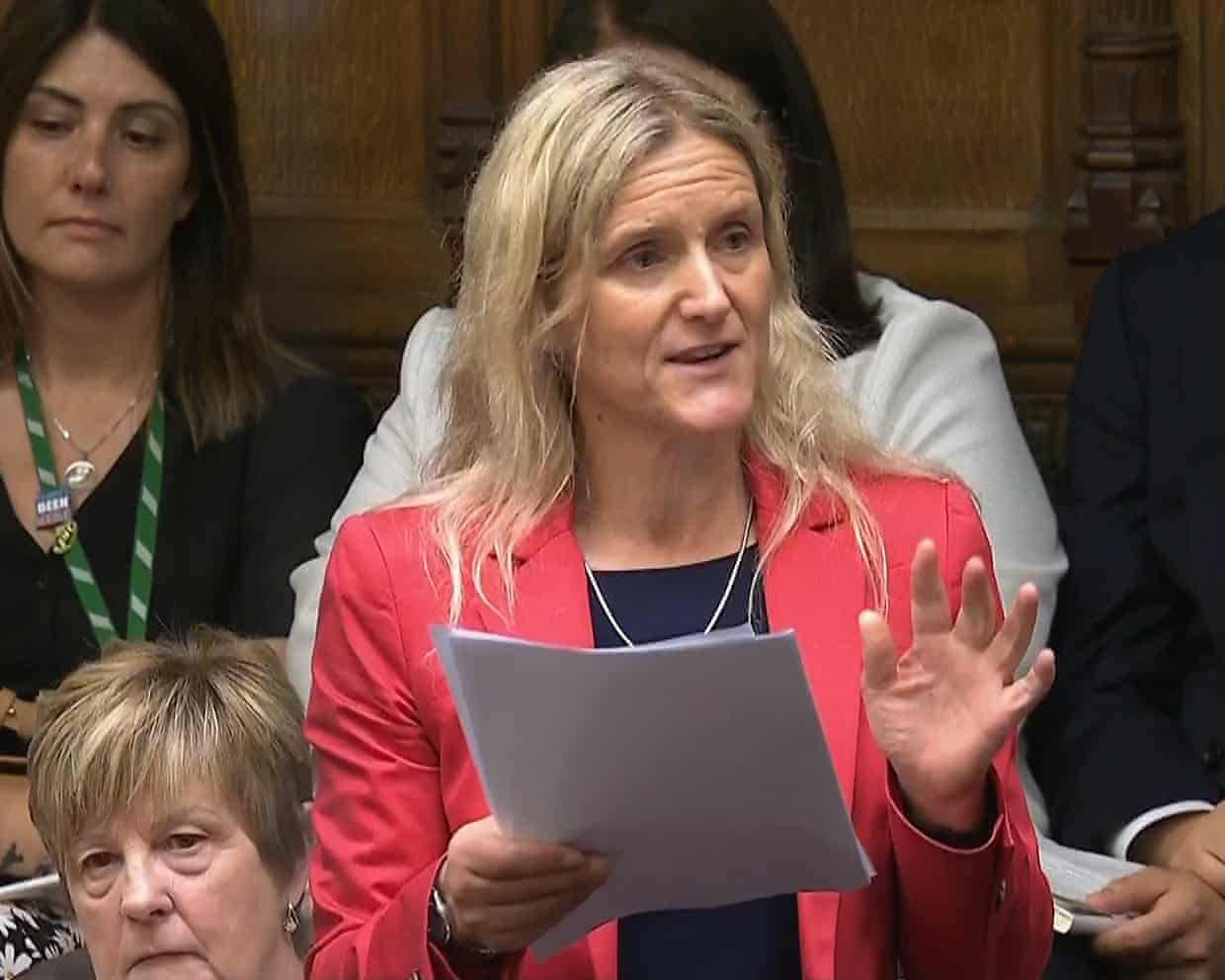
Dr Lucy Thomas raises some interesting points in her defence of the House of Lords’ behaviour on assisted dying (Letters, 26 November). But it is a stretch to suggest that the 1,000 amendments that peers have tabled to the bill represent effective independent scrutiny.What possible justification can there be for requiring every dying person – including a 90-year-old in their final weeks with advanced metastasised cancer – to provide a negative pregnancy test before their request is approved (amendment 458)? I am sure there are many peers who want to scrutinise the bill in a sensible way, but they are being thwarted by a handful who seem intent on stopping law change at any cost.The bill as currently drafted – which MPs have amended and approved – is safer than any other in the world, including in its protections for doctors. Clause 31 ensures that if Dr Thomas doesn’t wish to support her patients with this option, she would be under absolutely no obligation to do so
Shortage of ‘breakthrough’ weight loss drugs will slow fight against obesity, WHO warns
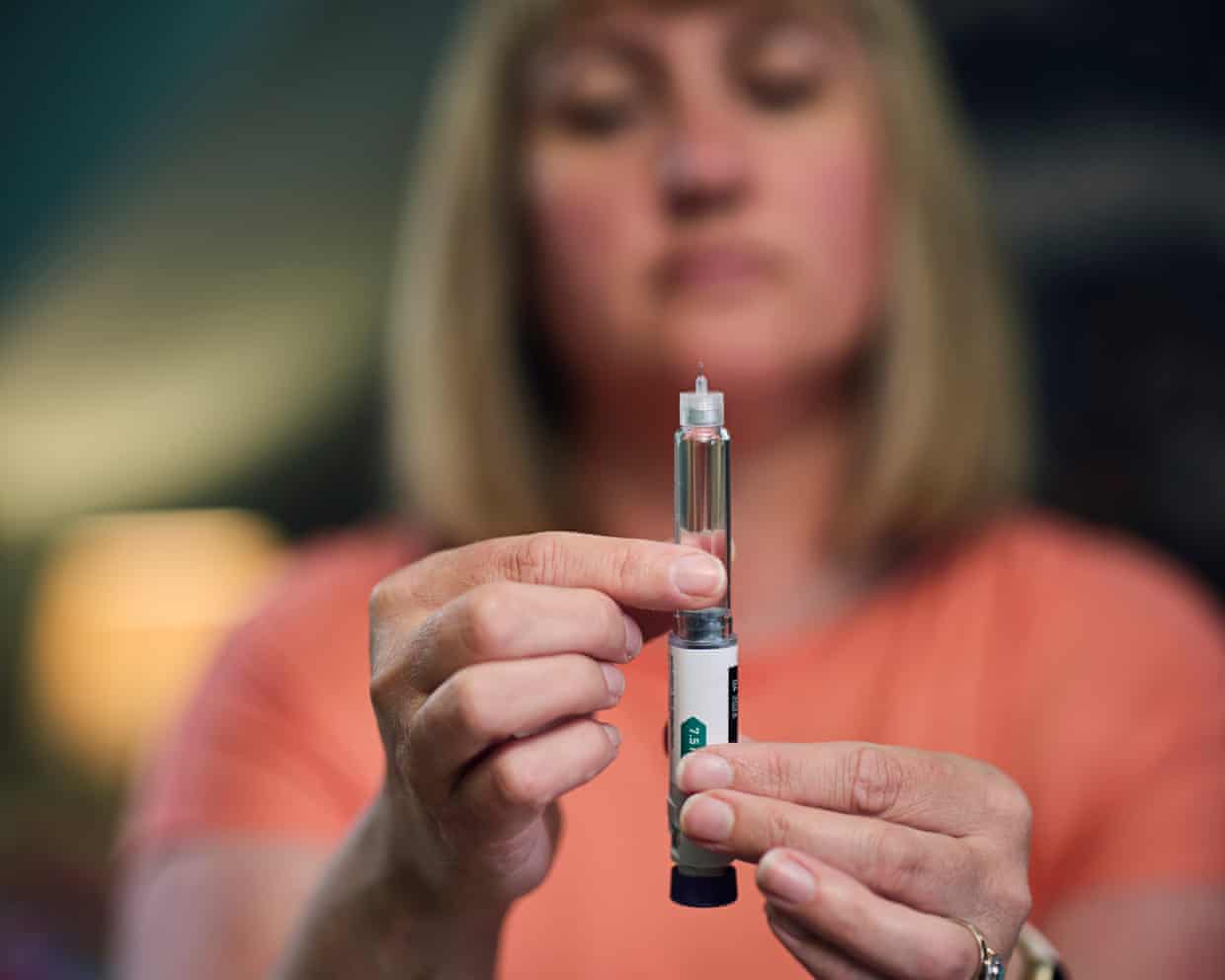
Weight loss drugs such as Mounjaro offer huge potential to tackle soaring obesity globally but are currently only available to one in 10 of those who need them, the World Health Organization has said.Their proven effectiveness in helping people lose weight means the medications represent “a new chapter” in how health services can treat obesity and the killer diseases it causes, the WHO added.Its statement urged countries to do what they could to ensure that people who would benefit from glucagon-like peptide-1 (GLP-1) therapies could access them. But while eligible adults generally should get them, pregnant women should not use them, the WHO stated.Limits on global production capacity mean that now only at most about 100 million people could receive the drugs – only 10% of the 1 billion who could benefit

Fiscal headroom is a matter of guesswork | Brief letters
OBR chief’s exit may ease pressure on Rachel Reeves but the battle isn’t over

‘The biggest decision yet’: Jared Kaplan on allowing AI to train itself

Charlie Kirk tops Wikipedia’s list of most-read articles in 2025

Robin Smith obituary

ITV to show every England Test from 2026 after agreeing new £80m deal