Sabastian Sawe: the marathon star on a mission to be drug tested as much as possible | Sean Ingle

Last week the world’s best marathon runner, Sabastian Sawe, looked me straight in the eye and told me “doping is a cancer”.Then he insisted he was clean.You hear such oaths and affirmations all the time.But, uniquely, Sawe recently backed up those words by asking the Athletics Integrity Unit to test him as much as possible.You see, Sawe believed he could break the world record in Berlin in September.
And he also understood that Kenya’s abysmal doping record meant that success would be met with more raised eyebrows than a plastic surgeon’s clinic in Hollywood,So the call went into the AIU,Test me,Repeatedly,Throw everything at it.
My sponsors, Adidas, will pick up the bill.“The main reason was to show that I am clean, and I am doing it the right way,” Sawe, who won the London Marathon in April, told me.“As Kenyans we have been challenged because of doping cases.So before the Berlin Marathon I was tested 25 times, blood and urine, around two or three times a week.And one day I was even tested twice – first thing in the morning and late at night.
”In the end, hot weather put paid to Sawe’s dreams of a world record.But his approach to the AIU tells you something about Kenya and doping.It is now so routine that when Sheila Chelangat, who ran in the Tokyo Olympics, was banned for six years for taking EPO last week, it barely made a ripple.How bad is the problem? Well, since the AIU was set up in 2017 it has sanctioned 427 elite athletes for doping offences.And, staggeringly, 145 of them – more than a third – have been Kenyans.
The next on the list? Russia with 75,Then Ethiopia and India with 20 each,Little wonder, then, that the calls for Kenya to be banned have grown in intensity,You see it on athletics threads, and hear it in the frustrations of coaches doing things the right way,If Russia, why not Kenya?The anger is understandable.
But Russia and Kenya are not the same,Partly because there is no evidence of state-sponsored doping coming from Nairobi,But also because the experts believe that Kenya is finally getting its act together,“There’s no doubt there’s a really serious doping problem in Kenya,” the AIU’s chief executive, Brett Clothier, says,“That’s just beyond question now.
” But, he stresses, things are much better than six or seven years ago, when it was almost open season.“The one thing I will say about the testing system in Kenya, it’s the best in the world.Within an hour of getting intelligence, the AIU team can have a test executed anywhere in the country.We can’t say that about anywhere else.”Clothier also stresses that elite road runners, a large number of whom are Kenyans, are tested far more than track athletes.
As he points out, for most disciplines the AIU focuses on the world’s top 10 when it comes to out-of-competition testing.In other words, those likely to win medals.That’s because testing and gathering intelligence is so expensive, the AIU has to leave it to national anti-doping bodies to test those lower down the rankings.However when it comes to road running, there is a lot more money sloshing around as the major races, athletes, and sponsors such as Nike, Adidas and Asics have put in $3m a year since 2019 to fund extra testing for hundreds of athletes.It also helps that the Kenyan government now gives the AIU $5m (£3.
75m) a year as well,As Clothier points out, Kenyan GDP per capita is about $2,000,So the equivalent would be the UK government putting in £75m a year to tackle doping,“We are going to continue to have a high number of cases in Kenya because we’re doing way more testing,” Clothier admits,“But I’m certain that there’s less doping now than five years ago, because there’s much more control of the situation – as well as consequences for people who are doping.
”He contrasts the situation with the AIU’s early days,“Back in 2018, the overwhelming majority of their podium finishers of elite marathons were not being tested out of competition at all in the lead-up to races,” he says,“It was a complete recipe for disaster,”The AIU is widely seen as the best anti-doping unit in sport,But despite its best efforts, athletes do escape detection.
Ruth Chepngetich, who shattered the women’s marathon world record last year, was tested 14 times in 2024 without yielding a positive test,It was only in March 2025 that she was finally caught,And while days when athletes would mainline EPO with impunity are gone, they can still microdose substances that can be out of their body within hours,It means that unless there is hard intelligence, or testing late at night and then early in the morning, they can still escape detection,So why is there reason for hope when it comes to Sawe’s approach to the AIU? As Clothier explains, he was not only tested 25 times in a few weeks, but his samples were also scrutinised with top-end analysis, including isotope ratio mass spectrometry testing, which is much better at detecting tiny levels of banned drugs.
“It was really very comprehensive,” Clothier says.“We don’t didn’t do just standard blood and urine tests, but for every test we did a high amount of special analysis.Normally we can’t do this because of budget constraints.“None of this was initiated by us.It came from his sponsor, his agent and Sawe himself – I’m told he was the driver behind all this.
I think it’s a really potentially powerful and important moment for the sport,”The caveat is that this was for a limited time period,However the AIU says it is discussing with Sawe’s management about how to continue this enhanced program but in a more sustainable way,Meanwhile Sawe’s agent, Eric Lilot, says he will soon require his athletes who train at the 2 Running Club in Kapsabet to sign a contract that will require them to give up any money still owed to them if it is shown they intentionally tried to dope – which will be passed on to anti-doping authorities,And what if an athlete doesn’t sign the document? “Then we will kick them out of the group,” Lilot says.
None of this means we can be absolutely sure that Sawe is clean, of course.However he deserves great credit for realising that in a time of heightened scepticism, extraordinary performances require extraordinary proof.

A better understanding of mental ill health is crucial | Letters
As a psychotherapist with child and adolescent mental health services, I welcome Wes Streeting’s change of heart on his comments about the “overdiagnosis” of mental health conditions, ADHD and autism (I realise now that my view on mental health overdiagnosis was divisive. We all need better evidence, 4 December). Political point-scoring has no place in public health.By setting up this taskforce, Streeting acknowledges the complexity of the picture and that conversations must be led by research, where science and suffering can be held together.The increase in reported mental health problems and neurodevelopmental diagnoses, and services not keeping pace, reflect what many clinicians see every day – people are in more distress and unable to access support

Rock star: Sasha DiGiulian on making history with a ‘crazy, audacious’ climb of El Capitán
The 33-year-old hit rain, lightning, snow and ice in Yosemite – and still became the first woman to ascend the Platinum routeBig-wall climber Sasha DiGiulian had spent the last three years preparing for a career-defining ascent of one of the most challenging routes up the face of the famed granite cliff known as El Capitán in Yosemite national park. All she and her partner needed was a two-week window of favorable weather. They appeared to get one on 3 November.DiGiulian felt jolts of fear during her training, she said, induced by the sudden 2,600ft of exposure she felt as she rappelled down to practice on the most challenging sections of the iconic California peak. But her nerves calmed when ascending from the base, allowing her to focus more intently on the moves and completing each pitch – a measurement that references a length of the rope that climbers use to secure themselves to the rock

People on lowest incomes being denied access to social housing, research finds
The poorest people in England are being denied access to social housing owing to their low income, in a “catch-22” situation that is pushing more people into homelessness, research has found.A new report from Crisis said that an ever depleting supply of social homes meant that housing associations were using strict criteria to choose new tenants, and people on low incomes and in receipt of benefits were having applications denied due to being deemed too risky.The situation has been compared to “rearranging the deckchairs on the Titanic” by one housing association, as the homelessness charity urged the government to introduce new rules.“Ultimately, people are in a catch-22 situation where they’re looking to move into a social rent home, and they’re basically told no because of their financial circumstances. But where else can people live?” said Francesca Albanese, executive director of policy and social change

Local authorities in England and Wales warn finances at ‘breaking point’
Local authorities in England and Wales have warned their finances are at “breaking point” with more councils expected to fall into bankruptcy in future, as they face a nervous wait to discover their government funding this month.Council leaders expect changes to annual funding arrangements will result in steep cuts for many local authorities, preventing many from balancing their books and providing basic services to citizens.Amid a crisis in local authority funding, 29 councils have already been unable to meet their financial obligations without special government loans, including Croydon, Thurrock in Essex and Birmingham.Norfolk county council’s deputy leader for finance, Andrew Jamieson, said the number of local authorities unable to meet their statutory obligations was likely to grow when the government publishes a new funding settlement this month.“We are often accused of crying wolf, but local authorities are reaching breaking point now,” he said

Rules on single-sex spaces pose risk to trans people’s mental health, UK charities say
New rules on access to single-sex spaces could pose a significant risk to the mental health of trans and non-binary people, according to 15 of the UK’s most respected mental charities.Organisations including Samaritans, Mind, Centre for Mental Health and the Royal College of Psychiatrists have written to the equalities minister, Bridget Phillipson, to express their “deep concern” about guidance from the Equality and Human Rights Commission (EHRC) that is awaiting approval from the government.The letter says the guidance could “deepen existing inequalities and pose significant risk to the mental health of trans and non-binary people across UK”.It says: “Mental health services should be places of refuge, not risk, and equality protections must strengthen, not erode, the conditions that enable people to feel safe and supported.”The EHRC is waiting for ministers to approve its official guidance on how public bodies, businesses and other service providers should respond to the supreme court’s ruling in April that the legal definition of a woman is based on biological sex

Spiteful or fair? Reeves’s mansion tax plan proves divisive | Letters
Jonathan Liew’s article (Won’t somebody please think of Britain’s poor £2m homeowners? Oh, wait – everyone already is, 2 November) entirely misses the point that underlies the spate of criticism against the “mansion tax”. While wealth disparity is no doubt an issue that needs to be addressed, this tax is a spiteful assault on hard-working taxpayers who already pay an enormous proportion of their salary to the Treasury to support a woefully mismanaged public sector and welfare state. Those who support the tax seem to be driven by a simple ideology that we need to “bash the rich” to create equality.In the real world, this tax penalises hard-working families who have made difficult choices and made huge sacrifices to get to where they are. I come from a working-class background, I worked hard at school and achieved good grades, I worked part-time jobs, paid my own way through university and chose a profession that pays well, relocating to London and making sacrifices to earn good money – spending 18 hours a day in the office – and I chose to buy property and invest in it

Was 2025 Oscar Piastri’s best chance at an F1 title or a prelude to glory? | Jack Snape
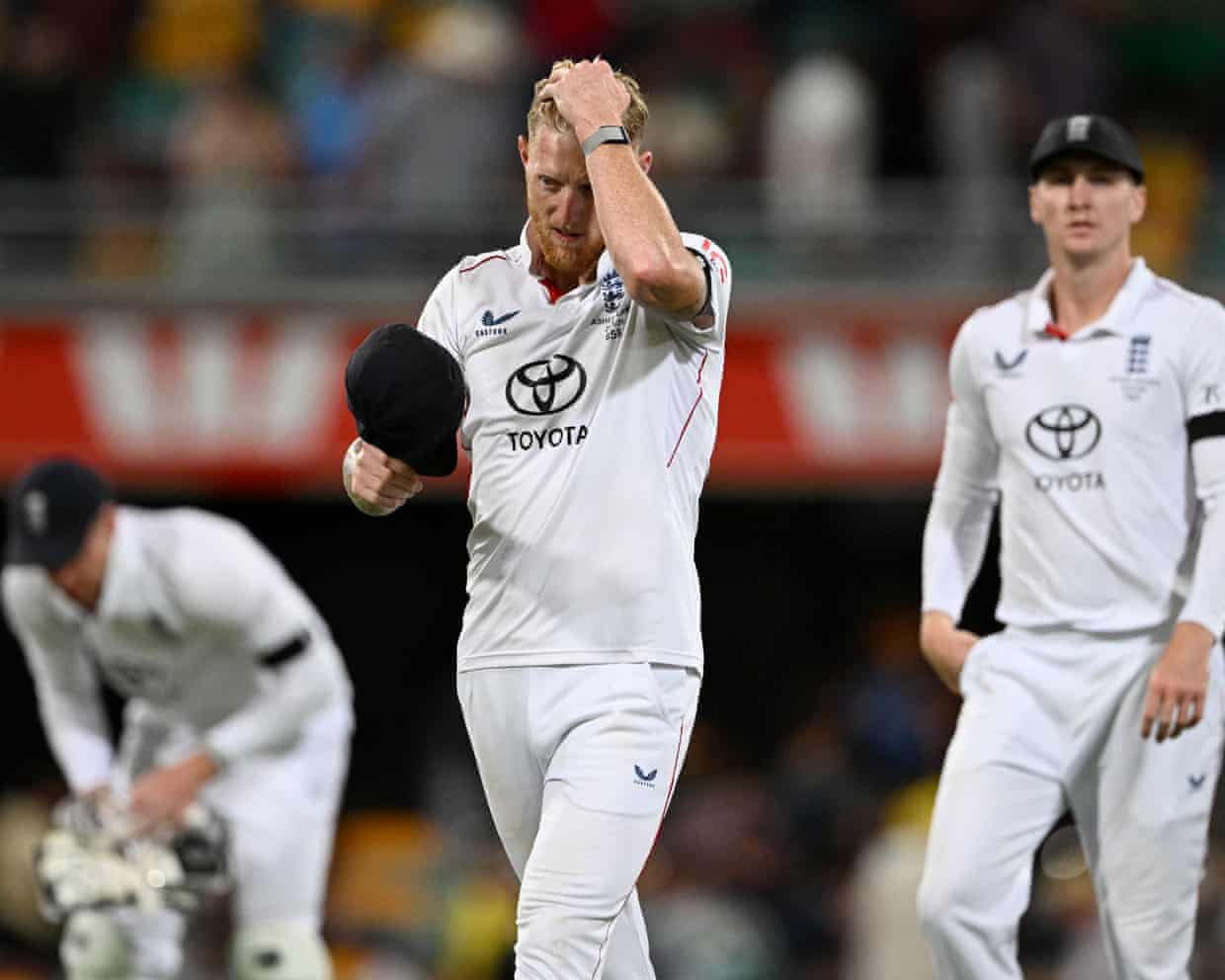
Burning down the Baz-house is easy, but what comes after that for England? | Barney Ronay

‘Like a movie’: Lando Norris relives final lap to glory and partying till 6am as world champion

Account closures and restrictions are angering racing punters but there is an answer

Ross Byrne says escort defender crackdown could see locks converted to wings

McCullum’s ‘overprepared’ Ashes remark may prove England’s Bazball epitaph