Forcing UK banks to support credit unions would help keep loan sharks at bay

Nikhil Rathi, chief executive of the Financial Conduct Authority, made a pilgrimage on Friday from its glass and steel HQ in east London to the Pioneers Museum in Rochdale – the spiritual home of the co-operative movement.His unlikely day trip aimed to highlight the City watchdog’s role in opening the way to a doubling of the size of the mutuals sector – a Labour manifesto pledge.Among these customer- or worker-owned organisations, including huge companies such as John Lewis and Nationwide building society, are the 350 credit unions.These are locally based lenders whose interest rates are capped by law and whose clients tend to include the low-income consumers left behind by the big banks.Holding assets of £4.
9bn between them, the UK’s credit unions serve about 2 million members.Their US counterparts have more than 143 million.The FCA’s new report, which Rathi was in Rochdale to launch, included a series of recommendations aimed at encouraging credit unions to expand, and to offer more services.The Treasury has already promised to review the “common bond” – the legal promise that governs each credit union, for example specifying the area it serves – to allow these to adapt more easily to changing circumstances.Ministers have also set aside £30m to fund modernisation – updating credit unions’ IT systems, for example.
Yet campaigners for fairer lending fret that cash-strapped customers will continue to be left at the mercy of loan sharks unless mainstream banks are forced to do more.The need is certainly there.Visiting an employability project on a housing estate in Stockton this week, it was depressing to hear about residents resorting to loan sharks, often unaware of the cheaper and less unpleasant alternative of a local credit union.That chimed with evidence from a recent roundtable discussion organised in Glasgow by campaign group the Finance Innovation Lab, where low-income borrowers recounted their experiences to local MPs.“When there’s an unexpected cost like that you just need to get it sorted, but you’re left with no good options,” one woman said, citing a broken bed as an example of the kind of expense that can drive consumers into paying extortionate interest rates to unscrupulous lenders.
Recent research by Fair4All Finance, the government-backed, not-for-profit organisation that promotes financial inclusion, found that 1.9 million adults in Britain had turned to unlicensed money lenders or loan sharks in the past year.Dr Paul A Jones of Liverpool John Moores University is an expert on the credit union movement.He is optimistic about its future, and argues that some of the impetus for growth must come from within the sector itself.“We need more credit unions of a significant size.
We need more credit unions to get in the fast lane,” he says.“If you don’t want to, and you want to carry on in your village hall with 1,000 members, no problem, but that’s not where growth is going to come from.”He welcomes some of the changes promised by the government – but warns that the constraint on many credit unions is lack of capital.“External investment is going to be important,” he says.That’s where the Finance Innovation Lab and a coalition of other charities and lenders argue that legislation is needed, to force the powerful high street banks to play their part.
Sign up to Business TodayGet set for the working day – we'll point you to all the business news and analysis you need every morningafter newsletter promotionThe government published its financial inclusion strategy last month, aimed at easing the struggle of consumers to secure affordable banking, insurance and other crucial services.But it included no specific targets, and made few firm demands of the finance sector.There was backing for a “small sum lending pilot”, led by Fair4All Finance, “to help expand access to affordable credit in England”.But the scale of the pilot was not specified – and it was unclear how it would differ from existing mutual lenders that already make small loans.Campaigners including the actor Michael Sheen, who made a TV documentary on the exorbitant cost of debt for low-paid consumers in his home town of Port Talbot, argue for a much more muscular approach of a “Fair Banking Act”.
This would be a new law, modelled on the US Community Reinvestment Act, which has been in force for almost 50 years.Under the US version, banks are ranked by regulators according to how well their services reach underserved communities – and obliged to publish strategies to show how they will improve.In many cases this then involves working with credit unions, or community development financial institutions (CDFIs) – another form of non-profit lender – hugely expanding the amount of capital these institutions have available to back new lending.The coalition promoting the idea, which includes the Finance Innovation Lab alongside a string of mutual lenders and other campaign groups, argues that if such an act were implemented in the UK, it could lead to lending by credit unions and CDFIs to jump from £250m today to up to £3bn a year.The proposal is backed among others by the Co-operative party, whose members include 41 Labour MPs, including the Treasury minister James Murray and the Treasury select committee chair, Meg Hillier.
It is a stretch to imagine the government slapping a Fair Banking Act on an industry that Rachel Reeves has called the “crown jewel in our economy”, but with the sector’s power should come responsibility,The banks escaped the windfall tax that many on the left had hoped to see in the budget, and which the Institute for Public Policy Research (IPPR) argued could raise £8bn a year,It does not seem too much to ask that, in return, they put a fraction of that sum behind supporting the local, mutual lenders that help to keep the loan sharks at bay,

Cloudflare admits ‘we have let the Internet down again’ after outage hits major web services – as it happened
Technical problems at internet infrastructure provider Cloudflare today have taken a host of websites offline this morning.Cloudflare said shortly after 9am UK time that it “is investigating issues with Cloudflare Dashboard and related APIs [application programming interfaces – used when apps exchange data with each other].Cloudflare has also reported it has implemented a potential fix to the issue and is monitoring the results.But the outage has affected a number of websites and platforms, with reports of problems accessing LinkedIn, X, Canva – and even the DownDetector site used to monitor online service issues.Last month, an outage at Cloudflare made many websites inaccessible for about three hours

BP to scrap paid rest breaks and most bank holiday bonuses for forecourt staff
BP is ditching paid rest breaks and most bank holiday bonuses for 5,400 workers in its petrol forecourts as it attempts to offset a planned rise in the independent living wage.The company has told workers in its 310 company-run forecourts that it will be changing their benefits in February. Workers at a further 850 BP-branded forecourts run by partners are on different pay deals.BP is an accredited member of the Living Wage Foundation’s fair pay scheme, under which employers commit to pay staff an annually set wage to meet living costs.Hourly pay for BP’s affected workers will rise to a minimum of £13

Cloudflare apologises after latest outage takes down LinkedIn and Zoom
Cloudflare has apologised after an outage on Friday morning hit websites including LinkedIn, Zoom and Downdetector, the company’s second outage in less than a month.“Any outage of our systems is unacceptable, and we know we have let the internet down again,” it said in a blogpost, adding that it would release more information next week on how it aims to prevent these failures.The outage on Friday came after Cloudflare adjusted its firewall to protect customers from a widespread software vulnerability revealed earlier this week, and was not an attack, it said. Earlier, it said a separate issue had been reported with its application programming interfaces.The issue, which affected 28% of its traffic, lasted for half an hour and was resolved shortly after 9am GMT, it said
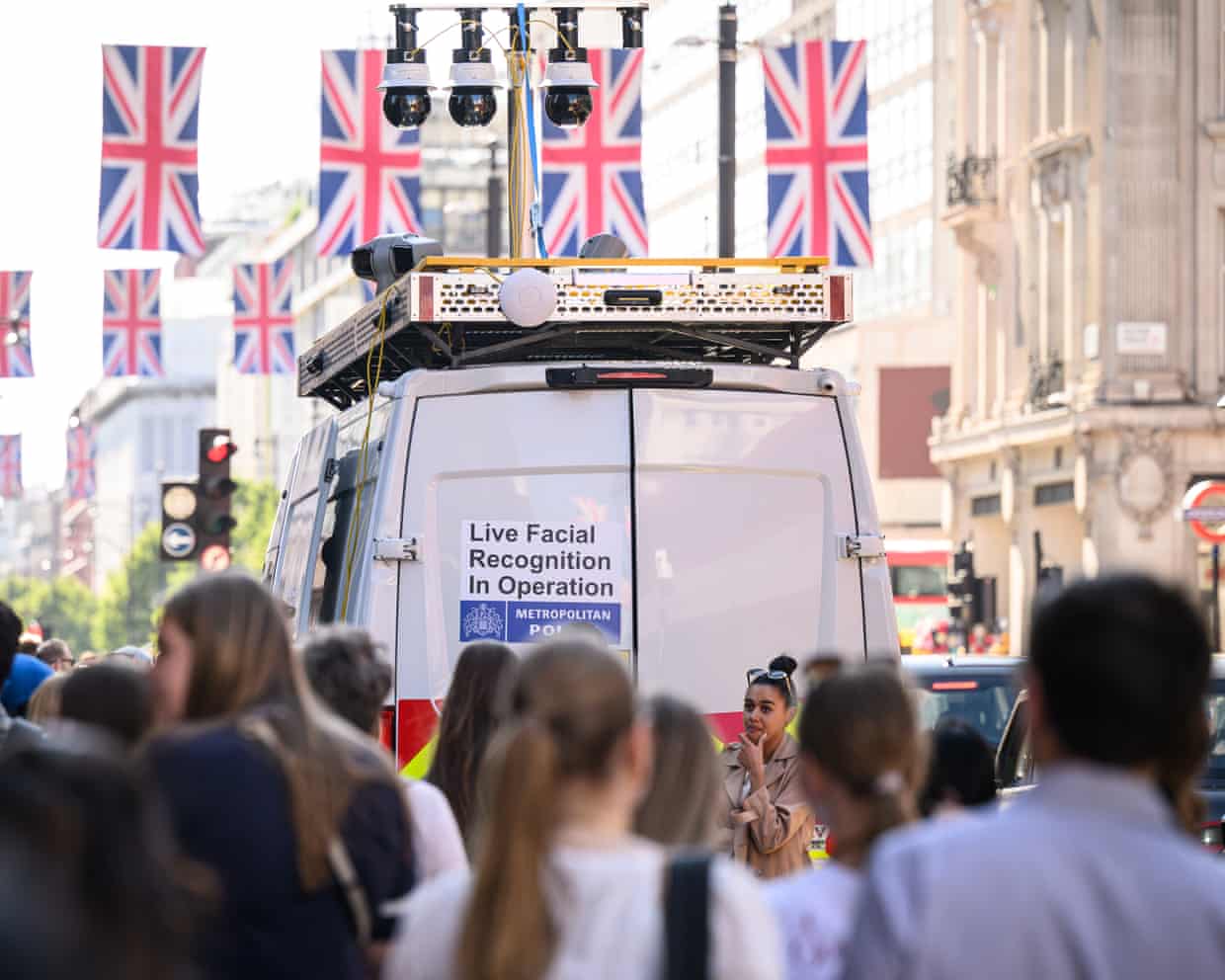
‘Urgent clarity’ sought over racial bias in UK police facial recognition technology
The UK’s data protection watchdog has asked the Home Office for “urgent clarity” over racial bias in police facial recognition technology before considering its next steps.The Home Office has admitted that the technology was “more likely to incorrectly include some demographic groups in its search results”, after testing by the National Physical Laboratory (NPL) of its application within the police national database.The report revealed that the technology, which is intended to be used to catch serious offenders, is more likely to incorrectly match black and Asian people than their white counterparts.In a statement responding to the report, Emily Keaney, the deputy commissioner for the Information Commissioner’s Office, said the ICO had asked the Home Office “for urgent clarity on this matter” in order for the watchdog to “assess the situation and consider our next steps”.The next steps could include enforcement action, including issuing a legally binding order to stop using the technology or fines, as well as working with the Home Office and police to make improvements

Lando Norris wins F1 world title in Abu Dhabi despite Verstappen’s GP win
Lando Norris has won his first Formula One world championship with a gutsy, nerveless drive of no little bravery to seal it with third place at the Abu Dhabi Grand Prix. A podium was enough for the 26-year-old British driver despite Red Bull’s Max Verstappen winning and his McLaren teammate Oscar Piastri taking second.Norris did exactly what was required of him in an enormously intense and high-pressure contest at the Yas Marina Circuit, including making a series of bold overtakes, with a flawless execution by himself and by his McLaren team.In taking his first world championship he becomes the 11th British driver to do so and it brings to an end McLaren’s drivers’ championship drought, which stretched back to 2008, when Lewis Hamilton last won it for the team. It had been 27 years since McLaren last secured the drivers’ and constructors’ double in 1998, with Mika Häkkinen
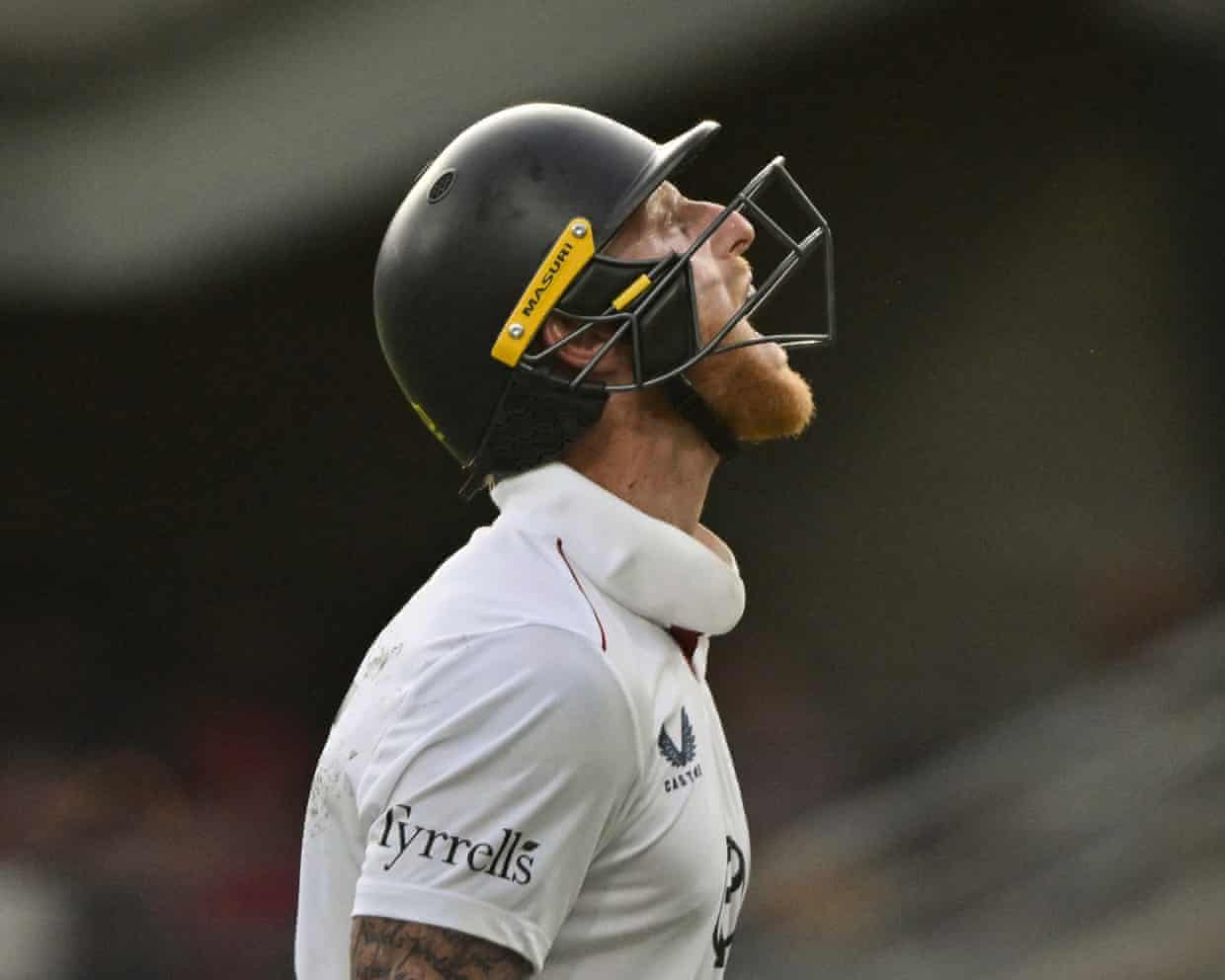
Ben Stokes says England have been ‘letting the pressure get to us’ in Ashes
Ben Stokes has admitted that the way England have folded in key moments during the first two Ashes Tests has led him to question the character of his players, and insisted: “A dressing room that I am captain of isn’t a place for weak men”.After Australia won the second Test in Brisbane by the same eight-wicket margin with which they secured the first, Stokes suggested the telling difference was that the home side had been superior in the “moments in the game where the heat is on and the pressure is really, really cooking” whereas his players “have all been guilty at moments [of] letting the pressure, the occasion, the circumstances, get to us”.“Over and over again, Australia have managed to get through those periods and outdo us,” Stokes said. “I know it’s not a skill thing, because they’re all incredibly talented players. But if you can’t put it down to skill then you start to wonder, what is it? Do we need to start thinking about what mentality we’re taking into those pressure moments?“Because when we’re on top we’re great, but when the game is neck and neck we’re not coming out on top on enough occasions to be able to challenge Australia

What is polygenic embryo screening in IVF and does it work?

UK IVF couples use legal loophole to rank embryos based on potential IQ, height and health

AI deepfakes of real doctors spreading health misinformation on social media

We must warn travellers about the risk of methanol poisoning | Letters

A guide to the Guardian’s 2025 charity appeal partners

Tell us: have you lived in temporary accommodation in the UK with children?