Anglo American’s merger bonus was a pay wheeze too far | Nils Pratley

Shareholder rebellions over executive pay aren’t what they used to be,In the past 18 months, bumper incentive arrangements for the bosses have been approved at AstraZeneca, the London Stock Exchange Group and Smith & Nephew,All those companies have managed to argue successfully that, since the bulk of their revenues are made on the other side of the Atlantic, the executives should be paid like Americans,Perhaps it was such favourable votes (for the executives) that persuaded the remuneration committee of FTSE 100 miner Anglo American that its cheeky “resolution 2” within the proposed $50bn all-share merger with the Canadian group Teck Resources wouldn’t cause a fuss,This resolution would have created, in effect, a £8.
5m bonus at the current share price for the chief executive, Duncan Wanblad, just for getting the deal over the line.The method would have been the roundabout one of amending the existing 2024 and 2025 long-term bonus schemes so that Wanblad would get a guaranteed payout worth 62.5% of the scheme’s maximum.The objection to that wheeze is obvious.Long-term bonus schemes are meant to do what they say on the tin – measure performance over the long term, which usually means at least five years.
You are not supposed to declare, after a couple of laps of the track, that everything is going splendidly because you’ve done a big deal and so a 62.5% victory can be declared.Now Anglo American says it has “reflected carefully on shareholders’ concerns” and will drop the resolution.A few big investors, including Legal & General Investment Management, had rightly objected.It is good that somebody is paying attention.
Anglo’s merger with Teck has generally gone down well with shareholders; they like the greater exposure to copper, the in-demand metal for electrification of the world’s energy grids, and the skinny premium being offered to Teck’s shareholders,But a bad precedent would be established if Anglo were allowed to hijack an agreed long-term bonus scheme and turn it into a short-term one,If the deal with Teck is as good as Anglo and Wanblad believe, he’ll be rewarded anyway because the value of his share-based rewards under the 2024 and 2025 schemes will inflate,Anglo’s shares have done well this year, especially after the Teck deal was announced in September, but you still have to wait until the end of the race before dishing out prizes,There is a separate argument as to whether Wanblad and his senior colleagues deserve bigger incentive packages because they’ll be running a bigger company and will have to relocate to Canada.
That seems to have been the thought behind the remuneration committee’s attempted tinkering to encourage “successful delivery of the merger”.But it is a separate issue: if you want to pay Wanblad more because Anglo-Teck will be a bigger beast, make the argument openly.Sign up to Business TodayGet set for the working day – we'll point you to all the business news and analysis you need every morningafter newsletter promotionAnglo will now be obliged to do exactly that.It says it will be back next year with an “updated directors’ remuneration policy”.So, one way or another, Wanblad will probably end up quids in.
But at least Anglo, having been forced into an embarrassing 11th-hour climbdown, will be made to do things by the book.

‘It has to be genuine’: older influencers drive growth on social media
In 2022, Caroline Idiens was on holiday halfway up an Italian mountain when her brother called to tell her to check her Instagram account. “I said, ‘I haven’t got any wifi. And he said: ‘Every time you refresh, it’s adding 500 followers.’ So I had to try to get to the top of the hill with the phone to check for myself.”A personal trainer from Berkshire who began posting her fitness classes online at the start of lockdown in 2020, Idiens, 53, had already built a respectable following

Scores of UK parliamentarians join call to regulate most powerful AI systems
More than 100 UK parliamentarians are calling on the government to introduce binding regulations on the most powerful AI systems as concern grows that ministers are moving too slowly to create safeguards in the face of lobbying from the technology industry.A former AI minister and defence secretary are part of a cross-party group of Westminster MPs, peers and elected members of the Scottish, Welsh and Northern Irish legislatures demanding stricter controls on frontier systems, citing fears superintelligent AI “would compromise national and global security”.The push for tougher regulation is being coordinated by a nonprofit organisation called Control AI whose backers include the co-founder of Skype, Jaan Tallinn. It is calling on Keir Starmer to show independence from Donald Trump’s White House, which opposes the regulation of AI. One of the “godfathers” of the technology, Yoshua Bengio, recently said it was less regulated than a sandwich

A robot walks into a bar: can a Melbourne researcher get AI to do comedy?
Robots can make humans laugh – mostly when they fall over – but a new research project is looking at whether robots using AI could ever be genuinely funny.If you ask ChatGPT for a funny joke, it will serve you up something that belongs in a Christmas cracker: “Why don’t skeletons fight each other? Because they don’t have the guts.”The University of Melbourne’s Dr Robert Walton, a dean’s research fellow in the Faculty of Fine Arts and Music, is taking a different approach to working out whether robots can do comedy.Thanks to an Australian Research Council grant of about $500,000, he will train a swarm of robots in standup. And, at least in the beginning, they won’t use words

Artificial intelligence research has a slop problem, academics say: ‘It’s a mess’
A single person claims to have authored 113 academic papers on artificial intelligence this year, 89 of which will be presented this week at one of the world’s leading conferences on AI and machine learning, which has raised questions among computer scientists about the state of AI research.The author, Kevin Zhu, recently finished a bachelor’s degree in computer science at the University of California, Berkeley, and now runs Algoverse, an AI research and mentoring company for high schoolers – many of whom are his co-authors on the papers. Zhu himself graduated from high school in 2018.Papers he has put out in the past two years cover subjects such as using AI to locate nomadic pastoralists in sub-Saharan Africa, to evaluate skin lesions and to translate Indonesian dialects. On his LinkedIn, he touts publishing “100+ top conference papers in the past year”, which have been “cited by OpenAI, Microsoft, Google, Stanford, MIT, Oxford and more”

Cloudflare apologises after latest outage takes down LinkedIn and Zoom
Cloudflare has apologised after an outage on Friday morning hit websites including LinkedIn, Zoom and Downdetector, the company’s second outage in less than a month.“Any outage of our systems is unacceptable, and we know we have let the internet down again,” it said in a blogpost, adding that it would release more information next week on how it aims to prevent these failures.The outage on Friday came after Cloudflare adjusted its firewall to protect customers from a widespread software vulnerability revealed earlier this week, and was not an attack, it said. Earlier, it said a separate issue had been reported with its application programming interfaces.The issue, which affected 28% of its traffic, lasted for half an hour and was resolved shortly after 9am GMT, it said

‘Urgent clarity’ sought over racial bias in UK police facial recognition technology
The UK’s data protection watchdog has asked the Home Office for “urgent clarity” over racial bias in police facial recognition technology before considering its next steps.The Home Office has admitted that the technology was “more likely to incorrectly include some demographic groups in its search results”, after testing by the National Physical Laboratory (NPL) of its application within the police national database.The report revealed that the technology, which is intended to be used to catch serious offenders, is more likely to incorrectly match black and Asian people than their white counterparts.In a statement responding to the report, Emily Keaney, the deputy commissioner for the Information Commissioner’s Office, said the ICO had asked the Home Office “for urgent clarity on this matter” in order for the watchdog to “assess the situation and consider our next steps”.The next steps could include enforcement action, including issuing a legally binding order to stop using the technology or fines, as well as working with the Home Office and police to make improvements
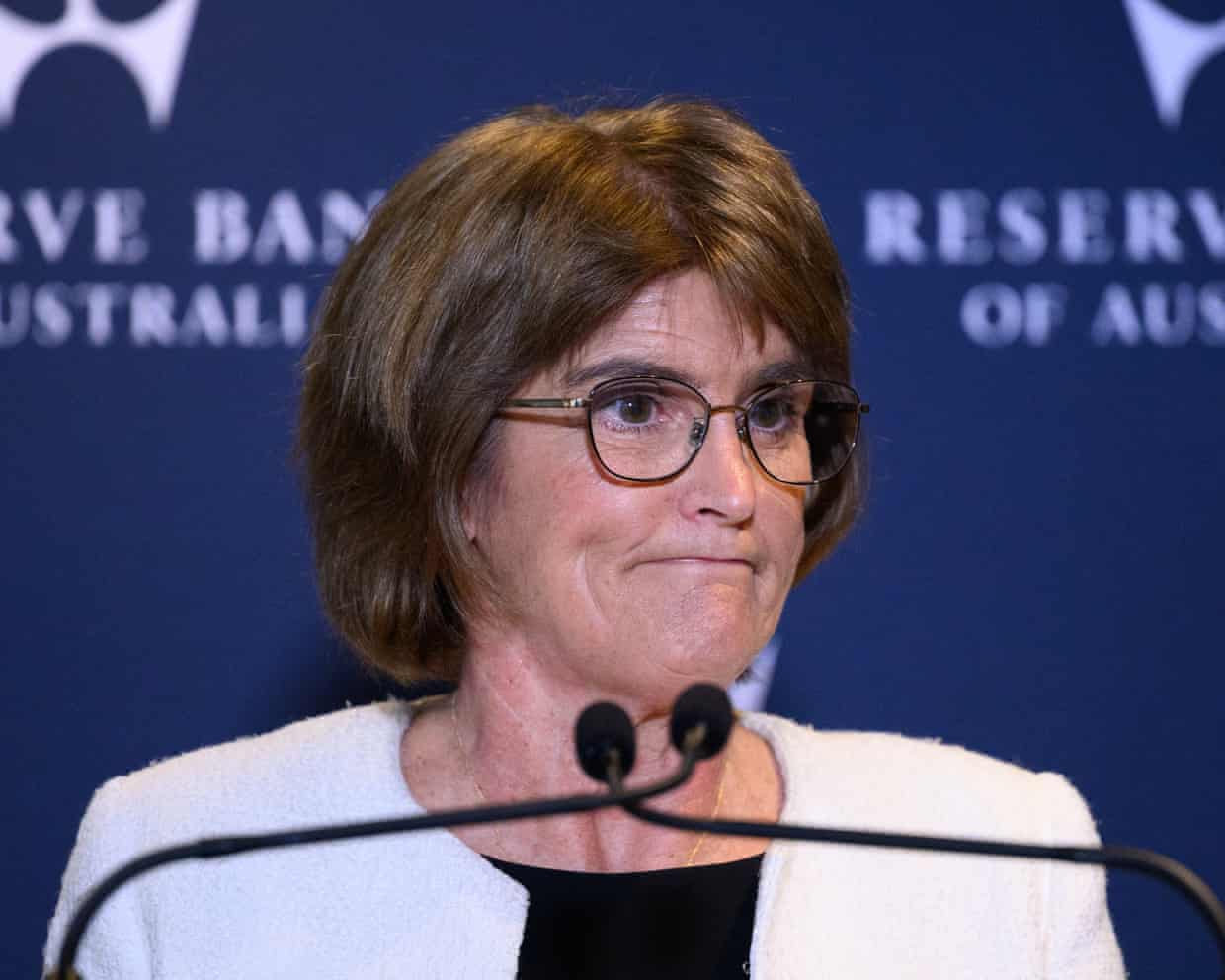
Australia is facing its shortest rate cut cycle in 30 years as the RBA hints it may have to start hiking

UK households cut spending at fastest pace in almost five years, says Barclays

‘I feel it’s a friend’: quarter of teenagers turn to AI chatbots for mental health support

Social media use damages children’s ability to focus, say researchers

F1 2025 awards: Lando Norris justifies favourite tag after gruelling three-way tussle

England dealt fresh Ashes blow with Mark Wood ruled out for rest of series