Report detailing risks to UK gas security was not one to bury on budget day | Nils Pratley
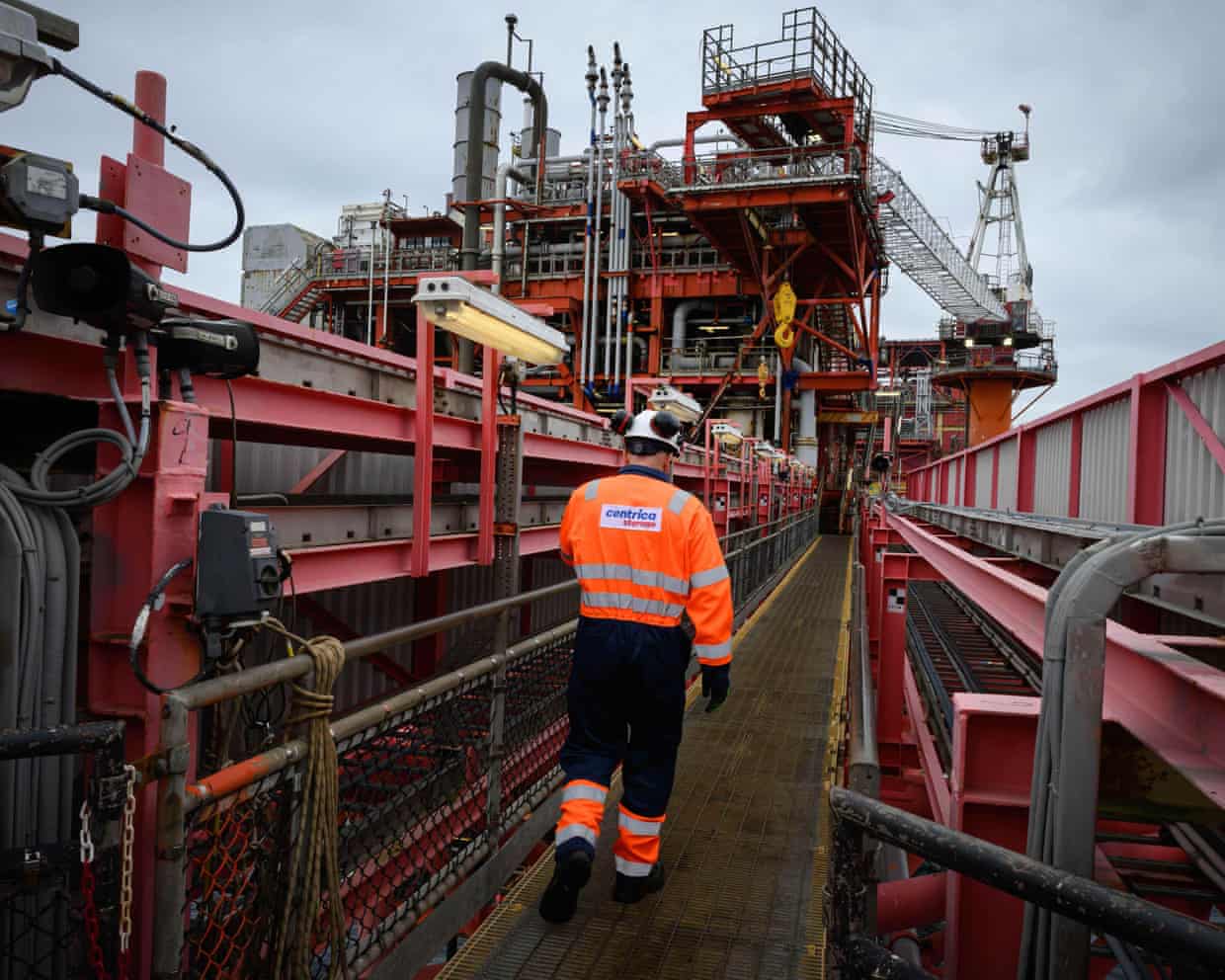
Chris O’Shea, the chief executive of British Gas-owning Centrica, tells an eye-popping tale from his early career in the North Sea offshore industry,During a routine underwater inspection in the 1990s, an unexploded bomb from the second world war was discovered close to the pipeline carrying oil ashore from the large Nelson field,Happily, the danger was dealt with,The point of the story is only that risks to critical pieces of infrastructure can come from unexpected sources,Stuff can happen.
It is something to bear in mind when reading about the “emerging risk to gas supply security”, as detailed in an assessment last week by the National Energy System Operator (Neso).This 50-page report was released on the afternoon of budget day.It was almost as if the government, or its in-house system operator, didn’t want the central finding to make the front pages.In short, Neso found there is an “emerging” risk of Britain running out of gas if an important piece of kit were to be out of action at a bad moment.It modelled five “pathways” for gas demand out to 2030 and 2035 and tested against a prolonged spell of very cold weather.
Here is the key sentence: “In the unlikely event of the loss of the single largest piece of gas infrastructure, gas supply falls short of demand for all pathways in 2030-31.”What does gas supply falling short of demand mean? Emergency measures would first involve telling factories and power plants to stop using gas.In extreme scenarios, households could be affected as well – there wouldn’t be enough gas for everyone with a gas boiler to heat their homes during cold weather.The latter, you’d think, could be a government-toppling event.There is no reason to doubt the report’s assessment that the nightmare is “unlikely”.
But nor is it hard to imagine how one big risk could materialise.The most critical piece of kit – the 725-mile underwater Langeled pipeline from Norway – may also be the most vulnerable.The threat is not second world war bombs but state-sponsored sabotage.In security circles, they are currently obsessing over the spate of ships dragging their anchors to damage undersea telecoms cables in the Baltic Sea and elsewhere.And remember that underwater explosions took out the Nord Stream 2 pipeline from Russia to Germany in 2022.
Repairing a disabled Langeled would take weeks or months.As you’d expect, the energy minister Michael Shanks reacted to the Neso report by promising to do “whatever it takes” to ensure secure gas supplies.A problem, though, is none of the report’s suggested “mitigations” sounds quick or cheap.For all the talk about the UK’s “diverse” supplies of gas, the list is not, actually, very long.In essence, there is: domestic North Sea production; Norwegian pipeline imports; imports of liquefied natural gas (LNG) via ship, mainly from Qatar and the US; gas interconnectors to Belgium and the Netherlands (where the gas can flow in both directions); and storage.
On domestic supplies, the chancellor Rachel Reeves’s decision to maintain the energy profits levy, AKA “the windfall tax”, until 2030 will probably only accelerate the decline of the UK production (never mind that Ed Miliband’s energy department is slightly more relaxed about in-field drilling).Norway may be at the limit of what it can supply to Britain.Sign up to Business TodayGet set for the working day – we'll point you to all the business news and analysis you need every morningafter newsletter promotionLNG import terminals are expensive and the UK only has three.Expanding interconnector capacity with the continent does not happen overnight.On storage, Centrica isn’t injecting gas this winter into Rough, its big offshore storage facility, because it doesn’t have a financial support deal with government, which currently takes the view that the numbers don’t stack up.
O’Shea has said Centrica would invest £2bn in Rough – in return for guaranteed returns.More onshore storage, in salt caverns, could be ordered – but, again, that requires early planning.But one or more of those options has to be chosen because Shanks’s remarks about “redoubling our efforts to decarbonise” are mostly irrelevant in this context.Even the government’s Clean Power 2030 plan will retain the current 35 gigawatts of gas power generating capacity because it will be needed as a backup in precisely the circumstances Neso modelled – cold and still winter periods when wind and solar aren’t generating.An “emerging risk” is one that gets bigger the longer it is left unaddressed.
So one can welcome the appearance of this first-of-its-kind report.It is useful that the government will have to respond formally.But one can also despair that the facts in the report have been well understood for years and been ignored by successive governments.Now there is non-negligible risk of a serious gas crisis in five years’ time.This was not a report to bury on budget day.

Bank of England defends OBR’s independence against political attacks; UK banks pass stress tests – business live
Having resisted two invitations to comment on the Office for Budget Responsibility, Bank of England governor Andrew Bailey can’t resist swishing at the third (has he been watching England batting in Australia?)Q: You have commented on political attacks on the Federal Reserve before, so are the political attacks on the Office for Budget Responsibility dangerous?Bailey reminds today’s press conference that there are good reasons why the Office for Budget Responsibility was created by George Osborne in 2010, telling reporters:The reason the OBR was created was to ensure there was a source of independent forecasting and an independent assessment of fiscal policy.That’s important, it’s important in many countries. Britain’s not unique… there’s nothing unusual about this absolutely core principle.So where attacks on the OBR are concerned, Bailey says we should “please remember why it was done and the principles underlying it”.However, it’s not for the Bank to get involved in “the day-to-day affairs of that”, he adds
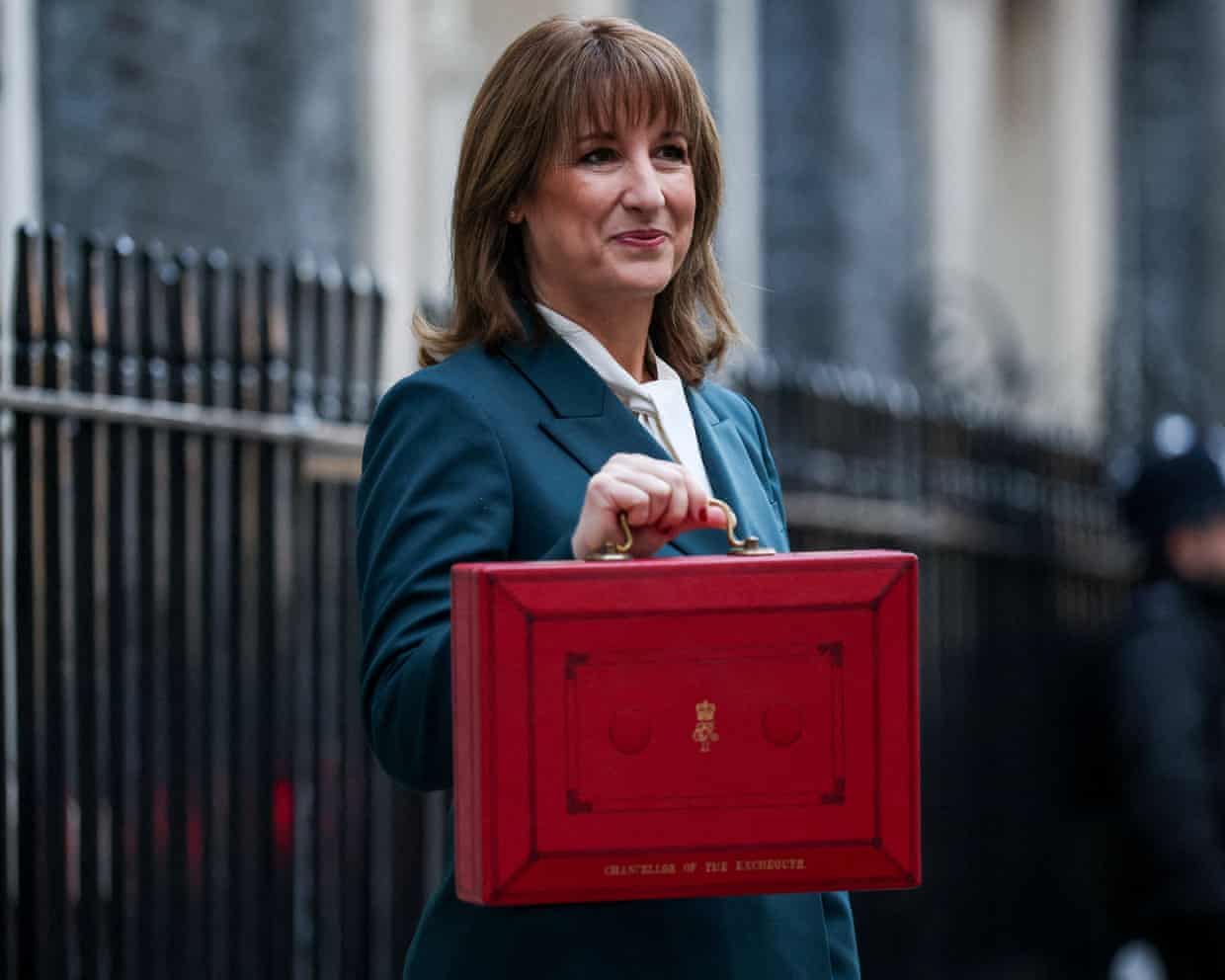
OBR complained to Treasury before budget about leaks spreading ‘misconceptions’
The Office for Budget Responsibility complained to senior Treasury officials in the run-up to the budget about a flurry of leaks that it said spread “misconceptions” about its forecasts, it has emerged.Prof David Miles of the OBR’s budget responsibility committee told MPs on the Treasury select committee on Tuesday that the watchdog had raised the issue of leaks with the department before the chancellor’s statement last week.“I think it was clear that there was lots of information appearing in the press which perhaps wouldn’t normally be out there and that this wasn’t from our point of view particularly helpful,” he said.He added: “We made it clear that they were not helpful and that we weren’t in a position of course to put them right.”Miles was appearing before the committee after the OBR chair, Richard Hughes, resigned on Monday, taking responsibility for the inadvertent release of its budget documents about an hour before Rachel Reeves stood up to announce her tax and spending plans

Age of the ‘scam state’: how an illicit, multibillion-dollar industry has taken root in south-east Asia
For days before the explosions began, the business park had been emptying out. When the bombs went off, they took down empty office blocks and demolished echoing, multi-cuisine food halls. Dynamite toppled a four-storey hospital, silent karaoke complexes, deserted gyms and dorm rooms.So came the end of KK Park, one of south-east Asia’s most infamous “scam centres”, press releases from Myanmar’s junta declared. The facility had held tens of thousands of people, forced to relentlessly defraud people around the world

Siri-us setback: Apple’s AI chief steps down as company lags behind rivals
Apple’s head of artificial intelligence, John Giannandrea, is stepping down from the company. The move comes as the Silicon Valley giant has lagged behind its competitors in rolling out generative AI features, in particular its voice assistant Siri. Apple made the announcement on Monday, thanking Giannandrea for his seven-year tenure at the company.Tim Cook, Apple’s CEO, said his fellow executive helped the company “in building and advancing our AI work” and allowing Apple to “continue to innovate”. Giannandrea will be replaced by longtime AI researcher Amar Subramanya

The Breakdown | Thirty years of Champions Cup has given us the beastly, beautiful and bizarre
Bloodgate, the ‘Hand of Back’ and a drop goal off ‘someone’s arse’ are among the tournament’s delightful eccentricitiesOn the eve of a new Champions Cup season it is worth remembering when and where it all began. The answer is 30 years ago on the shores of the Black Sea where Farul Constanta of Romania hosted France’s mighty Toulouse in the opening pool game of the old Heineken Cup on 31 October 1995.Let’s just say they were different times. The match was played on a Tuesday and, while the crowd was recorded as 3,000, eyewitnesses were focused on the large number of security personnel with barking Alsatian dogs straining at the leash. Toulouse, boasting an array of internationals including Émile Ntamack and Thomas Castaignède, duly registered eight tries and won 54-10
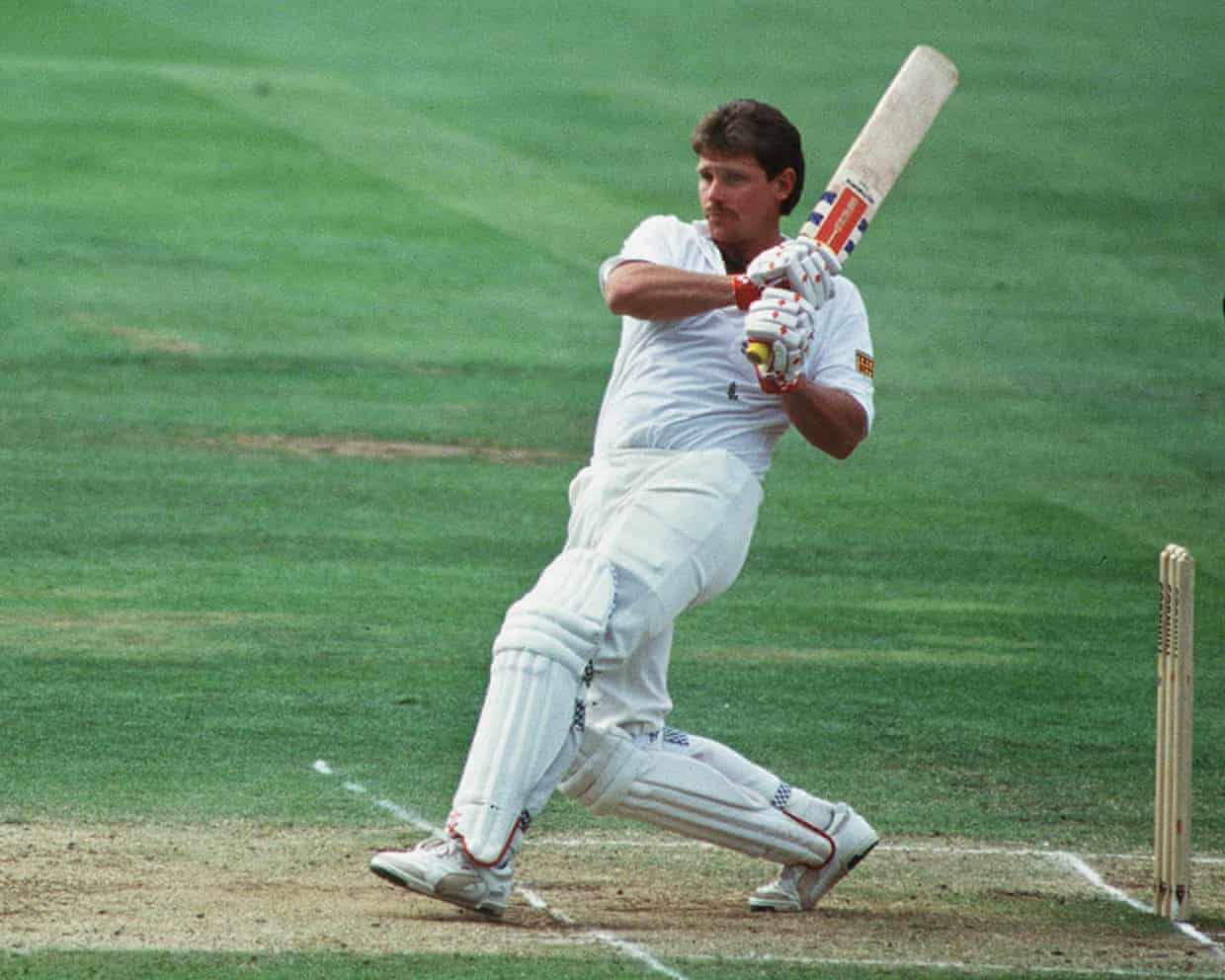
Robin Smith, former England cricketer, dies aged 62
The former England cricketer Robin Smith has died at the age of 62 with his family and former county Hampshire saying they were devastated by his loss.Smith played 62 Tests and 71 one-day internationals for England between 1988 and 1996 and was a resolute middle-order bulwark for the side during often difficult times for the team. He particularly excelled against pace, making his highest Test score of 175 against the fearsome West Indies attack at Antigua in 1994.He made 4,236 Test runs overall at an average of 43.67, including nine centuries

The Guide #219: Don’t panic! Revisiting the millennium’s wildest cultural predictions

From Christy to Neil Young: your complete entertainment guide to the week ahead

Susan Loppert obituary

Oh yes he is! Kiefer Sutherland dives into the world of panto

O come out ye faithful: a joyful roundup of UK culture this Christmas

Nominate your favourite Australian children’s picture book of all time